GM Built One Minivan and Sold It Four Times. All Four Were Deadly.
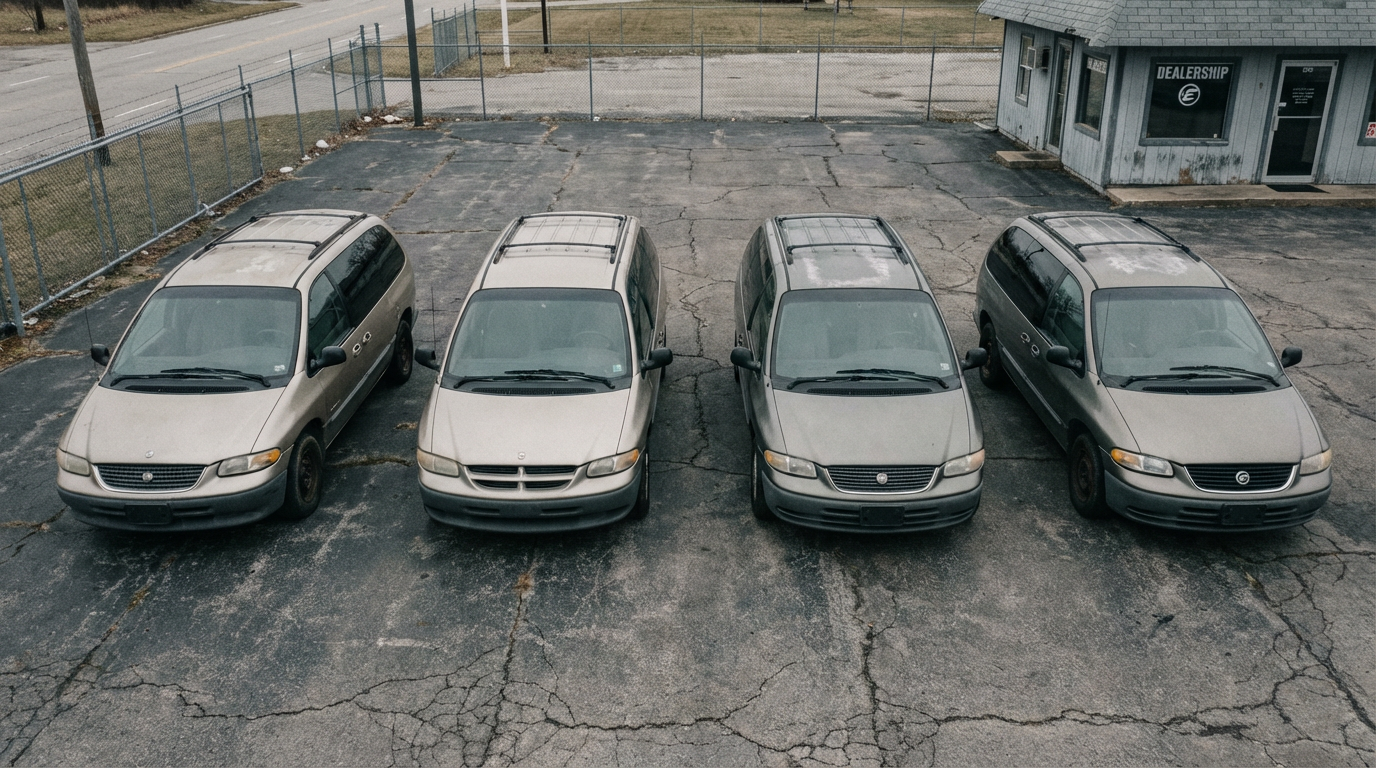
General Motors had a minivan problem in the 1990s. Their solution was to build one minivan, give it four names, and sell it through four different dealership networks. The Chevrolet Venture. The Pontiac Montana. The Oldsmobile Silhouette. The Chevrolet Uplander, which replaced the Venture in 2005 when GM apparently decided the problem was the name and not the engineering.
All four rode the same U-body platform. Same 3.4L V6. Same wheelbase, same floorpan, same crash structure. Different grilles.
The death rates tell you everything about how well this strategy worked:
| Vehicle | Deaths | Rate / 100M VMT | Fleet |
|---|---|---|---|
| Chevy Venture | 269 | 1.74 | 131,250 |
| Chevy Uplander | 201 | 1.30 | 131,250 |
| Pontiac Montana | 157 | 1.01 | 131,250 |
| Olds Silhouette | 88 | 0.85 | 87,500 |
| Platform total | 715 | — | — |
For context, here’s what the competition was doing during the same period with actual engineering budgets:
| Vehicle | Deaths | Rate / 100M VMT | Fleet |
|---|---|---|---|
| Toyota Sienna | 430 | 0.49 | 743,750 |
| Honda Odyssey | 864 | 0.93 | 787,500 |
| Chrysler Pacifica | 160 | 0.19 | 700,000 |
The Venture killed at 3.6 times the rate of the Sienna. Three and a half times. For a vehicle whose entire marketing premise was transporting children.
The Nameplate Shuffle
Watch what GM did. The Venture launched in 1997. By 2005 its reputation was cooked, so they killed the name and released the Uplander — same platform, freshened sheet metal, a rate that dropped from 1.74 to 1.30. Improvement? Sure. Still 2.7 times deadlier than the Sienna that was sitting across the street at the Toyota dealer. The Uplander lasted four years before GM exited the minivan business entirely in 2009.
The Silhouette’s lower rate (0.85) probably reflects its smaller fleet — fewer units on the road means fewer cheap used-market purchases, which means fewer second- and third-owner miles with deferred maintenance. Oldsmobile died in 2004, taking the Silhouette with it. The Montana split off into the Montana SV6, which was — and I cannot stress this enough — the same car again.
What Went Wrong
The U-body had two structural problems that Honda and Toyota solved a generation earlier. The roof crush resistance was marginal in rollover tests, and the front offset crash performance lagged behind the Odyssey’s ACE body structure by a wide margin. GM knew this. The platform received minimal structural updates between 1997 and its cancellation in 2009. Twelve years on essentially the same crash architecture while the Odyssey went through two complete redesigns.
GM’s exit from minivans wasn’t a strategic pivot to crossovers. It was a retreat from a segment where they couldn’t compete on the thing that matters most when families are the customers. The Traverse that replaced the Uplander rides on a completely different platform. Its rate: 0.31.
Seven hundred and fifteen people. Four badges. One bad platform. GM’s minivan strategy was a masterclass in how not to engineer a family vehicle — repeated four times, apparently to make sure.