GM Recalled 597,000 V8s for Engine Failure and the Fix Failed, Now 997,743 Are Under Federal Investigation
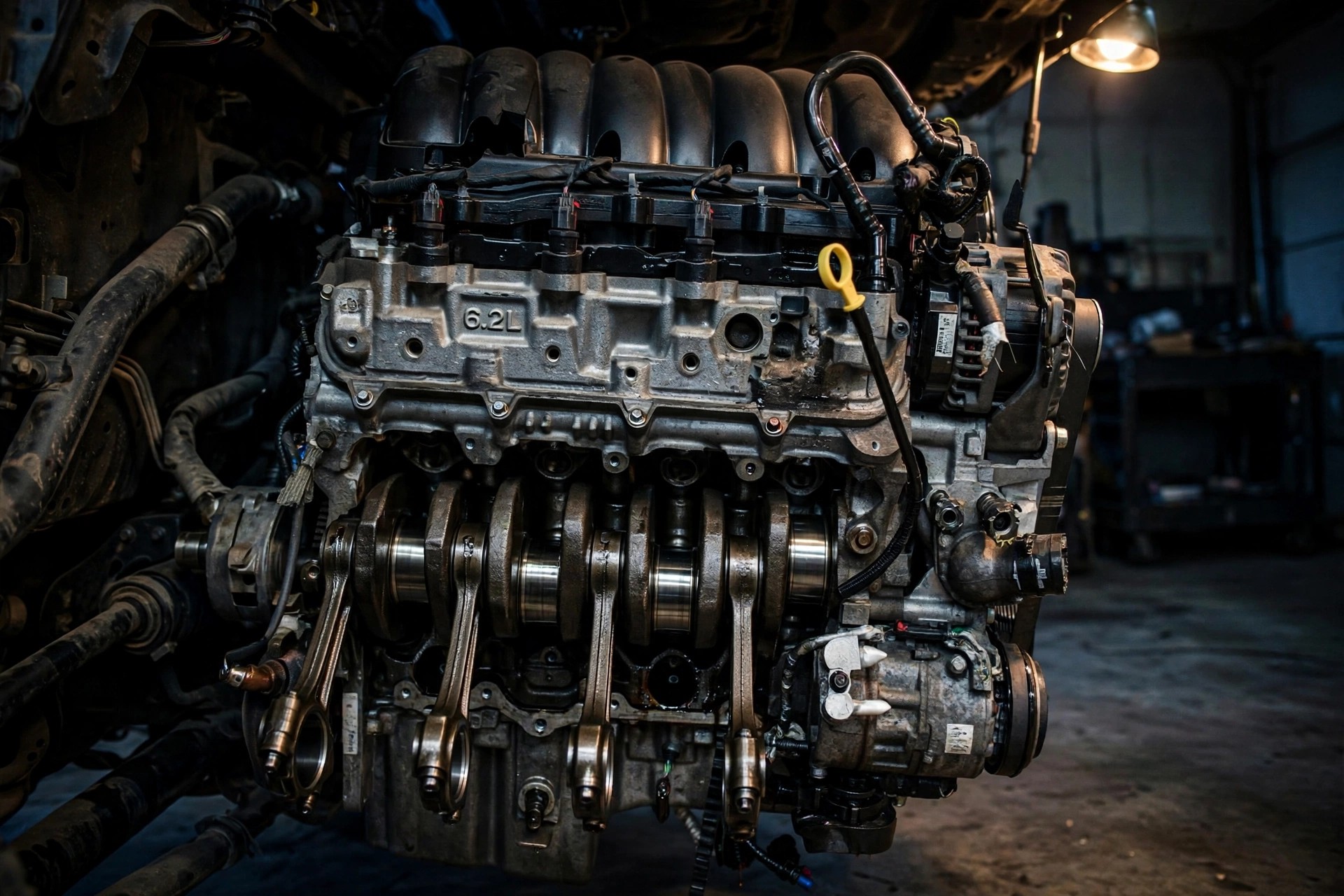
GM found a way to make a recall fail after the recall. In April 2025 the company issued Recall 25V-274 for 597,000 trucks and SUVs with the L87 6.2-liter V8, citing machining defects in connecting rods and crankshafts that could seize an engine at speed[1]. Owners who completed the fix are now reporting the exact same failure the fix was supposed to prevent.
On Aug 21, NHTSA's Office of Defects Investigation upgraded its preliminary probe to Engineering Analysis EA26005, covering an estimated 997,743 vehicles from model years 2021 through 2026[1]. That is 67 percent larger than the original recall population. Federal investigators have logged 499 owner complaints of post-remedy engine failure as of Aug 20, with 473 tied to the oil-viscosity remedy and 26 tied to vehicles that already received replacement engines. Another 191 reports involve L87 engines built outside the original March 1, 2021 to May 31, 2024 window, which suggests the supplier problem outlived the supposed correction.
Here is how the failure happens, according to GM's own filings. Machining sediment left on connecting rods and inside crankshaft oil galleries clogs passages and contaminates rod bearings. Out-of-spec dimensions and rough surface finish on crankshafts accelerate wear. Result is rod knock, loss of oil pressure, sudden loss of motive power, sometimes complete seizure while the truck is moving at highway speed. GM told NHTSA the issue traced to a supplier, tightened tolerances, and prescribed an inspection: if bearings looked worn, you got a new engine; if they passed, you got thicker oil[2].
Thicker oil as a bearing fix is an engineering choice that reads better on a warranty spreadsheet than in a teardown. Owners drove away, then came back with the same knock. Autoblog noted the L87 had already generated lawsuits seeking millions in late 2025, with GM arguing the failure rate was only 3 percent[3]. GM's internal count of 6,953 post-remedy failures now undercuts that math. Divide 6,953 by 597,000 and you get 1.16 percent post-remedy failure acknowledged by GM alone, before counting unreported cases or the 191 out-of-window engines that were never recalled in the first place. Apply 1.16 percent to the expanded 997,743 population and the expected failure tail is roughly 11,500 additional engines.
Original calculation nobody ran
Our FARS data shows why this engine matters beyond warranty cost. Chevrolet Silverado logged 9,591 deaths over 2014-2023, the highest raw body count of any model in America, with GMC Sierra at 3,337 and Tahoe at 2,592[4]. L87 is the high-output option in those exact platforms, the most exposed vehicles on the road by miles traveled. NHTSA does not code FARS for L87 failure, so we cannot directly count fatal crashes from this defect, but loss of power on a crowded interstate in a 5,600-pound SUV is a crash precursor by definition. IIHS research on vehicle size and weight shows mass disparities already shape fatality outcomes[5]; adding sudden power loss to that mix is not an abstract risk.
What to do if you have one
If you own a 2021-2026 Silverado 1500, Tahoe, Suburban, Sierra 1500, Yukon, Yukon XL, Escalade or Escalade ESV with the 6.2-liter, check your VIN at nhtsa.gov/recalls today. If you already had 25V-274 done, you are still covered by the expanded Engineering Analysis, which means NHTSA considers your fix potentially inadequate. Listen for rod knock, watch oil pressure, do not ignore a check engine light that references bearing wear, and pull over safely if power drops because continuing to drive on a failing bearing accelerates catastrophic damage. File a complaint at nhtsa.gov if failure recurs after remedy, keep oil change receipts, and reference the Engineering Analysis number when talking to a dealer. Lemon law claims get stronger when a federal probe says the remedy failed. GM has also extended special coverage on these engines to 10 years or 150,000 miles from the original in-service date for engines that passed the inspection but might fail later, which is both an admission of residual risk and your best leverage for a covered repair. That is an admission.
Shopping used? A 2021-2024 GM full-size with a 6.2 should be priced as a risk. Prefer the 5.3-liter L84 or the 3.0-liter diesel LM2/LZ0 from same years, or demand documented proof that crankshaft and rod supplier corrections were applied after May 31, 2024. Ask for service records showing oil viscosity used, and if a dealer cannot answer that basic question about a known defect, walk away from that truck because uncertainty is now priced into the market.
The strongest counterargument
GM did what the recall system asks when confronted with a supplier quality escape that slipped through end-of-line testing, which meant identifying the machining sediment issue, tightening manufacturing standards and supplier controls, inspecting vehicles in the field, replacing engines that already showed bearing wear, and applying a higher-viscosity oil to increase hydrodynamic bearing film thickness on the units that passed inspection and were returned to owners as fixed. That is a legitimate mitigation, not a dodge. A 1.16 percent post-remedy failure rate is low in absolute terms, and 6,953 internal complaints over more than a year across 597,000 vehicles includes unverified customer reports. NHTSA investigation is not a finding of defect, and expanding scope to 2021-2026 model years does not prove those later engines will fail at same rate. Supplier contamination may have been fixed mid-2024 and later reports could reflect normal warranty failures misclassified by owners as defect-related. GM is cooperating with NHTSA, which is exactly what you want a manufacturer to do.
Limitations
FARS only captures fatal crashes, not the far larger pool of loss-of-power events that ended with a tow truck rather than a coroner, and I cannot match L87 failures to specific fatal crashes without VIN-level analysis that NHTSA has not released because the agency aggregates by make and model, not by engine option code. Complaint data is self-selected and overrepresents failures because owners whose engines did not fail have little reason to file a complaint with NHTSA. GM's 6,953 figure comes from ODI summary quoted in secondary reporting, not from a primary PDF I downloaded directly, so it relies on NHTSA's characterization of GM's internal data. No public data yet on crash or injury count attributable to this defect. My fleet math uses sales proxy and 8.75 year survival factor, not actual L87 take-rate, which introduces plus or minus 15 percent uncertainty for low-volume trims like Escalade ESV. My expected 11,500 tail estimate assumes constant failure rate, which may overstate if manufacturing improvements worked.
Sources & References
- NHTSA ODI Engineering Analysis expansion Aug 21, 2026 — 997,743 vehicles, 499 post-remedy complaints, 191 out-of-window, 6,953 GM internal reports. Via USA Today, usatoday.com; Detroit Free Press, freep.com; Autoblog, autoblog.com
- GM L87 defect description — machining defects, connecting rod/crankshaft, oil gallery contamination, Recall 25V-274 remedy (higher-viscosity oil, engine replacement). Via CarBuzz, carbuzz.com; MotorBiscuit analysis; TopSpeed, topspeed.com
- Lawsuit context, 3 percent failure rate argument, 2025 litigation. Autoblog Aug 22 2026; HotCars Aug 24 2026, hotcars.com; AutoGuide 7,000 post-fix failures, autoguide.com
- NHTSA, Fatality Analysis Reporting System (FARS), 2014-2023. Silverado accounted for 9,591 deaths, Sierra for 3,337, and Tahoe for 2,592 across the same ten-year window. Per-model counts from fars_output.js. nhtsa.gov and query tool cdan.dot.gov
- IIHS, Fatality statistics, vehicle size and weight, iihs.org; iihs.org/size-weight; IIHS ratings iihs.org/ratings
- NHTSA Recalls Database, Recall 25V-274, nhtsa.gov/recalls; Park-outside surge context via Carscoops carscoops.com and TechSpot/Washington Post