Ford Recalled 3x More Vehicles Than Any Other Automaker This Year. The FARS Numbers Say That’s Not Enough.
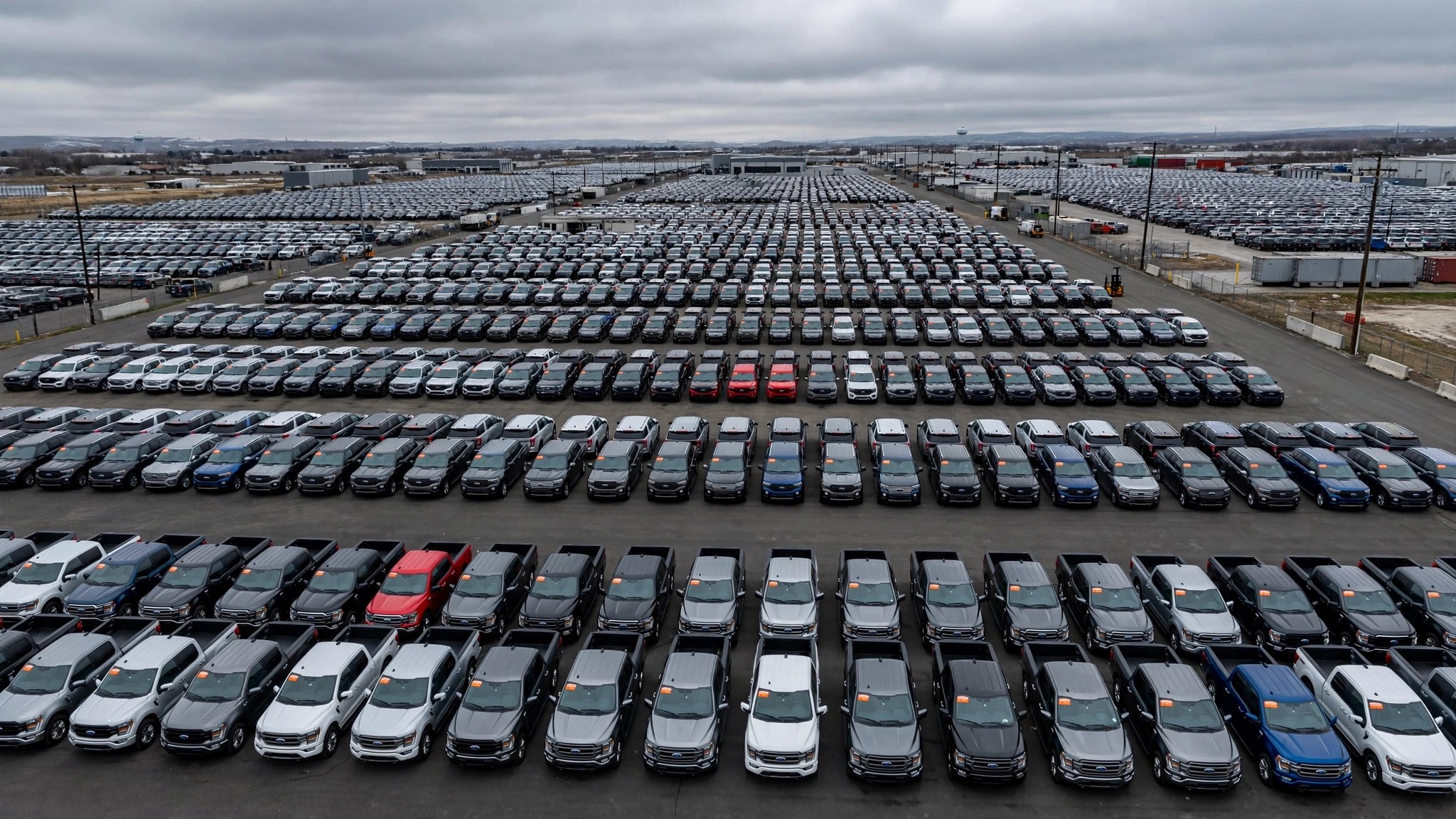
By March 2026, Ford Motor Company had recalled 7.3 million vehicles across 17 separate campaigns, according to Automotive World. That figure is more than three times the recall volume of the next-highest automaker.[1] Ford sells roughly two million vehicles a year in the United States. So for every new truck or SUV it put on a lot in Q1, it was simultaneously telling the owners of 3.65 others that something was wrong with theirs.
Then July arrived and the pipeline kept flowing. On July 20, NHTSA posted two more Ford campaigns: 387,911 Explorer and Aviator SUVs whose second-row seats can unlatch, tip, or slide while the vehicle is in motion, and 288,314 older Explorers whose roof rail covers are still flying off five years after the original recall supposedly fixed the problem with epoxy and hope.[2] That is 676,000 more vehicles added to a ledger that was already unprecedented.
Run the FARS database for 2014 through 2023 and Ford sits at 34,954 occupant deaths across 29 models, second only to Chevrolet at 35,905. Its F-150 alone accounts for 9,194 of those deaths at 919 per year, making it the second-deadliest nameplate in America behind only the Chevy Silverado.[3] Add the Explorer at 3,797. Add the discontinued Ranger at 3,089, and the also-discontinued Focus at 3,046. Five Ford nameplates sit in the top 15 for total fatal-crash involvement. If Ford were a country, its FARS footprint would have its own accident investigation board.
A reflexive defense is that volume explains everything. Ford sells enormous numbers of trucks, so naturally they recall enormous numbers and show enormous FARS tallies. Fair point, and it deserves an honest examination. Per 100 million vehicle miles traveled, the F-150 carries a fatality rate of 1.04, which is just below the 2025 national average of 1.06.[4] The Explorer runs 1.54. Neither is an outlier in its class. What the rate obscures is that scale IS the risk multiplier. When you sell 900,000 F-150s a year and each one racks up roughly 13,500 annual miles, a rate of 1.04 means roughly 920 funerals a year, every year, decade after decade, in this one model. A minuscule rate on a massive fleet is still a body count that dwarfs most automakers' entire lineups.
But volume alone does not explain a recall-to-sales ratio of 3.65 to 1, three times the nearest competitor. A gap that wide means Ford is finding more things wrong with its vehicles post-sale than anyone else, and by a wide margin. In April it recalled 1.4 million F-150s for a transmission range sensor defect that caused unintended downshifts into second gear at highway speed, a problem linked to 444 warranty claims and at least two injuries.[5] Thermal cycling and vibration degraded the electrical connections over time. Ford's engineers didn't catch it until NHTSA opened its own investigation.
One charitable interpretation is that Ford has gotten better at self-reporting. A cynical one is that Ford's quality control is failing at the design level and recalls are the cleanup crew sent in after the fact. Both can be true at the same time. What matters to the family loading three kids into a 2022 Explorer is whether the rear seat will stay where they bolted it, and the answer right now is: Ford does not know for certain, and the fix won't be available until January 2027.[2]
If you own any Ford built between 2015 and 2027, go to nhtsa.gov/recalls and plug in your VIN. Today. Not next week. Right now. Your odds of being covered by at least one active campaign are disturbingly high, and the difference between an open recall and a completed one is the difference between a family road trip and a fire investigation report.
Sources & References
- Automotive World, “Ford announces another massive recall: 1.4 million F150s,” April 2026. automotiveworld.com
- NHTSA recalls 26S52 (Explorer/Aviator second-row seats) and 26S54 (Explorer roof rails), filed July 2026. nhtsa.gov/recalls
- NHTSA, Fatality Analysis Reporting System (FARS), 2014–2023 data. nhtsa.gov
- NHTSA, “Traffic Crash Deaths: Early Estimates Jan–June 2025,” projecting 1.06 fatalities per 100M VMT. nhtsa.gov
- NHTSA recall 26V237000 (Ford F-150 transmission range sensor), April 2026. Consumer Reports, “1.4 Million Ford F-150 Pickups Recalled.” consumerreports.org
Source: NHTSA FARS 2014–2023. FARS captures only crashes in which at least one person died; the F-150’s rate of 1.04 per 100M VMT reflects fatal-crash involvement, not total crash frequency. Fleet size estimates are derived from cumulative US sales and average vehicle lifespan assumptions. Recall volumes are as reported by NHTSA and the referenced Automotive World analysis. See methodology for caveats.