Ford Told 135,000 Owners to Replace Their Timing Belt at 150K Miles. 98% Failed Before They Got There.
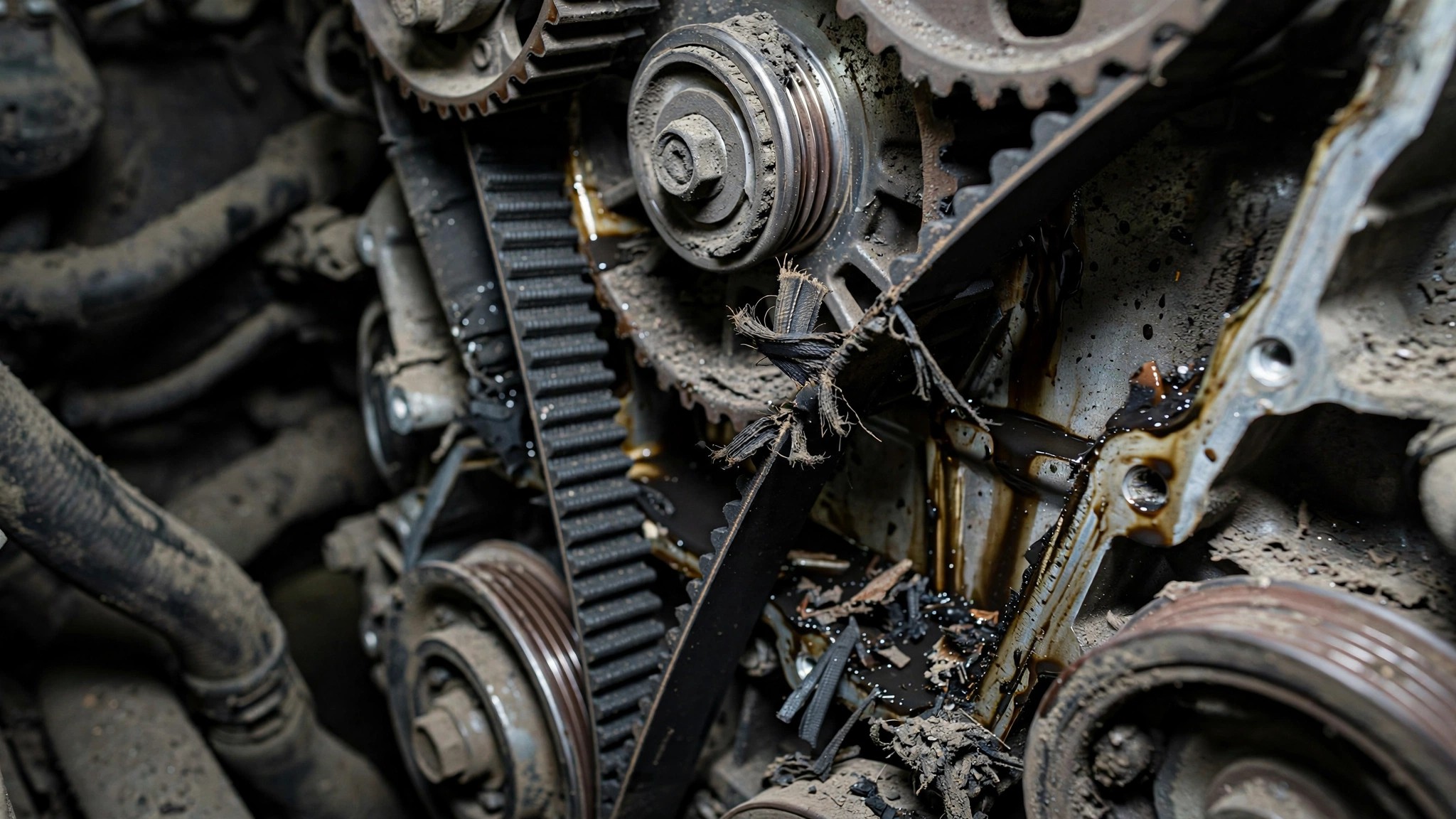
NHTSA upgraded its defect investigation into Ford's 1.0-liter EcoBoost three-cylinder engine to engineering analysis on Monday, the final stage before the agency can compel a recall.[1] The probe covers roughly 135,000 Ford Focus, Fiesta, and EcoSport vehicles from model years 2014 through 2021. The defect: timing belt material degrades, sheds debris into the oil system, clogs the mesh pump screen, and starves the engine of oil until it seizes. On a highway. Without warning.
That 80,000-mile gap between reality and the owner's manual is the problem nobody at Ford put in a press release. NHTSA's investigation found 355 complaints describing low oil pressure warnings followed by total power loss, often within seconds.[1] A 2017 Focus driver on a highway in Wilmington, Delaware, reported the oil pressure light flickered on and within an eighth of a mile the engine "lost all power and began to sound like a tank." Ninety-eight percent of documented failures happened before Ford's recommended 150,000-mile service interval. The average was 70,000 miles. Failures occurred despite routine oil changes done on schedule.
Read that again: following Ford's own maintenance schedule did not prevent the failure. Owners who did everything right still lost engines. The maintenance interval was not merely optimistic. It functioned as a false assurance that the component had 80,000 miles of life remaining when it was already past its real design limit. A service schedule should be a safety floor. Ford's was a ceiling painted to look like a floor.
FARS data adds context that the investigation itself cannot provide. Between 2014 and 2023, the Ford Focus accumulated 3,046 fatalities across all model years, the Fiesta added 513, and the EcoSport contributed 86.[2] Narrowing to the affected model years, roughly 970 people died in these vehicles during the FARS reporting window. FARS does not track mechanical cause of crash, so none of those deaths can be attributed directly to timing belt failure. But a vehicle with a documented propensity for sudden, unwarned engine seizure on public roads is not a safer vehicle because nobody bothered to code why the engine stopped.
All three models are discontinued. Ford killed the Focus in 2018, the Fiesta in 2019, the EcoSport in 2022. No current Ford uses the 1.0L EcoBoost. The financial incentive to issue a recall for a dead model line approaches zero: no active brand to protect, no showroom traffic to preserve, no future buyer goodwill to earn. A recall is pure expense against vehicles whose only remaining corporate purpose is not generating lawsuits. The people still driving them are overwhelmingly budget buyers who chose the cheapest Ford on the lot because that was what they could afford. They are also the people least likely to find an NHTSA investigation page, least able to absorb a $3,000-to-$7,000 engine replacement, and most dependent on the only maintenance guidance they have: the manual that said 150,000 miles.
A fair objection: the 1.0L EcoBoost was an optional engine on these platforms, and most Focus and Fiesta vehicles in FARS had 2.0L or 1.6L powertrains. Conflating the broader death count with a narrower engine defect inflates the apparent connection. True. But the objection concedes the point it is trying to dodge. If the majority of Focus fatalities involved a different engine, that means 135,000 owners of the affected variant got the worst possible combination: a maintenance schedule calibrated to a different engine's tolerances and a belt that degrades 80,000 miles ahead of the replacement it was never going to reach.
If you own a 2014-2021 Ford Focus, Fiesta, or EcoSport with the 1.0-liter three-cylinder, check your VIN at nhtsa.gov/recalls and do not wait for a recall letter. Get the timing belt inspected now regardless of mileage. If the oil pressure warning light appears while driving, pull over immediately and shut the engine off. Every mile past 70,000 on the original belt is a mile Ford's maintenance schedule told you was safe, and NHTSA just told you it wasn't.
Sources & References
- NHTSA Office of Defects Investigation, Engineering Analysis upgrade for Ford 1.0L EcoBoost timing belt defect, covering ~135,000 Ford Focus, Fiesta, and EcoSport vehicles (MY 2014–2021). 355 complaints, average failure at ~70,000 miles, 98% before 150,000-mile service interval. Reported by Reuters, August 3, 2026. reuters.com
- NHTSA, Fatality Analysis Reporting System (FARS), 2014–2023. Ford Focus: 3,046 deaths; Ford Fiesta: 513 deaths; Ford EcoSport: 86 deaths. nhtsa.gov
- NHTSA Recalls Database. Vehicle owners can check recall status by VIN. nhtsa.gov/recalls