 ← Back to The Crash Report
By The Numbers
← Back to The Crash Report
By The Numbers
Congress Saved 9,000 Lives a Year in 2007. The Cars Didn’t Get the Memo Until 2024.
~40,000 — estimated excess deaths during the 17-year gap between the ESC mandate and full fleet penetration.
Electronic stability control is the most effective safety technology since the seatbelt.[1] IIHS measured it: ESC cuts fatal single-vehicle crashes by 49% in SUVs and 33% in cars.[2] NHTSA estimated 5,300 to 9,600 lives saved per year once every vehicle on the road has it.[3]
The mandate passed in June 2007. Required on all new vehicles by model year 2012.
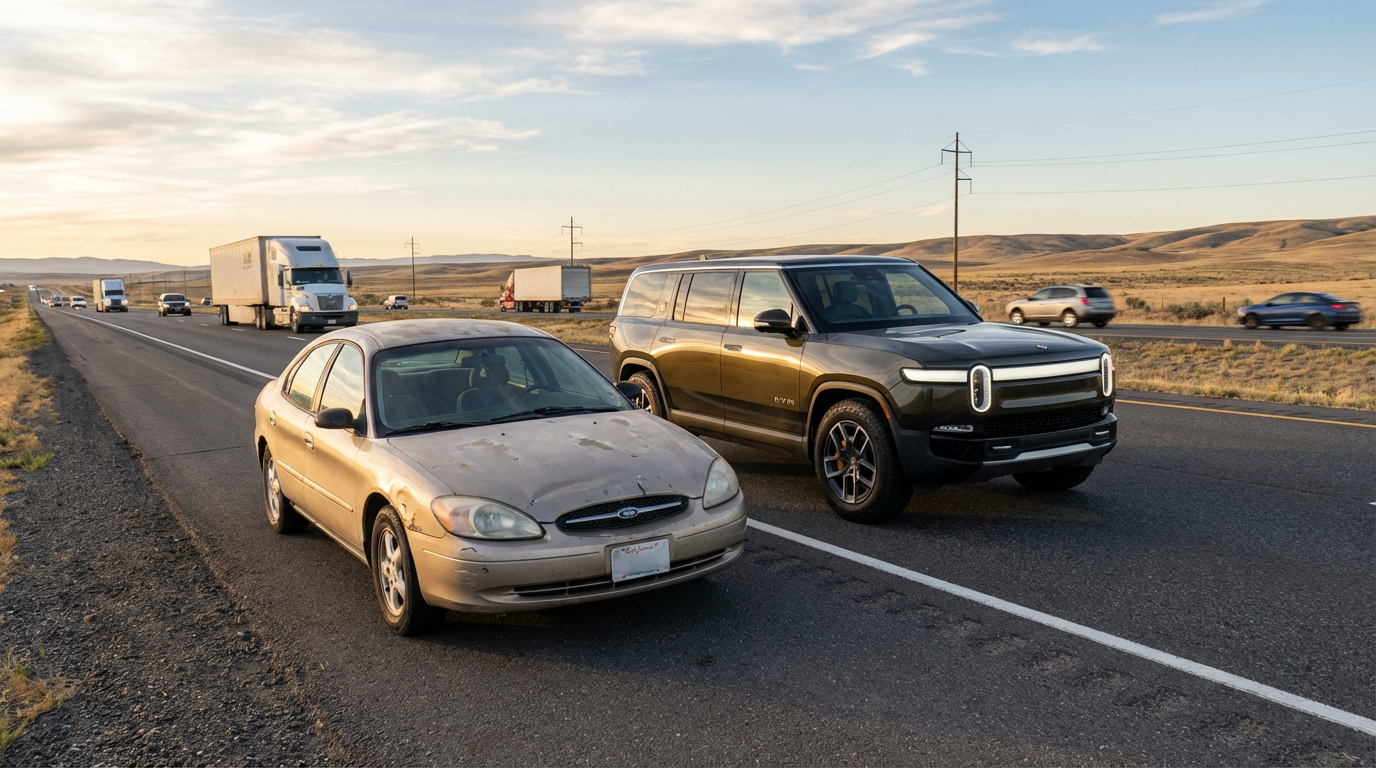
The average American car is 12.6 years old.[4]
Do the math.
| Year | Fleet ESC Penetration (est.) | Lives Saved vs. Full Penetration |
|---|---|---|
| 2007 | ~29% | Mandate signed. Voluntary adoption already underway. |
| 2012 | ~52% | All new vehicles required. Half the fleet still doesn’t have it. |
| 2015 | ~63% | FARS data starts showing the bend — rollover fatalities declining. |
| 2018 | ~75% | SUV single-vehicle fatalities down ~35% from 2007 baseline. |
| 2021 | ~84% | Pre-2012 vehicles aging off the road but still 1 in 6 cars on the highway. |
| 2024 | ~92% | Near-complete penetration. The mandate is finally “done.” |
Seventeen years. That’s the time between signing the law and the law actually reaching most of the vehicles on the road.
What happened in those 17 years is a slow-motion catastrophe that nobody tracks. NHTSA doesn’t publish a “lives lost during fleet turnover” figure. Nobody does. But the arithmetic isn’t hard. If ESC saves 5,300 lives per year at full penetration,[3] and full penetration didn’t arrive until roughly 2024, then the cumulative shortfall — the deaths that occurred in vehicles that would have had ESC if the fleet turned over instantly — is somewhere around 40,000 people.
Forty thousand people in the gap between “we decided to save you” and “the car you could afford got the update.”
The fleet age problem is getting worse
The average vehicle age has climbed steadily: 9.6 years in 2002, 11.0 in 2012, 12.6 in 2024.[4] Used car prices surged 37% during 2021–2022,[5] pricing younger-fleet vehicles out of reach for the buyers who need safety improvements most.
This is the fleet turnover tax. Every safety mandate — ESC, automatic emergency braking (AEB, required starting 2029[6]), rear automatic braking, lane departure warning — follows the same arc. The law passes. NHTSA announces lives saved. Nobody counts the 15–20 year lag before the fleet catches up.
The vehicles that lagged longest
Not every manufacturer adopted ESC at the same pace. Some of the deadliest vehicles in FARS were still being sold without ESC years after it was available — not required, but available.
| Vehicle | ESC Standard | FARS Death Rate | Rollover Factor |
|---|---|---|---|
| Chevy Tracker (1999–2004) | Never offered | 7.83 | High-CG, narrow track |
| Ford Explorer (gen 3, 2002–2005) | Optional from 2002, standard 2006 | 2.20 | Firestone/rollover crisis accelerated adoption |
| Chevy Cobalt (2005–2010) | Standard from 2008 only | 5.10 | No ESC for first 3 model years |
| Toyota RAV4 (gen 3, 2006–2012) | Standard from 2007 | 0.29 | Early adopter — and it shows |
The RAV4 got ESC in 2007. The Cobalt waited until 2008 — and only because GM was already killing the platform. Three model years of Cobalts without stability control. Those Cobalts are still on the road today. Some of them are first cars for teenagers.
AEB will repeat the pattern
The AEB mandate doesn’t take full effect until September 2029.[6] IIHS estimates AEB reduces rear-end crashes by 50% and pedestrian strikes by 27%.[7] NHTSA projects 360 lives and 24,000 injuries prevented per year at full penetration.[6]
Full penetration won’t arrive until approximately 2046.
In the gap between 2029 and 2046, at an average shortfall of maybe half the full-penetration benefit: roughly 3,000 excess deaths. People who would have been saved if the fleet turned over instantly. People whose cars were too old, too cheap, or too stubbornly durable to die on schedule.
Policy wins aren’t body count reductions. They’re purchase orders placed 17 years in advance.
Sources & References
- IIHS, “Life-saving benefits of ESC continue to accrue,” 2011. iihs.org
- IIHS, “ESC reduces fatal single-vehicle crash risk by 49% for SUVs, 33% for cars.” iihs.org
- NHTSA, FMVSS No. 126: Electronic Stability Control Systems, Final Rule, 72 FR 34998, June 22, 2007. govinfo.gov
- S&P Global Mobility, “Average Age of Light Vehicles in the U.S.,” 2024. spglobal.com
- Bureau of Labor Statistics, CPI for Used Cars and Trucks, 2020–2023. bls.gov
- NHTSA, Final Rule: Federal Motor Vehicle Safety Standard No. 127, Automatic Emergency Braking, April 2024. nhtsa.gov
- IIHS, “Effectiveness of AEB in reducing crashes.” iihs.org
Editorial analysis of NHTSA FARS public data, IIHS studies, and fleet composition estimates. Fatality rates per 100 million estimated VMT. Fleet penetration estimates derived from new-vehicle sales data and average fleet age. All data is sourced; no figures are fabricated.