FARS Says the Range Rover Sport Is Nearly the Safest Crash You Can Have. NHTSA Says Its Steering Can Snap Off.
Run the numbers on our 337-model FARS dataset and the Range Rover Sport lands at number two for lowest crash lethality in America: 26 occupant deaths across 95 fatal crashes over ten years, a 27.4% lethality ratio.[1] Only the Porsche Macan is lower, at 22.6%. If you crash a Cavalier, FARS gives you an 85.7% chance of dying. Crash a Range Rover Sport and you beat a coin flip three times running.
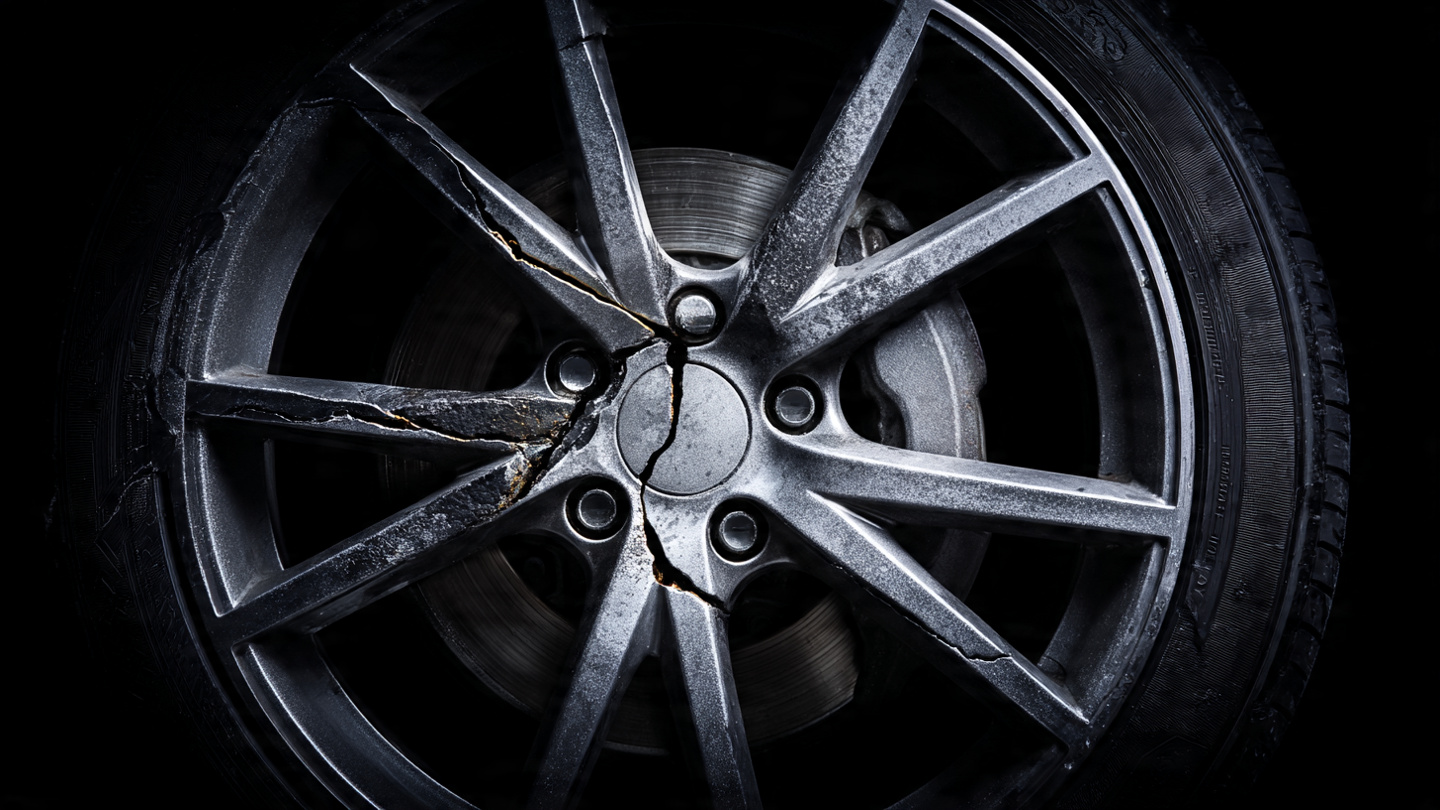
Now read this week's NHTSA filing. ODI has escalated its investigation of 2014–2022 Range Rover and Range Rover Sport models to a full engineering analysis after documenting 522 failures of the front aluminum steering knuckle assembly.[2] A crack forms at the top. Propagates. And eventually the upper control arm parts company with the vehicle entirely. At highway speed. In the middle of traffic. 331,559 vehicles sit inside that probe.
JLR issued a recall last August covering 2015–2017 models only, but since then NHTSA has received complaints from owners of 2020 and 2021 Range Rovers reporting the identical failure mode at the identical location on newer castings that were never part of the recall scope.
That recall was too small, and the feds know it, which is precisely why they escalated to engineering analysis rather than closing the file.
Two federal databases, one massive gap
FARS counts bodies after crashes, and it is the gold standard for fatality analysis, covering every fatal motor vehicle crash on a public road in America since 1975, which is exactly why we built this entire site on it. But FARS cannot see engineering defects before they cause crashes, because it only activates when someone dies. If a steering knuckle cracks and the driver manages to pull over safely, or crashes and walks away with a broken collarbone and a totaled SUV, FARS records absolutely nothing.
NHTSA's complaint and recall database covers the other half of safety. It tracks defects, owner reports, field failures, and manufacturer-initiated fixes. A vehicle can accumulate 6,000 field complaints for a cascading electrical failure[3] and never appear in FARS at all, provided nobody dies from it.
For the Range Rover Sport, the disconnect is staggering. FARS sees 95 fatal crashes over ten years. NHTSA's ODI sees 331,559 vehicles with a potential structural defect. Divide one by the other: 3,474 vehicles under investigation for every fatal crash in the database. You could multiply the Range Rover Sport's entire fatal crash history by thirty and still not reach the number of vehicles that might have cracking steering knuckles.
Why FARS makes luxury SUVs look invincible
Luxury SUVs dominate the low end of the lethality spectrum, and it is not a coincidence. Cross-referencing our dataset reveals a pattern across the full luxury SUV segment: Porsche Macan at 22.6%, Range Rover Sport at 27.4%, Porsche Cayenne at 29.5%, Lexus LX at 31.0%, Audi Q7 at 31.5%.[1] Average lethality across 26 luxury SUVs in our dataset: roughly 40%. Average lethality across the 15 highest-mortality economy sedans: 80%. Crash a luxury SUV and you are half as likely to die as in a budget sedan. FARS measures that gap accurately.
But it measures only the gap in crash outcomes. Weight, structural rigidity, advanced restraint systems, curtain airbags with head protection, and lower impairment rates among luxury-SUV drivers all contribute. What FARS cannot measure is the probability that a given vehicle will fail mechanically and put you into a crash you never should have had. And that probability, for JLR vehicles right now, is not zero. It might be significant.
JLR's second problem: the DCDC converter recall
While the steering-knuckle investigation makes the headline, JLR simultaneously recalled 170,169 additional vehicles (2019–2024 model years) for a failing DCDC converter that triggers a cascade of electrical failures: driver aids shut down, suspension faults emerge, the transmission shifts into neutral on its own, the engine dies, and exterior lighting goes dark.[3] Affected models span the Range Rover, Range Rover Sport, Defender, Discovery, Velar, Evoque, and Jaguar's F-Pace and E-Pace. JLR logged nearly 6,000 field reports in America before NHTSA told them it was, in fact, a safety issue. JLR had initially concluded it was not.
No fix exists yet, which means 170,169 luxury vehicles are sitting inside an active recall with no available remedy and no timeline for one.
Combined, over 500,000 JLR vehicles are under active recall or federal investigation in the United States. Zero of those appear in FARS as a defect signal.
What we calculated
We define a defect exposure ratio as the number of vehicles under NHTSA investigation or recall for a specific defect divided by the number of fatal crashes involving that model in FARS over the same period. For the Range Rover Sport steering-knuckle probe, that ratio is 331,559 investigation vehicles ÷ 95 FARS fatal crashes = 3,489. For the DCDC converter recall across all affected JLR models, the combined FARS fatal crash count is approximately 300 (aggregating Range Rover, Defender, Discovery, Velar, Evoque, F-Pace, E-Pace). That yields a ratio of roughly 567 recalled vehicles per fatal crash.
By comparison, a typical high-volume recall like the 2014 GM ignition switch (2.6 million vehicles, ~1,200 linked fatal crashes) produces a ratio of approximately 2,167.[4] JLR's steering-knuckle ratio of 3,489 exceeds even that infamous case. A massive population of mechanically compromised vehicles, nearly invisible in FARS data.
Limitations
FARS lethality ratios use fatal crashes only, meaning they exclude all non-fatal crashes and all non-crash incidents. A steering knuckle that fails at low speed in a parking lot is invisible to FARS and to us. Our fleet and VMT estimates carry ±15% uncertainty for low-volume models like Range Rover Sport (estimated 131,250 registered fleet), which means the per-VMT fatality rate of 0.20 per 100M VMT could range from 0.17 to 0.24. That does not change the lethality-ratio finding. Additionally, NHTSA investigation populations represent vehicles under scrutiny, not vehicles confirmed to have the defect. A fraction of the 331,559 vehicles may never develop a cracked knuckle.
Strongest counterargument
Someone will point out that 522 documented failures across 331,559 vehicles is a 0.16% incidence rate, and that most Range Rover Sport owners will never experience a knuckle failure, and in narrow percentage terms that argument deserves its full weight. But engineering defects are not random events that distribute evenly across a fleet; they are time-dependent degradation patterns that worsen as vehicles age, accumulate miles, and encounter road conditions that stress the aluminum casting. A 0.16% rate in April 2026 tells you nothing about what the rate will be in April 2028, when the youngest vehicles in the investigation scope (2022 models) hit 60,000 miles, because fatigue cracks in aluminum castings accelerate rather than plateau, and one detached control arm at 70 mph is not a statistical abstraction but a physics problem involving two tons of unsteered metal in a lane of traffic.
What you should do
If you own a 2014–2022 Range Rover or Range Rover Sport, check your VIN at nhtsa.gov/recalls today. If your vehicle falls within the 2015–2017 recall scope, schedule the repair. If it falls outside the recall but inside the investigation (2014, or 2018–2022), file a complaint with NHTSA's Vehicle Safety Hotline and watch for unusual noises from the front suspension. If you own any 2019–2024 JLR mild-hybrid model, the DCDC converter recall applies, but no remedy exists yet; monitor your dash for the "Stop Safely Electrical Fault Detected" warning.
And stop using FARS data as a shopping guide. FARS tells you what happens when a crash occurs. It tells you nothing about whether your vehicle is more likely to put you in one.