Ford Tried to Fix the Explorer's Seats Quietly. It Didn't Work.
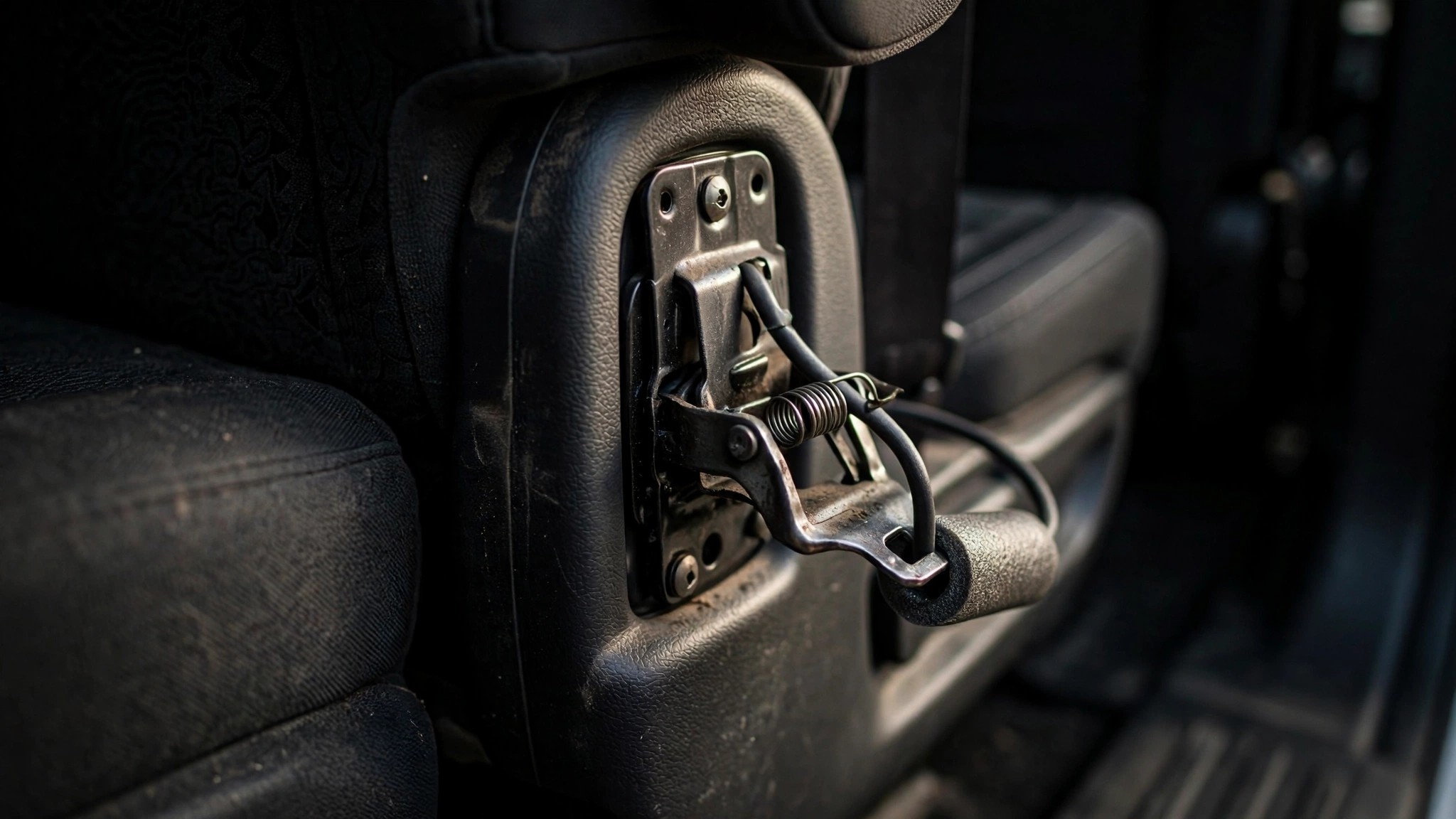
About a year ago, Ford discovered that the second-row seats in its Explorer and Lincoln Aviator could unlatch, tip forward, or slide while the vehicle was moving. Rather than issuing a recall, the company told its tier-one seat supplier to modify the installation process, filed the repair as a Field Service Action, and moved on, confident that a quiet procedural tweak at the factory would contain a safety problem affecting nearly 400,000 vehicles.
It didn't. Eight more owners reported their seats shifting while driving, in vehicles that hadn't been touched by the original fix, and Ford's Critical Concern Review Group eventually tallied 14 total reports of unintended seat movement while in drive. Six of those came from vehicles already remedied under the earlier campaign, which means even the fix itself hadn't held. Last week, NHTSA posted the full recall: 387,911 Explorers and Aviators built between October 2018 and June 2026.[1]
What makes this defect particularly insidious is where it sits in the safety chain. Every modern restraint system, from the seatbelt pretensioner to the side curtain airbag, is engineered around one assumption: the seat stays bolted to the floor. A seat that shifts forward by three inches during a 45-mph offset frontal collision puts the occupant's torso outside the airbag's designed catch zone, slackens the belt geometry, and severs the load path between the crash structure and the person it was built to protect. Remove that single anchor point and you're riding in a $45,000 vehicle with the crashworthiness of a lawn chair.
But the recall itself isn't what caught my attention. What caught my attention is the twelve months that preceded it.
Ford identified this defect and chose to address it through a Field Service Action, a manufacturer-initiated repair campaign that operates entirely below NHTSA's formal reporting threshold. FSAs never appear in the NHTSA recall database that consumers and dealers check before buying a used car, they don't trigger the mandatory owner notification letters that recalls require, and they don't generate the quarterly remedy-rate reporting that lets the agency track whether fixes are actually reaching the vehicles that need them.[2]
An FSA is not a cover-up, and Ford would argue, with some justification, that this system functioned as intended: identify a potential issue early, attempt a proactive fix through the supplier chain, monitor field results, and escalate when evidence shows the fix is insufficient. That is exactly what happened here, and that counterargument is strong enough that it deserves to be stated at full strength rather than waved away.
So what went wrong with the FSA? Time, mostly.
For twelve months, owners of affected Explorers and Aviators had absolutely no way to know their second-row seats might unlatch in a crash, because every consumer-facing system designed to inform them was showing a clean bill of health: NHTSA's database returned nothing, no recall notice arrived in anyone's mailbox, and VIN checks came back spotless. Meanwhile, Ford and its supplier were running what amounted to a private beta test of a safety remedy on 387,911 families, and for a full year, the results of that beta test hadn't been audited by anyone outside Dearborn.
FARS data puts the Explorer's baseline risk in context. Over the 2014–2023 decade, 3,797 people died in crashes involving Ford Explorers, at a fatality rate of 1.54 per 100 million VMT. That's 34% above the SUV segment average of 1.15 and ranks the Explorer fourth among SUVs with 500 or more deaths, behind only the Chevy Tracker, Trailblazer, and GMC Yukon. Perhaps more telling: 80.5% of those fatal Explorer crashes involved sober drivers, a ratio that suggests vehicle dynamics and structural characteristics are doing a larger share of the lethal work than driver behavior.[3]
Nobody can say whether any of those 3,797 deaths involved a seat that moved, and Ford reports no crashes or injuries from this specific defect. But that absence of evidence is itself symptomatic: when a structural component fails in a high-speed collision, post-crash investigation attributes the death to "impact forces" or "ejection," not to the seat latch that allowed the occupant's body to travel six inches beyond where seventeen airbag and belt engineers designed it to be.
If you drive a 2020 or newer Explorer or Aviator with easy-entry second-row seats, check your VIN at nhtsa.gov/recalls now and do not wait for September's letter. And if your vehicle already received a fix under the earlier campaign, take it back, because Ford's first remedy was a process change at the supplier level while their second is a redesigned part, and the distance between a procedural adjustment and an admission that the hardware was wrong is exactly the distance between a Field Service Action and a recall.
Sources & References
- NHTSA Safety Recall, Ford Motor Company, July 2026. 387,911 units: 2020–2026 Ford Explorer, 2020–2027 Lincoln Aviator. nhtsa.gov/recalls
- NHTSA, Motor Vehicle Safety Defects and Recalls: What Every Vehicle Owner Should Know. nhtsa.gov
- NHTSA, Fatality Analysis Reporting System (FARS), 2014–2023. Ford Explorer: 3,797 deaths, 1.54 rate per 100M VMT, 19.5% impairment rate. nhtsa.gov