Ford Just Recalled the Explorer for the Same Problem Twice. Its Death Rate Says That's the Pattern.
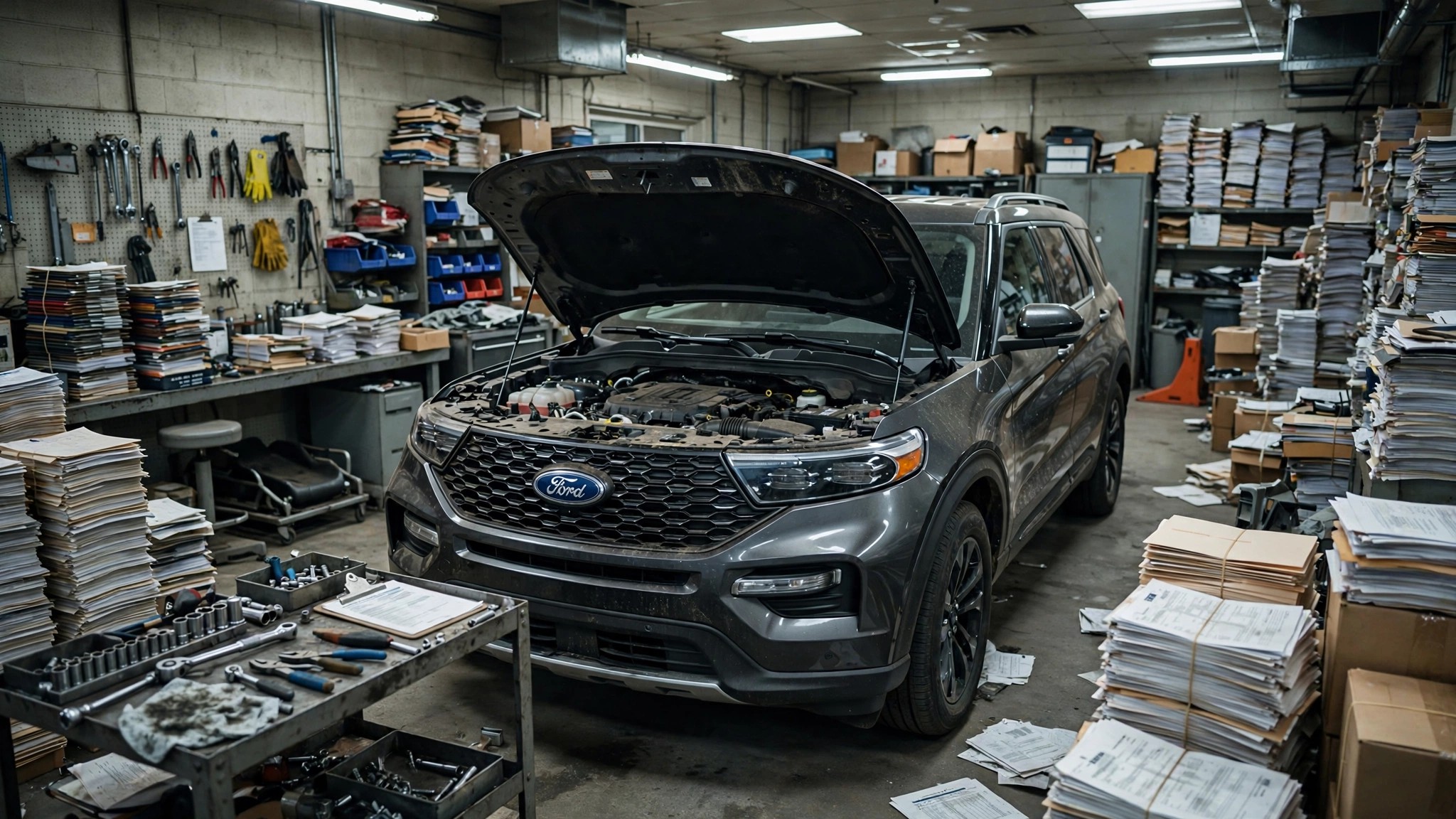
On Saturday, NHTSA published recall 26V451. Ford is recalling 387,911 Explorers and Lincoln Aviators because the second-row seat can tip forward or slide while you're driving. Its easy-entry switch bezel gets misaligned, stays pressed, and suddenly your kid's seat is in motion at highway speed.
This is a re-recall. Ford already tried to fix this under recall 25V393. Dealers inspected the bezel, replaced it if damaged. Problem solved, right? Ford itself reported 14 cases of unintended seat movement while driving. Six of those vehicles had already been through the first recall. Ford's fix was a failure.
Two days earlier, Ford recalled 288,314 more Explorers for roof rail trim covers that detach at highway speed. Also a re-recall. Ford's 2021 fix involved epoxy. Epoxy. On a roof rack baking in the sun for five years. That went about as well as you'd predict.
Two re-recalls in one week. Both for the same vehicle. Both for defects Ford already claimed to have fixed. And here is where it stops being a recall story and starts being a design story: the Explorer's FARS fatality rate is 1.54 deaths per 100 million vehicle miles traveled. That's the second-highest rate among midsize and large SUVs with significant fleet presence.[1] Only the Chevrolet Tahoe is worse.
Put that in consumer terms. The Honda Pilot competes directly with the Explorer. Same segment, same price range, same three-row family mission. The Pilot's FARS rate is 0.29 per 100M VMT. The Explorer's is 1.54. That is a 5.3x gap. The Toyota Highlander is at 0.42. The Chevrolet Traverse is at 0.20. These are not exotic alternatives. They sit on the same dealer row.
Between 2014 and 2023, 3,797 people died in or because of Ford Explorers. That's 380 per year. Ninth-highest raw body count of any vehicle in the FARS database, across all classes.[1] The Explorer was involved in 6,626 fatal crashes during that period. In 57% of them, an Explorer occupant died. In the other 43%, the Explorer killed someone else.
And here's the part that should unsettle Ford's engineering team: the Explorer's impairment rate in fatal crashes is 19.5%, slightly below the SUV class average of 19.5%.[2] Drunk or drugged drivers aren't disproportionately behind the wheel. More than 80% of these fatal crashes involve sober drivers. The vehicle itself is the variable.
Ford launched the sixth-generation Explorer in 2020 to fix this. It moved from a front-wheel-drive platform to rear-wheel-drive, got a complete structural redesign. Instead, it got a cascade of recalls: roof rails peeling off, second-row seats lurching, stop-start systems dying, and now the same fixes failing a second time.[3][4]
When you recall the same vehicle for the same defect twice because your first repair didn't work, you've crossed from defect correction into defect management. You're not fixing the Explorer. You're subscribing to its problems.
The strongest counterargument: Ford's FARS death rate of 1.54 spans all model years still on the road, including the Firestone-era Explorers that killed 503 people in model year 2002 alone. The 6th-generation redesign may well be structurally safer. Recall volume doesn't automatically equal crash risk. These are trim covers and seat bezels, not structural failures. Fair. But a manufacturer that can't glue a roof rail or anchor a seat switch on the second attempt doesn't inspire confidence in the systems you can't see.
What this means for you: Check your VIN at nhtsa.gov/recalls. If you own a 2020-2026 Explorer, verify whether either recall applies and do not use the rear center seating position until the bezel is reinspected. Shopping for a three-row SUV? The Highlander (0.42 per 100M VMT), Pilot (0.29), and Traverse (0.20) are on the same lot with a fraction of the fatality rate and none of the recall treadmill.
Sources & References
- NHTSA, Fatality Analysis Reporting System (FARS), 2014–2023. nhtsa.gov
- NHTSA FARS toxicology data, driver impairment rates by vehicle model, 2014–2023.
- NHTSA Recall 26V451: Ford Explorer/Lincoln Aviator second-row seat easy-entry switch bezel, July 19, 2026. nhtsa.gov
- K. Brown, “Ford’s Latest Explorer Recall Is For A Problem It Already Tried To Fix,” Autoblog, July 19, 2026. autoblog.com