1.3 Million EVs Are Under Suspension Investigation. The Common Thread Weighs 1,000 Pounds.
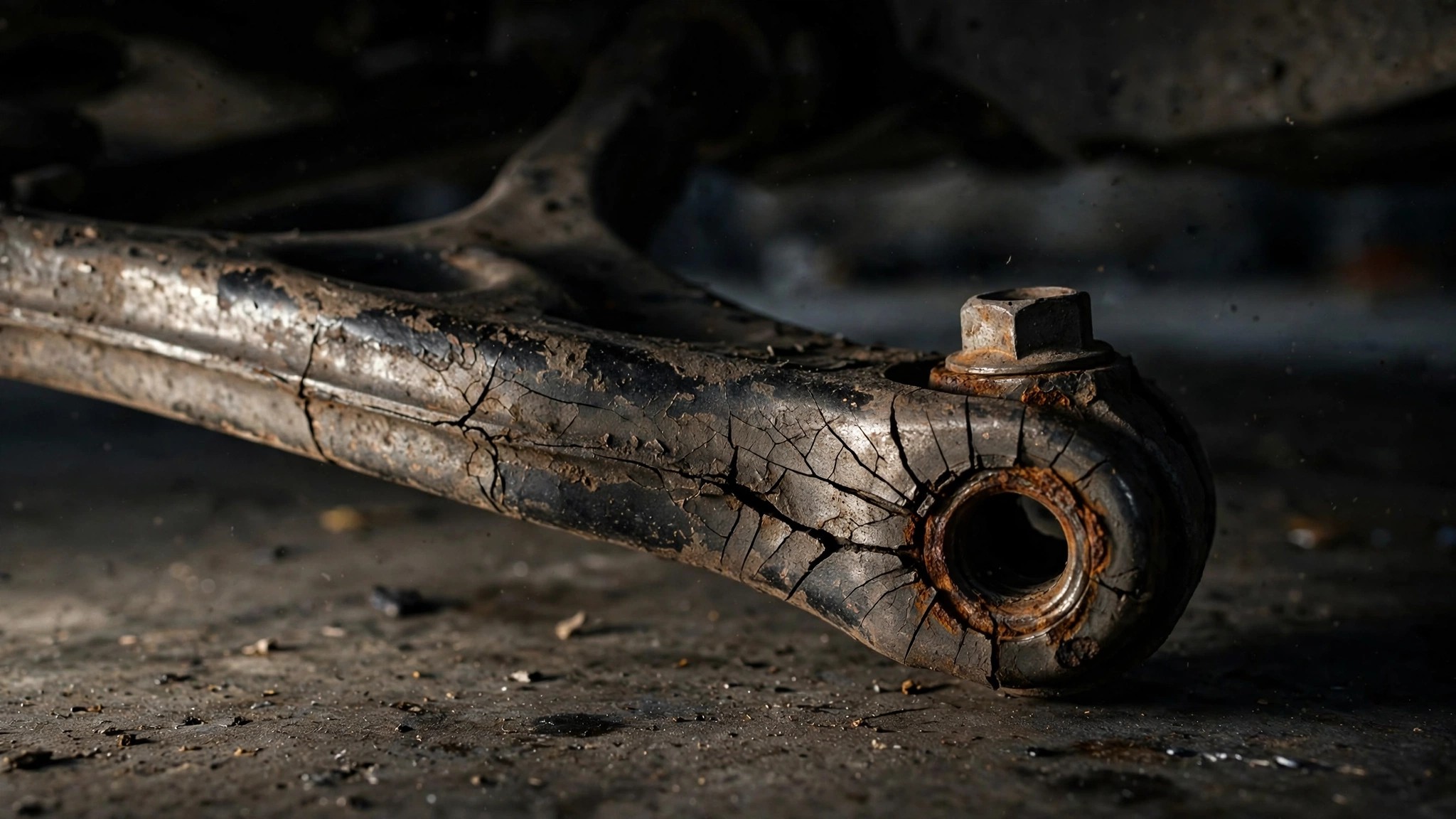
Two manufacturers that have never shared a supplier, a platform, or a single bolt pattern are answering the same federal question simultaneously: why are your suspension components detaching from moving vehicles?
On July 31, NHTSA opened a preliminary evaluation into 1.2 million Tesla Model 3 and Model Y vehicles after 156 complaints that the front lower lateral link separated from the subframe, causing complete steering loss with no advance warning.[1] Two months earlier, the agency launched a separate probe into 115,000 Rivian R1T and R1S trucks whose left rear toe link separated mid-drive, sending vehicles swerving across lanes.[2] Different components, different mounting points, identical consequence: a structural link holding a wheel to the chassis lets go, and the driver discovers the failure when the steering stops responding.
Both manufacturers had already recalled smaller batches for these same parts, blaming production issues or service errors, and NHTSA opened the current investigations specifically because the new complaints fall outside those earlier, tidier root causes.[1][2] Reuters reported in 2023 that Tesla had internally tracked chronic suspension and steering component failures for years, even as it frequently attributed the damage to driver abuse in communications with customers and regulators.[1]
One variable both platforms share is mass: a Tesla Model Y weighs 4,154 to 4,416 pounds against the 3,370-to-3,594-pound RAV4 it competes with, and a Rivian R1S hits 7,148 pounds where a Highlander stops at 4,300.[3] That gap is a lithium-ion slab between the axles, adding 800 to 2,800 pounds of dead mass cycling through every pothole and load transfer for the vehicle's entire service life, quietly exceeding the fatigue envelope these suspension components were validated against.
Correlation is not causation, and claiming otherwise from two data points would be reckless; Range Rover has 330,000 ICE SUVs under investigation for a steering knuckle that cracks the same way, proving batteries are not the only path to a detached suspension component.[4] The Tesla Model 3 and Model Y carry FARS fatality rates of 0.05 and 0.03 per 100 million VMT, ranking among the safest vehicles on American roads.[5] These investigations do not change that, but they challenge the assumption that a vehicle with a low aggregate death rate cannot harbor a specific catastrophic failure mode that scales with mileage in ways nobody has yet characterized.
What to do: If you own a 2018–2020 Model 3, 2021–2023 Model Y, or 2023–2024 R1T/R1S, listen for new clunking or popping from the suspension, though many owners reported no warning at all before failure. If something changes, stop driving and get the suspension inspected. File a complaint at nhtsa.gov/report-a-safety-problem; complaint volume drives whether NHTSA escalates to the engineering analysis that precedes a recall.
Sources & References
- NHTSA Preliminary Evaluation, Tesla Model 3/Model Y Front Lower Lateral Link, ~1.2M vehicles, July 31, 2026; Reuters, “US auto safety regulator probes 1.2 million Tesla vehicles over suspension failure risks.” reuters.com
- NHTSA Preliminary Evaluation, Rivian R1T/R1S Rear Toe Link, ~115K vehicles, May 30, 2026; TopSpeed, “NHTSA Opens Investigation Into 115K Rivian R1T And R1S Over Rear Toe Link Separation.” topspeed.com
- Edmunds vehicle specifications, 2026 model year; CarBuzz, “How Much Does a Tesla Weigh.” carbuzz.com
- NHTSA Engineering Analysis, Jaguar Land Rover Steering Knuckle, 331,559 vehicles (2014–2022 Range Rover & Range Rover Sport); Reuters, “US agency upgrades probe into JLR vehicles’ steering troubles,” April 28, 2026. reuters.com
- NHTSA, Fatality Analysis Reporting System (FARS), 2014–2023. nhtsa.gov