The Elantra Has 2,407 Bodies in FARS and a Below-Average Impairment Rate. Now Its Hybrid Wants to Catch Fire.
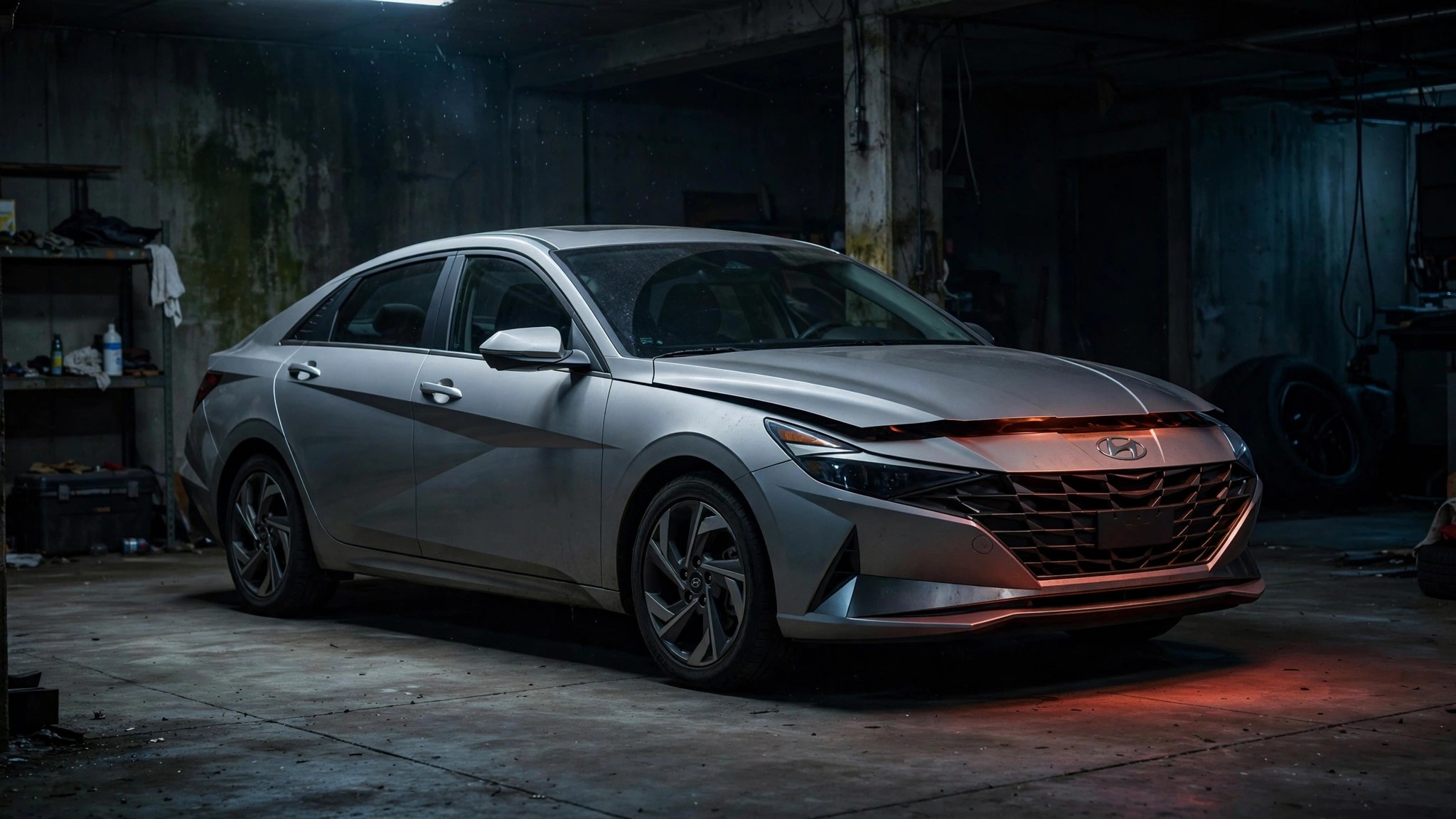
A metal-oxide semiconductor field effect transistor. That is the component Hyundai identified as the root cause when it recalled 54,337 Elantra Hybrid sedans in May for a fire risk that its own software created.[1] The MOSFET inside the Hybrid Power Control Unit overheats under high electrical loads because the software managing it does not request enough cooling. In four documented incidents, one ended in an engine bay fire.
The recall would be routine except for what FARS already knows about the Elantra. Across 2014 to 2023, 2,407 people died in crashes involving a Hyundai Elantra, placing it 19th on the all-models body count list and giving it a fatality rate of 1.50 per 100 million vehicle miles traveled.[2] That rate sits above the fleet median. Impairment data makes the picture worse, not better: only 18.6% of Elantra drivers in fatal crashes tested positive for alcohol or drugs, compared to the sedan-class average of 20.4%.[3] Fewer drunk drivers, more dead people per mile. That math points at the car, not the driver. A caveat: FARS counts all deaths in crashes involving an Elantra regardless of fault assignment, and the rate uses estimated VMT that carries roughly ±15% uncertainty for high-volume models. Even with that margin, the Elantra's rate remains above median while its impairment rate remains below average.
Model year 2013 is the scar. That single vintage produced 338 FARS deaths, more than two and a half times the next-highest Elantra model year and nearly matching the entire lifetime body count of some vehicles.[2] A generation of compact sedan buyers absorbed Hyundai's value pitch and drove into a platform with a fatality rate their monthly payment could not have warned them about.
And now Hyundai is asking owners of the electrified variant to trust a software update that fixes a cooling logic error the company took seven months to diagnose. Hyundai first received a "Speak Up For Safety" internal report about the HPCU in December 2024. Multiple teardowns followed in July 2025. The recall dropped in May 2026.[4] Seventeen months from discovery to remedy notification while the transistor kept overheating.
The Elantra Hybrid fire is Hyundai's fifth major U.S. recall of 2026. Before it came the Palisade power seats that killed a two-year-old in Ohio (61,093 vehicles), the Tucson phantom braking from an overeager forward collision camera (421,000 vehicles), and the Palisade seat belt buckle wiring (46,787 vehicles).[5] After it came the Tucson instrument panel blackout (96,300 vehicles) and the Kona seat belt buckle from worn-out supplier tooling (47,749 vehicles).[6] Count the affected vehicles across seven campaigns and you cross 727,000. Count the segments and you cross every one Hyundai sells in America.
If you own a 2024 through 2026 Elantra Hybrid, check your VIN at nhtsa.gov today. If the car has failed to start or dropped into limp mode with a malfunction indicator light, do not dismiss it. That is the HPCU telling you it is overheating. Get the software update before it decides to tell you with fire instead.
Sources & References
- NHTSA Recall 26V308, Hyundai Elantra Hybrid HPCU fire risk, 54,337 vehicles. nhtsa.gov
- NHTSA, Fatality Analysis Reporting System (FARS), 2014–2023. nhtsa.gov
- FARS toxicology data cross-tabulated by vehicle make/model. Sedan class average computed across all sedan-classified models in the FARS dataset.
- CarBuzz, “Hyundai Has A Hot Hybrid Problem On Nearly 55,000 Cars,” May 22, 2026. carbuzz.com
- NHTSA recalls 26V176 (Palisade power seats), 26V303 (Tucson FCA phantom braking), 26V197 (Palisade seat belt wiring). nhtsa.gov
- NHTSA recalls 26V400 (Tucson instrument panel), 26V452 (Kona seat belt buckle). nhtsa.gov