Ford's Award-Winning 1.0L Engine Is Eating Itself Alive
The Ford 1.0-liter EcoBoost won the International Engine of the Year award six consecutive times. On Monday, NHTSA declared it an "unreasonable risk to motor vehicle safety" after 355 complaints of engines devouring themselves from the inside out.
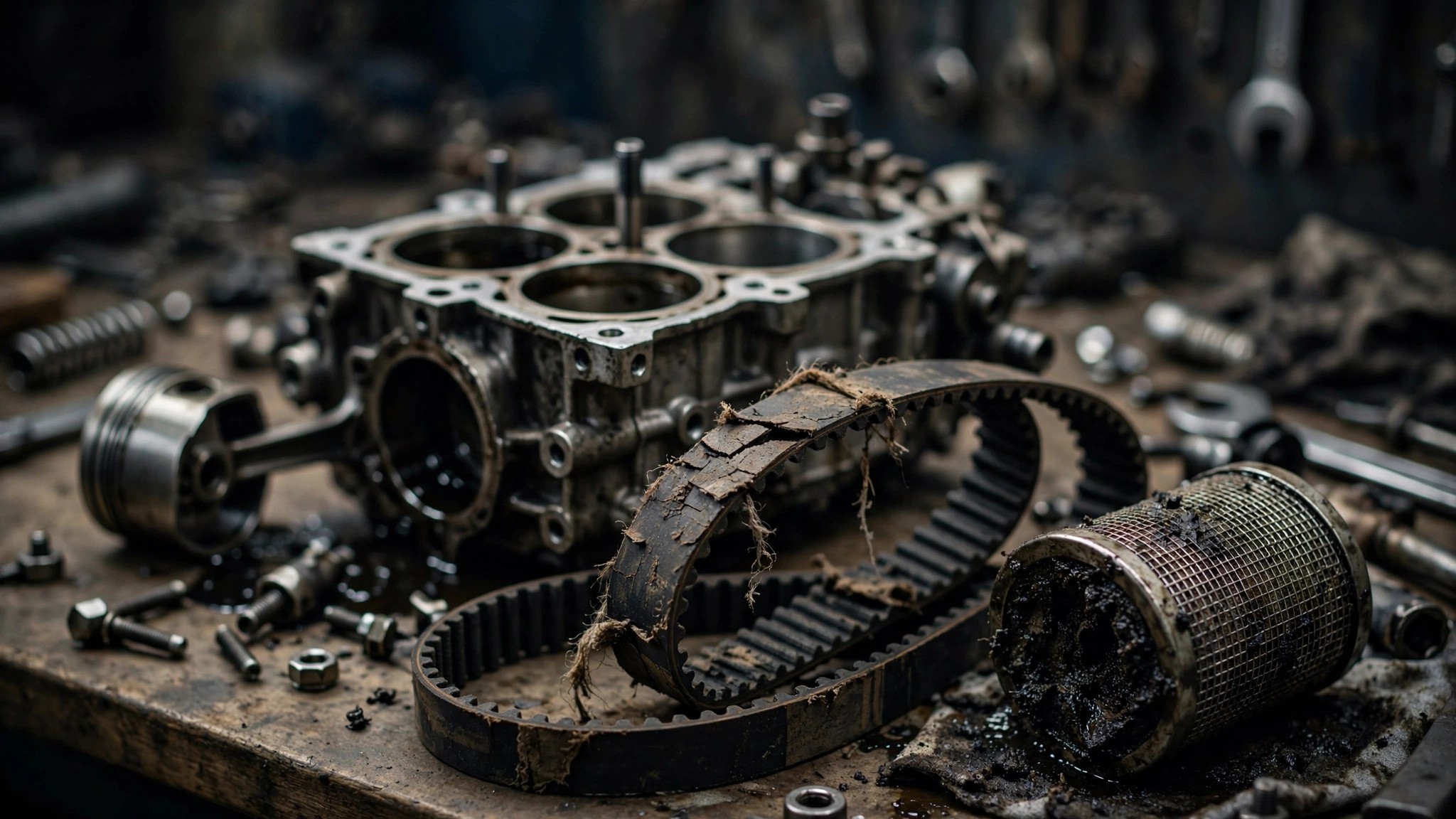
The failure sequence is mechanical poetry of the worst kind. Inside Ford's celebrated three-cylinder engine, the timing belt degrades over time, shedding material into the oil system. That debris migrates to the mesh oil pump pickup screen and clogs it. Oil pressure drops. Then, without what NHTSA calls "sufficient warning," the engine seizes. On a highway, at speed, in traffic.
NHTSA upgraded its investigation into approximately 135,000 Ford Fiesta, Focus, and EcoSport vehicles equipped with 1.0L EcoBoost engines from model years 2014 through 2021. The engineering analysis, which is the required step before the agency can compel a recall, found that 98% of failures occurred before the manufacturer's own 150,000-mile timing belt replacement interval. Owners who followed Ford's maintenance schedule to the letter still ended up with seized engines. One driver on a highway in Wilmington, Delaware, reported the oil pressure light appeared and within an eighth of a mile the car "lost all power and the engine began to sound like a tank."[1]
Ford discontinued all three models. That is not a coincidence.
What makes this investigation particularly grim is the crashworthiness of the vehicles it covers. In FARS fatal crash data from 2014 to 2023, the Ford Focus sits at a conditional lethality ratio of 0.684, ranking it among the 25 deadliest vehicles per crash in America.[2] That figure means when a Focus is involved in a fatal crash, the Focus occupant dies 68.4% of the time. Fiesta is not far behind. These are small, light cars with crash structures that do poorly in multi-vehicle collisions with larger vehicles. A sudden engine seizure on an expressway puts one of these cars directly into the path of following traffic in the absolute worst configuration for survival.
The Focus alone accounts for 3,046 deaths in FARS across 4,455 fatal crashes over the study period, with a fatality rate of 2.52 per 100 million vehicle miles traveled. Fiesta drivers, notably, show a below-average impairment rate of 16.6% in fatal crashes compared to the overall sedan average of 20.4%. These are predominantly sober drivers being killed in structurally vulnerable cars. Adding a randomly-timed engine seizure to that equation is not a marginal risk increase.
Ford's EcoBoost 1.0L debuted to genuine acclaim. Ford's achievement in wringing competitive power from a one-liter three-cylinder earned praise across the automotive press and consistent recognition from engine award panels. What nobody measured at the time was the long-term durability of the timing belt material under sustained thermal cycling in a turbocharged application. Fifteen years later, the data is in. Belt material sheds, debris accumulates, the screen clogs, and the engine dies. The engineering is elegant in its symmetry: Ford built a system where the very component designed to time the engine's breathing eventually chokes its blood supply.
If you own a 2014-2021 Ford Fiesta, Focus, or EcoSport with a 1.0L EcoBoost: Check for an oil pressure warning light. Do not ignore it. If it appears while driving, pull over immediately. Monitor for any loss of power, unusual engine noise, or vibration. Ford's 150,000-mile timing belt replacement interval is apparently fictional. NHTSA has not yet ordered a recall, but the engineering analysis upgrade is the last step before one becomes likely. Check your VIN at nhtsa.gov/recalls.
Sources & References
- Reuters, “US says some older Ford cars, SUVs pose unreasonable safety risks,” August 3, 2026. reuters.com
- NHTSA, Fatality Analysis Reporting System (FARS), 2014–2023. nhtsa.gov
- International Engine + Powertrain of the Year Awards, 1.0L EcoBoost — six consecutive wins (2012–2017). ukipme.com
- NHTSA Recalls & Defects database. nhtsa.gov/recalls