The Ford E-350 Killed 776 People. Most Were Passengers.
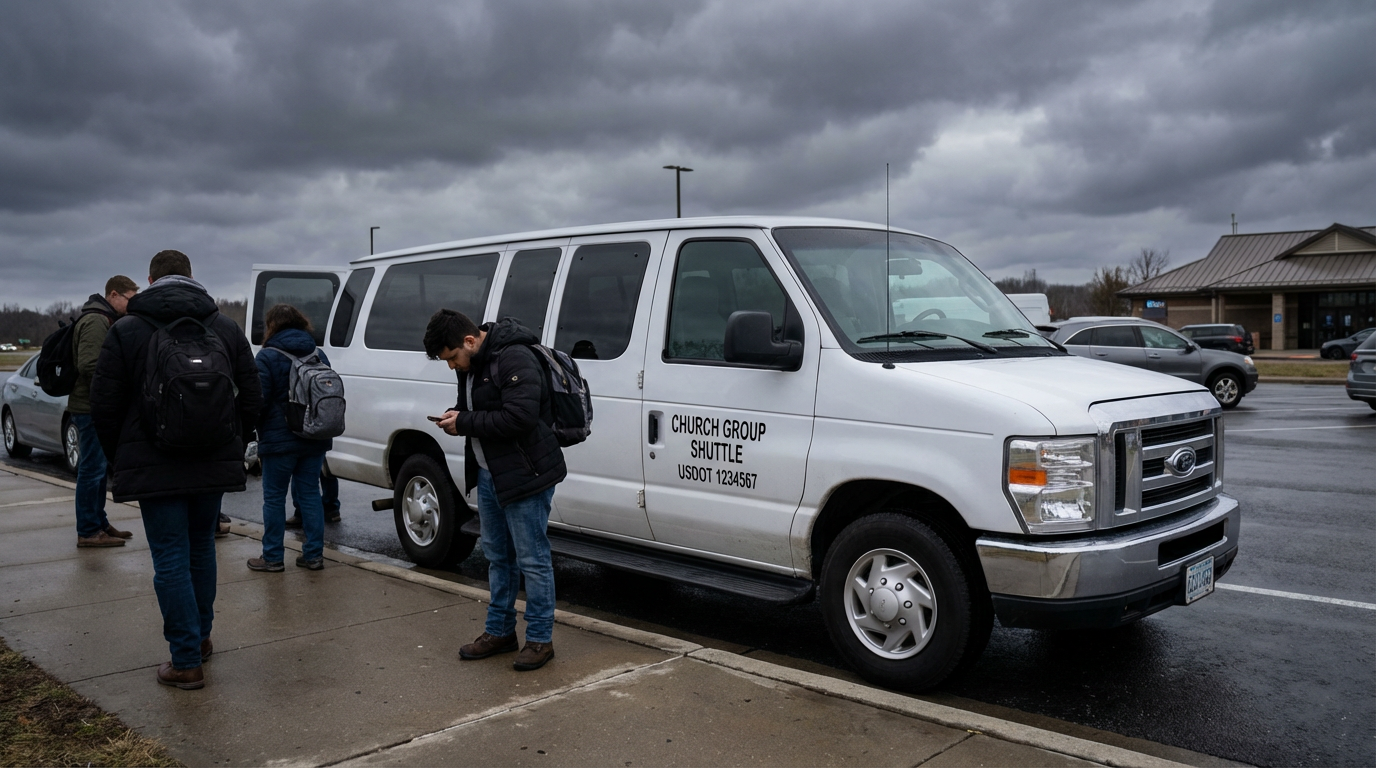
The numbers don’t lie, but they do occasionally drive a church group to a funeral. 776 people died in Ford E-350 vans between 2014 and 2023 — not in muscle cars, not in sports coupes, but in the boxy white vans that shuttle your grandmother to Wednesday Bible study and ferry hotel guests to the airport terminal.
From a registered fleet of just 262,500 vehicles, the E-350 generated 776 fatalities at a rate of 2.51 deaths per 100 million vehicle miles traveled. To put that in perspective, the Ford Transit — the E-350’s own replacement — kills at a rate of 0.14. That’s not a modest improvement. That’s an 18-fold reduction in the death rate. Ford knew how to build a safer van. They just kept selling the old one for two decades.
The E-350 is the heavy-duty version of Ford’s E-Series, a body-on-frame van that first rolled off the line in 1961 and stayed fundamentally unchanged through its final production year in 2014. Churches, hotels, rental car agencies, airport shuttles, nursing homes, summer camps — any organization that needed to move 12–15 people bought an E-350. Some were converted into ambulances. The cruel irony of a vehicle designed to save lives becoming one that ends them writes itself.
The Commercial Van Death Ladder
Here’s every commercial van in the FARS database, sorted by how efficiently it kills:
| Vehicle | Deaths | Fleet | Rate | Impairment |
|---|---|---|---|---|
| Ford E-350 | 776 | 262,500 | 2.51 | 15.7% |
| Chevy Express | 475 | 437,500 | 0.92 | 19.0% |
| GMC Savana | 166 | 262,500 | 0.54 | 20.4% |
| Ford E-150 | 73 | 175,000 | 0.35 | 22.1% |
| Ford E-250 | 79 | 218,750 | 0.31 | 19.0% |
| Nissan NV200 | 28 | 87,500 | 0.27 | 19.3% |
| Ford Transit Connect | 61 | 218,750 | 0.24 | 16.0% |
| Ford Transit | 178 | 1,050,000 | 0.14 | 13.6% |
| Nissan NV | 13 | 131,250 | 0.08 | 16.3% |
The E-350 isn’t just the most dangerous commercial van. It’s 2.7× deadlier than the Chevy Express, 7× deadlier than Ford’s own E-250, and 18× deadlier than its replacement Transit. Every other van on this list is in a different universe of risk.
The Sober Killer
Here’s where the E-350 story gets genuinely unsettling. Of 1,152 E-350 drivers involved in fatal crashes, only 15.7% tested positive for any impairment — 11.6% alcohol, 7.6% drugs. That’s the lowest impairment rate of any van in the database, and 4 points below the 20% national average for all vehicles.
These weren’t drunk drivers. These were professional drivers — shuttle operators, church volunteers, hospital transport workers — doing their jobs stone sober. The E-350’s body count isn’t a behavior problem. It’s an engineering one.
Model Year 2006: The Killing Peak
Model year 2003 E-350s account for 60 deaths. Model year 2006 peaks at 61 deaths. Model year 2012 still contributes 45. The E-Series was so unchanging that there’s no obvious model-year inflection where Ford fixed anything — because Ford didn’t fix anything. They just built the same van, year after year, while their competitors moved to unibody construction and modern crash engineering.
Between model years 1999 and 2014, the E-350 killed at least 25 people from every single model year vintage. No model year ever “got safe.” The body-on-frame design, the high center of gravity, the passenger compartment that existed more or less unchanged since the Clinton administration — it all just kept generating the same death rate, decade after decade.
The Replacement That Proved the Point
Ford introduced the Transit in 2015 as the E-Series replacement for most configurations. The Transit is a unibody design with modern crash structure, stability control, and crash-tested passenger cells. At 0.14 deaths per 100 million VMT, it’s not just safer than the E-350 — it’s one of the safest vehicles of any type in the entire FARS database. And its impairment rate (13.6%) is even lower, confirming that commercial van drivers as a population are among the soberest on the road.
The Transit proves that the E-350’s death rate was never inevitable. Ford had the engineering capability to build a van that doesn’t kill people. They just didn’t do it until 2015 — 54 years after the E-Series launched.
Somewhere right now, a church group is climbing into a 2008 E-350 for a Sunday road trip, trusting the institution that organized it, trusting the driver who volunteered, trusting a vehicle that kills at 18 times the rate of its replacement. Nobody told them the numbers. The numbers don’t lie. But nobody’s required to read them out loud.