86% of Distracted Driving Deaths Have Nothing to Do With a Phone
We have spent the better part of two decades building an elaborate regulatory and cultural apparatus around one specific object in the driver’s hand. Thirty-plus states passed hands-free laws. Billions went into “Don’t Text and Drive” campaigns. Apple and Google shipped driving modes that silence notifications. And NHTSA’s own 2024 data, released this April, shows the result: cellphones were cited in just 14% of distraction-affected fatal crashes.[1]
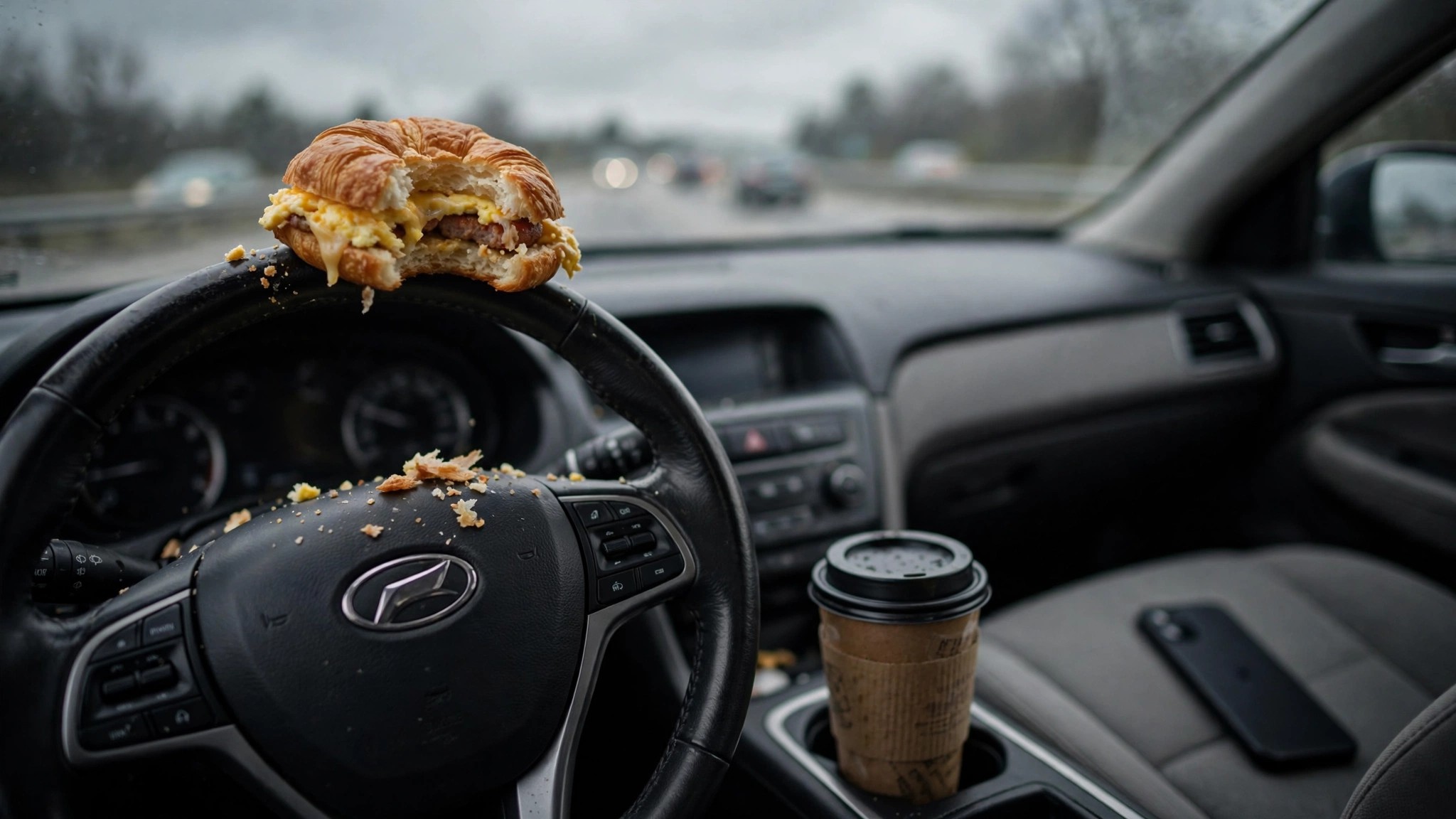
That leaves 86% of the body count. Roughly 2,759 of the 3,208 people killed in distraction-affected crashes last year died from causes no billboard campaign has ever addressed. Daydreaming. Eating a breakfast burrito at 72 mph. Turning around to yell at a kid in the backseat. Rubbernecking at a fender bender across the median. The entire taxonomy of human inattention that predates the smartphone by about a century.
The math is plain enough. NHTSA counted 3,208 distraction-affected fatalities in 2024, a 2% decline from 3,283 the year before. Of those, 437 involved a driver engaged in cellphone activity.[1] That is 13.6%. Round generously to 14%. Now subtract. The remainder is enormous, and it has been sitting in the data for years while the awareness apparatus focused on the 14% you can photograph at an intersection.
NHTSA’s FARS database breaks distraction into categories. The single largest one, historically, is “generally distracted” or “lost in thought.” It is a polite way of saying the driver was daydreaming. No law written in any statehouse can legislate against a wandering mind. It does not involve a device. It does not involve a substance. It involves being human in a 4,000-pound machine at highway speed, thinking about the mortgage or the argument from last night or absolutely nothing at all.
The phone-use trend data makes the gap more uncomfortable. NHTSA’s National Occupant Protection Use Survey found that hand-held phone use among drivers dropped from 3.8% in 2015 to 1.9% in 2024.[2] The laws and the campaigns worked. Hand-held phone use was cut in half over a decade. Yet total distracted driving deaths have declined only 9% in that same period. If phones were the primary driver of the problem, halving phone use should have produced a proportional collapse in deaths. It did not.
One countertrend complicates the picture: “manipulating hand-held electronic devices,” which includes swiping through apps, checking maps, and scrolling social media, increased 104% over the same period, from 2.2% to 4.5%.[2] Drivers put the phone down for calls but picked it up for everything else. The device evolved faster than the regulation.
None of this means phone bans were wrong. They were necessary. A September 2025 report from the Governors Highway Safety Association and Cambridge Mobile Telematics found that drivers with high cellphone distraction are 240% more likely to crash.[3] Phones are genuinely dangerous. But they are 14% of a 3,208-person annual death toll, and the other 86% has no lobby, no ad campaign, and no legislative strategy.
There is one technology that does not discriminate by distraction type. Driver attention monitoring systems, the infrared cameras now embedded in vehicles from Subaru, BMW, GM, Mercedes, and a growing list of others, track where the driver is looking regardless of why. They catch the phone. They catch the burrito. They catch the daydream. The Euro NCAP safety rating protocol already requires them for top marks. In the U.S., they remain optional, unregulated, and unadvertised.
If you are shopping for a car today, look for driver monitoring as a feature. If you are a parent coaching a new driver, “don’t text and drive” covers less than 15% of the distraction risk. The other 85% is everything else competing for a human brain behind the wheel. There is no app for that.
Sources & References
- NHTSA, Distracted Driving Crash Facts 2024, released April 2026; cited by FCC, “The Dangers of Distracted Driving.” fcc.gov
- NSC, Injury Facts: Distracted Driving, 2024 analysis of NHTSA FARS and NOPUS data. injuryfacts.nsc.org
- GHSA & Cambridge Mobile Telematics, Distracted Driving Report, September 2025. Referenced by FCC consumer guide.
What This Analysis Doesn’t Prove
FARS distraction coding relies on police judgment at the crash scene. Officers are trained to check for phone evidence but may undercode cognitive distraction, which is self-reported by surviving drivers and inherently harder to verify. Virginia Tech naturalistic driving studies suggest phone involvement may be 2–3× higher than police reports indicate. If you triple the phone contribution to ~42%, that still leaves 58% of distracted driving deaths from non-phone causes, and the regulatory gap remains enormous. The 14% figure is NHTSA’s own published number; the true figure is debated, but nobody argues it accounts for the majority.