A 50-Cent Fuel Pump Part Has Been Stalling Toyotas for Six Years. The Recall Still Isn’t Done.
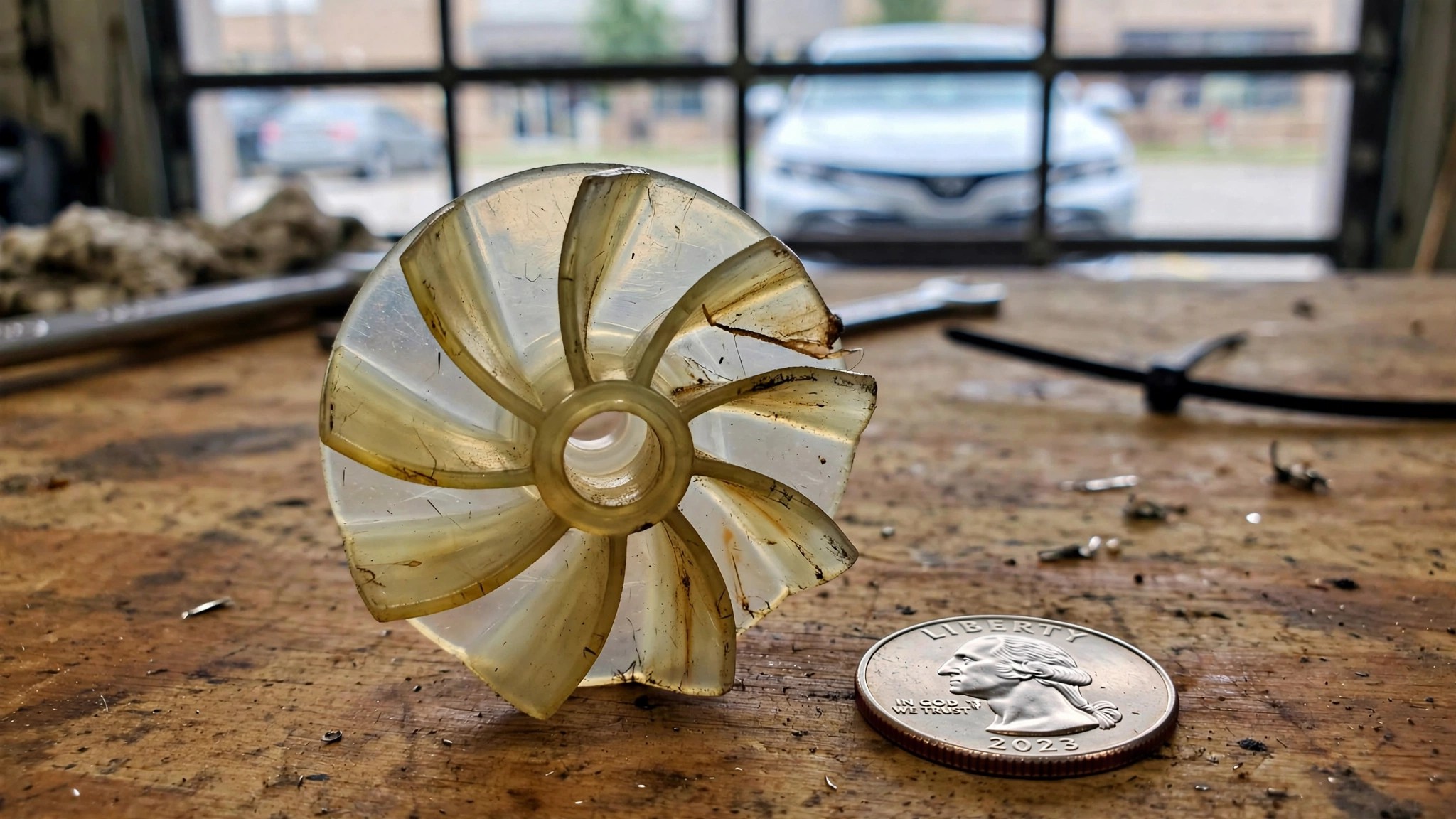
Denso’s low-pressure fuel pump uses a small plastic impeller to spin gasoline from the tank into the fuel lines, a component that costs roughly fifty cents to manufacture. In 2020, Denso told NHTSA the impeller’s resin was too porous. Fuel soaks into the plastic, the disc warps, and the engine quits without warning.[1] Toyota recalled 3.34 million vehicles that January.
Six years later, the recall is still growing. Toyota expanded the affected model list in January 2025, sweeping in the 4Runner, Land Cruiser, Tacoma, Highlander, and additional Lexus nameplates through the 2020 model year. Then again in April 2026, adding Lexus RC, GS, and IS variants built as recently as 2022.[2] The global total now exceeds 5.8 million vehicles, and Denso supplies the identical pump to Honda, Acura, Subaru, and Mazda, each of which has issued its own parallel recalls.[2]
We mapped every Toyota nameplate named in the Denso recall against NHTSA’s Fatality Analysis Reporting System. Twelve models appear in both datasets: the Camry (6,328 FARS deaths), Corolla (4,945), Tacoma (2,274), 4Runner (1,418), Tundra (1,223), Highlander (1,106), RAV4 (914), Avalon (469), Sienna (430), Land Cruiser (343), Sequoia (136), and FJ Cruiser (95). Combined, 19,681 deaths, or 89.4% of every Toyota fatality in FARS, occurred in models carrying the defective Denso pump across a registered fleet of roughly 16.5 million vehicles.[3]
An important caveat, stated at full volume: not one of those 19,681 deaths has been linked to a fuel pump stall. FARS records crash outcomes, not root mechanical causes, and an engine that dies on a freeway on-ramp gets coded the same as any other stopped-vehicle collision. The 89.4% figure measures the recall’s exposure footprint, not its body count. It tells you how much of Toyota’s fatal-crash surface area a single supplier’s quality failure reached.
The counterargument writes itself. Those twelve models compose 86.6% of Toyota’s total registered fleet, so of course they compose a proportional share of deaths. The fuel pump recall didn’t target Toyota’s most dangerous vehicles. It targeted the popular ones, which crash most often because there are simply more of them on the road. That proportionality is mathematically real and honest observers should acknowledge it.
But proportionality is also the problem. When a single Tier-1 supplier’s manufacturing defect (resin density in a plastic disc) penetrates 86.6% of a major automaker’s fleet, the recall system’s tolerance for multi-year expansion timelines becomes a structural vulnerability in itself. The Takata airbag recall touched 100 million vehicles and killed 27 Americans over two decades.[4] GM’s ignition switch defect killed 124 people and cost $4.1 billion.[5] Toyota and Denso settled their class action for $212–288 million, denied all liability, and extended the pump warranty to fifteen years.[2] Nobody has confirmed a death from a Denso pump stall. But a stalled engine at highway speed is a 3,500-pound obstacle dropped into 70-mph traffic. That the fatality column still reads zero may owe more to luck and driver reaction time than to the benignity of the defect.
What you should do: If you own any Toyota or Lexus built between 2013 and 2022, enter your VIN at nhtsa.gov/recalls. The pump replacement is free under the settlement. Do it before Toyota files expansion number four.
Sources & References
- Denso Corporation, Integrated Report 2024. Statement by Chief Quality Officer Yasuhiko Yamazaki identifying insufficient resin density in fuel pump impeller as root cause.
- Kelly, J., “How A 50-Cent Denso Part Triggered Toyota’s 3.3 Million-Vehicle Recall Nightmare,” CarBuzz, Jul. 4, 2026. carbuzz.com
- NHTSA, Fatality Analysis Reporting System (FARS), 2014–2023. Cross-tabulation by the author of recalled Toyota models against FARS fatality counts and estimated fleet registration. nhtsa.gov
- NHTSA, Takata Recall Spotlight. nhtsa.gov
- Wikipedia, General Motors ignition switch recalls. wikipedia.org