Congress Spent $92 Million Building a Drunk Driving Solution. NHTSA Says It Doesn't Work Yet.
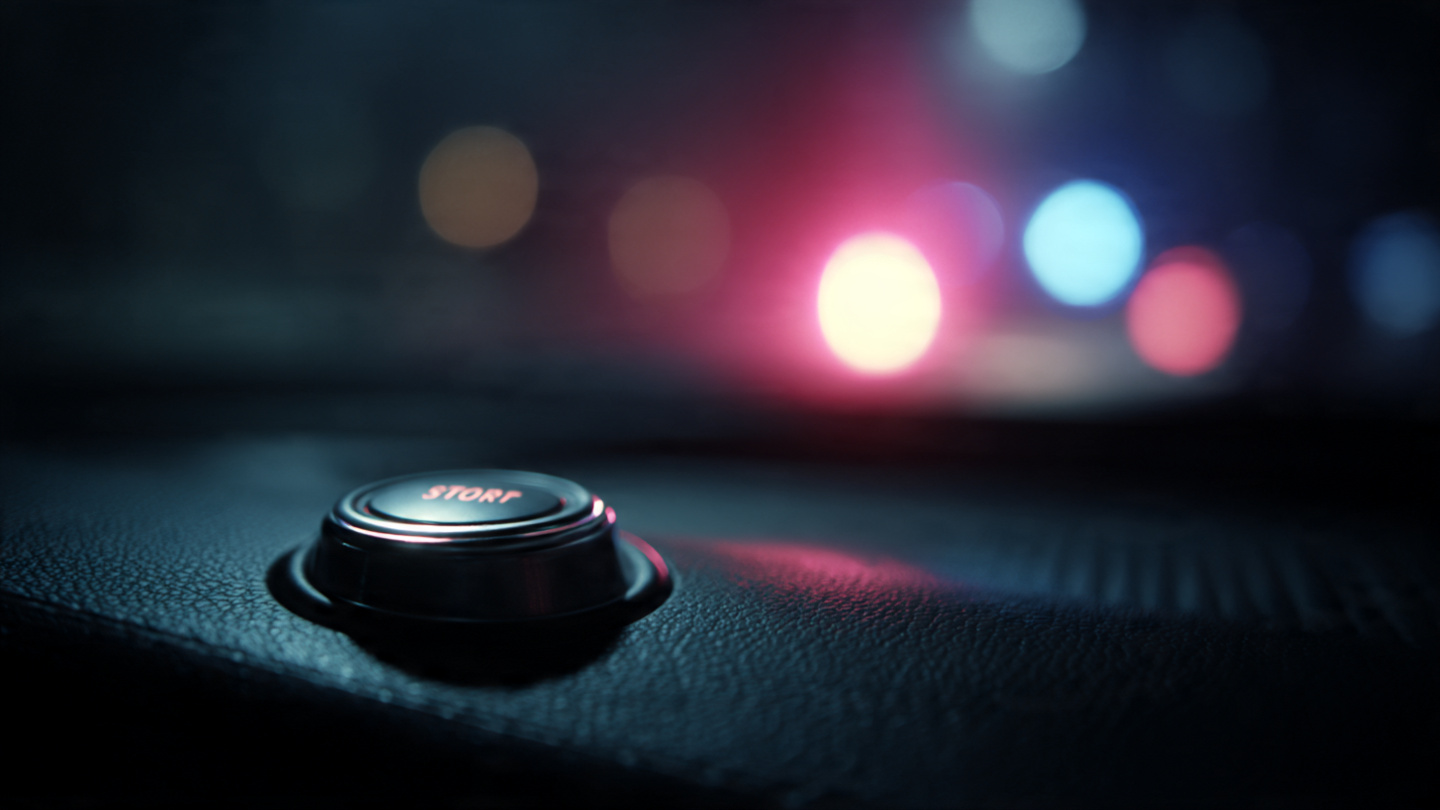
In 2008, the National Highway Traffic Safety Administration and a nonprofit called the Automotive Coalition for Traffic Safety began work on a technology they believed could eliminate drunk driving deaths entirely. Passive alcohol detection: sensors embedded in the steering wheel or steering column that would measure a driver's blood alcohol concentration without the driver doing anything at all. No blowing into a tube, no pressing a button. Sit down, start the car, and the vehicle silently decides whether you are sober enough to drive. They called it DADSS, the Driver Alcohol Detection System for Safety, and Congress liked the idea so much that in November 2021, lawmakers made it law.[1]
Section 24220 of the Infrastructure Investment and Jobs Act directed NHTSA to write a federal motor vehicle safety standard requiring all new passenger vehicles to include "advanced drunk and impaired driving prevention technology." The statutory deadline was three years: November 15, 2024.[1] That deadline passed without a rule, without a proposed rule, without even a notice of proposed rulemaking beyond the preliminary request for comments NHTSA published in January 2024.[2] In February 2026, NHTSA told Congress what the $91.7 million had produced: "There are no in-vehicle technologies in production that can measure BAC or BrAC above 0.08 g/dL passively."[3]
Eighteen years. Zero production vehicles.
The money is traceable to the penny on USAspending.gov, which shows two cooperative agreements flowing from NHTSA to ACTS, the automaker-funded nonprofit that administers the DADSS program out of Leesburg, Virginia. Award DTNH2213H00433 obligated $46,687,500 between March 2014 and September 2023 for "advanced alcohol detection technology." Its successor, award 693JJ92350015, added another $45,000,000 in February 2023 and runs through February 2028.[4] Together: $91,687,500 across 22 transactions to a single 501(c)(3) whose members are the fifteen automakers who will be required to install the technology it has not yet managed to build.
Read that structural arrangement again: federal taxpayers fund NHTSA, NHTSA funds ACTS, and ACTS is governed and funded by the same automakers who are the regulated parties under the rule NHTSA is supposed to write. The organization developing the technology that will be mandated for the industry is funded by the industry. In regulatory theory, this arrangement has a name, and it is not "innovation accelerator."
The technical problem is real, and it deserves to be stated at full strength. Passive BAC detection requires measuring blood alcohol through the skin or ambient breath without asking the driver to do anything, and it must distinguish the driver from a drunk passenger in the next seat. NHTSA's own ANPRM acknowledged that the DADSS breath sensor still requires a "directed puff of breath toward the sensor," which does not meet the statutory definition of passive under the Infrastructure Act.[2] Touch-based infrared sensors reading BAC through the skin in the start button or steering wheel face a harder problem: calibrating across skin tones, calluses, hand creams, temperature variations, and the simple fact that alcohol distributes unevenly in tissue. Sober or drunk is a binary legal distinction imposed on a continuous biological variable, and the margin at 0.08 is razor-thin.
But the hardest number is not the BAC threshold. It is the false positive rate at scale. Federal Highway Administration data puts roughly 227 million licensed drivers on American roads. The National Household Travel Survey clocks the average driver at 3.2 trips per day, yielding approximately 726 million vehicle start events daily across the U.S. fleet.[5] At 99.9% accuracy, a system heralded as nearly perfect would lock out 726,000 sober drivers every single day. At 99.99% accuracy, 72,600. At 99.999%, still 7,260 sober people immobilized before their morning commute. For comparison, alcohol-impaired crashes kill roughly 33 people per day.[6] A passive detection system would need to achieve six-nines reliability, 99.9999%, before the number of daily false lockouts drops below the daily death toll it exists to prevent. No passive biometric sensor in any field, medical devices included, operates at that accuracy at population scale.
Meanwhile, approximately 11,900 people died in alcohol-impaired crashes in the United States in 2024.[6] The CDC puts the 2022 number at 13,524, or 32% of all traffic fatalities, at an annual societal cost of $143 billion.[7] Across the 18 years DADSS has been in development, more than 180,000 Americans have died in alcohol-impaired crashes. The program has saved none of them. Not because the people running it are incompetent, but because they were asked to invent something that may not be inventable at the accuracy threshold the law requires, and were paid to keep trying by the companies that benefit from the answer being "not yet."
Congress has had two chances to pull the funding. Representative Thomas Massie of Kentucky offered amendments in both November 2023 and January 2026 to defund Section 24220 implementation. Both failed.[4] The current House majority has twice voted to keep writing checks for technology its own regulator says does not exist. Section 24220 includes a three-year extension clause, pushing the backstop to November 2027, but NHTSA's language to Congress was not the language of an agency approaching a deliverable. It was the language of an agency managing expectations indefinitely: "NHTSA will continue to provide annual reports to Congress and publish status updates."[3]
The cruelest irony lives in a comparison with the technology DADSS was supposed to replace. A $100 ignition interlock, the crude breathalyzer-wired-to-your-starter that convicted DUI offenders are ordered to install, reduces repeat drunk driving by 67%.[8] It requires a directed breath. It is ugly, stigmatizing, and occasionally embarrassing at the drive-through. It also works, today, and 80% of the people ordered to install one never do. The $91.7 million spent on DADSS could have subsidized interlock installation and monitoring for every convicted DUI offender in America for two full years. Instead, it funded a research program that in 18 years has produced prototypes that do not meet the definition of the statute that funds them.
If you have been convicted of DUI and your state requires an interlock, install it. If your state does not require interlocks for first offenders, check NHTSA's impaired driving page for your state's current laws. If you want to know when passive alcohol detection will actually arrive in new vehicles, the honest answer from the agency spending $92 million to build it is: they do not know.
Sources & References
- Public Law 117-58, Infrastructure Investment and Jobs Act, Section 24220, November 15, 2021. Mandates FMVSS for advanced drunk and impaired driving prevention technology. congress.gov
- NHTSA, Advanced Impaired Driving Prevention Technology, Advance Notice of Proposed Rulemaking, 89 FR 830, January 5, 2024. Docket RIN 2127-AM50. Acknowledged breath sensor requires directed puff, not passive. federalregister.gov
- NHTSA, Report to Congress on Impaired Driving Prevention Technology, February 2026. Stated no in-vehicle production technology can passively measure BAC above 0.08 g/dL. nhtsa.gov
- KMS Newsroom, "The money behind the kill switch: NHTSA has sent $91.7 million to one auto-industry nonprofit," April 15, 2026. USAspending.gov award data: DTNH2213H00433 ($46.7M) and 693JJ92350015 ($45M). Massie amendment vote details. usaspending.gov
- FHWA, Highway Statistics, 2023: ~227 million licensed drivers. National Household Travel Survey: average 3.2 trips/driver/day. nhts.ornl.gov
- Responsibility.org, Drunk Driving Fatality Statistics, 2024 data: estimated 11,904 drunk driving fatalities (BAC 0.08+). ~33 per day. responsibility.org
- CDC, Impaired Driving Facts, updated 2025. 13,524 alcohol-impaired driving deaths in 2022 (32% of traffic deaths). Annual cost ~$143 billion. cdc.gov
- IIHS, “State laws mandating interlocks for all DUI offenders save lives,” March 2018. 67% recidivism reduction per MADD/IIHS analysis. GAO-14-559: 15-20% installation compliance. iihs.org
Source: NHTSA FARS 2014–2024, USAspending.gov award data, CDC impaired driving statistics, FHWA Highway Statistics. The false-positive calculation uses NHTS average trip frequency and FHWA licensed driver counts; actual daily start events vary by season, geography, and fleet composition. DADSS program total reflects only the two documented NHTSA-ACTS cooperative agreements; additional industry matching contributions and prior pre-2014 funding are excluded. See methodology for caveats.