America's Two Deadliest Trucks Can't Pass a Crash Test. The Meme Truck Aced It.
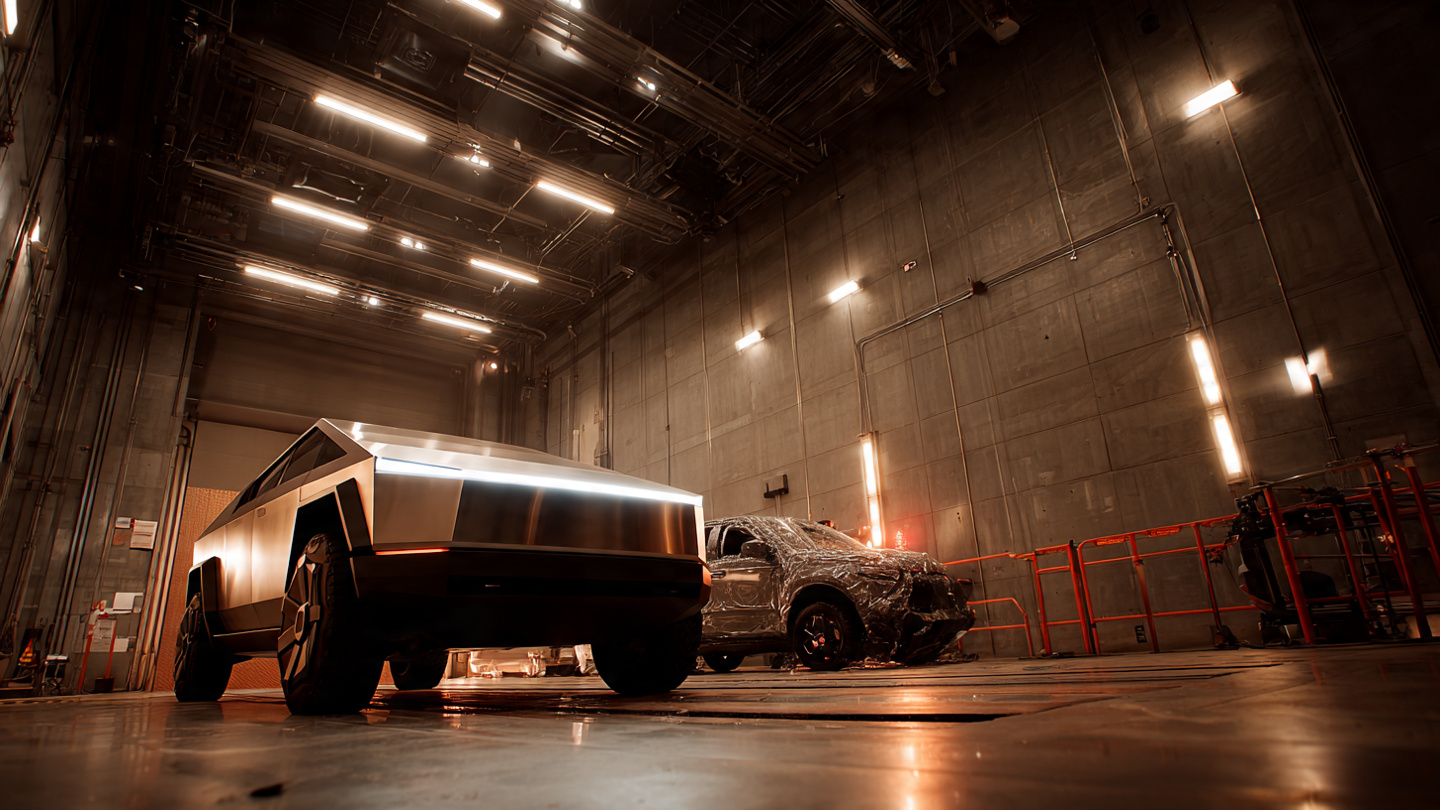
Out of every pickup truck sold in America, exactly two earned an IIHS safety award in 2026. One of them is the Toyota Tundra, which is respectable and boring and probably what your uncle drives. The other is the Tesla Cybertruck, which earned Top Safety Pick+, the highest safety designation the Insurance Institute for Highway Safety can bestow. Not the F-150, not the Silverado, not the Ram. The stainless steel polygon that people genuinely compared to a doorstop.
Numbers land like a bad joke told at a funeral. Between 2014 and 2023, the Chevrolet Silverado accumulated 9,591 fatalities in NHTSA's Fatality Analysis Reporting System, at a rate of 1.25 deaths per 100 million vehicle-miles traveled. Ford's F-150 wasn't far behind at 9,194 deaths and a rate of 1.04.[1] Together they account for nearly 19,000 American deaths in a single decade. Both are older-generation-heavy fleets, and both contain millions of trucks built before the safety standards that exist today. But that's precisely the problem: these are the trucks that Americans actually own and actually die in, and neither one could earn an award when measured against 2026 crash test criteria.[2]
Meanwhile, the Cybertruck earned "Good" ratings across every crashworthiness category that IIHS evaluates: driver-side and passenger-side small overlap frontal impacts, moderate overlap, and side-impact tests. Tesla apparently spent much of 2025 reworking the front underbody structure and driver footwell to handle small-overlap crashes, where the impact bypasses most of the truck's primary crash structure and tries to intrude on the cabin. Somehow, the rigid exoskeleton that everyone assumed would transfer lethal force into occupants turned out to manage crash energy better than the ladder-frame trucks that have had fifty years of iteration.[3]
IIHS raised the bar for 2026 in ways that specifically exposed pickup trucks. Its new vehicle-to-vehicle front crash prevention test runs at 31, 37, and 43 mph against a stationary passenger car, a motorcycle, and a semitrailer. Back-seat protection in the moderate overlap test is now required for Top Safety Pick+. Pickups have historically been weakest in the back row, where passengers can submarine under the lap belt during frontal impacts, a failure mode that the industry has known about for decades and done approximately nothing to fix.[2] The Cybertruck's Collision Avoidance Assist scored top marks in both vehicle-to-vehicle and pedestrian scenarios, including nighttime pedestrian detection. Toyota's Tundra, which earned the slightly lower Top Safety Pick, missed the "Plus" designation because its nighttime pedestrian detection was only "Acceptable" and some trims shipped with reflector-style headlights that introduced glare.[3]
Some necessary honesty, though, because this is where the cosmic joke gets complicated. In terms of real-world fatality data, the Cybertruck has essentially none. FARS covers 2014 through 2023, and Tesla started delivering Cybertrucks in late 2023 in tiny numbers. We have no idea what the Cybertruck's actual fatality rate will be once hundreds of thousands of them spend years on highways, work sites, and suburban driveways. Lab performance and road performance are different things. Ford's death toll reflects a fleet of 6.6 million trucks, many from generations that predate modern crash structures entirely, while the Cybertruck fleet is still small enough that a single fatal crash would distort its statistics for years. Comparing their safety records right now is like comparing a new restaurant's Yelp rating to McDonald's: the sample sizes aren't in the same universe.
But this IIHS comparison is valid on its own terms. It doesn't care about fleet size or legacy models. It takes the current production vehicle, crashes it, and measures how well occupants survive. On that specific question, the Cybertruck does what the F-150 and Silverado cannot. And the Tundra, with 1,223 deaths over the same period and a rate of 0.94 per 100 million VMT, does slightly better than both in real-world data while also earning a safety award. Consider the Honda Ridgeline, a unibody pickup truck that purists dismiss as "not a real truck," which has a fatality rate of 0.24, roughly a quarter of the F-150's, and 84 total deaths across the entire decade.[1] Nobody buys it, naturally.
What should genuinely worry you isn't that the Cybertruck is safe. That's just funny. What should worry you is that America sells roughly 2.5 million full-size pickup trucks every year, and almost none of them can meet the safety standard that a first-generation electric truck from a company that has never built a traditional body-on-frame vehicle cleared on its first real attempt. Ford's flagship has been America's best-selling vehicle for over four decades. It has had more engineering investment than almost any consumer product in history. And in 2026, it sits outside the circle of trucks that the IIHS considers adequately safe.
If you're buying a pickup this year, here's the uncomfortable math: exactly two models have earned IIHS safety awards. One costs $80,000 and looks like it was designed by a twelve-year-old with a ruler. The other is a Toyota. If you drive anything else, check your VIN at nhtsa.gov/recalls to see what else might be waiting for you. And sit in the front row. The back seat is where pickup trucks have the least to say for themselves.
Sources & References
- NHTSA, Fatality Analysis Reporting System (FARS), 2014–2023. Per-model death counts and estimated fatality rates per 100 million vehicle-miles traveled. nhtsa.gov
- IIHS, “IIHS pushes improvement in crash avoidance with 2026 awards,” March 24, 2026. 63 vehicles qualify; new vehicle-to-vehicle front crash prevention test introduced; no minicars, minivans, or small pickups earn awards. iihs.org
- AutoGuide, “Only Two Pickup Trucks Survived 2026 IIHS Crash Testing,” May 15, 2026. Tesla Cybertruck (TSP+) and Toyota Tundra (TSP); Cybertruck revised underbody structure in April 2025. autoguide.com