NHTSA Used Its Most Powerful Enforcement Tool for the First Time in 20 Years. It Can't Find the Cars.
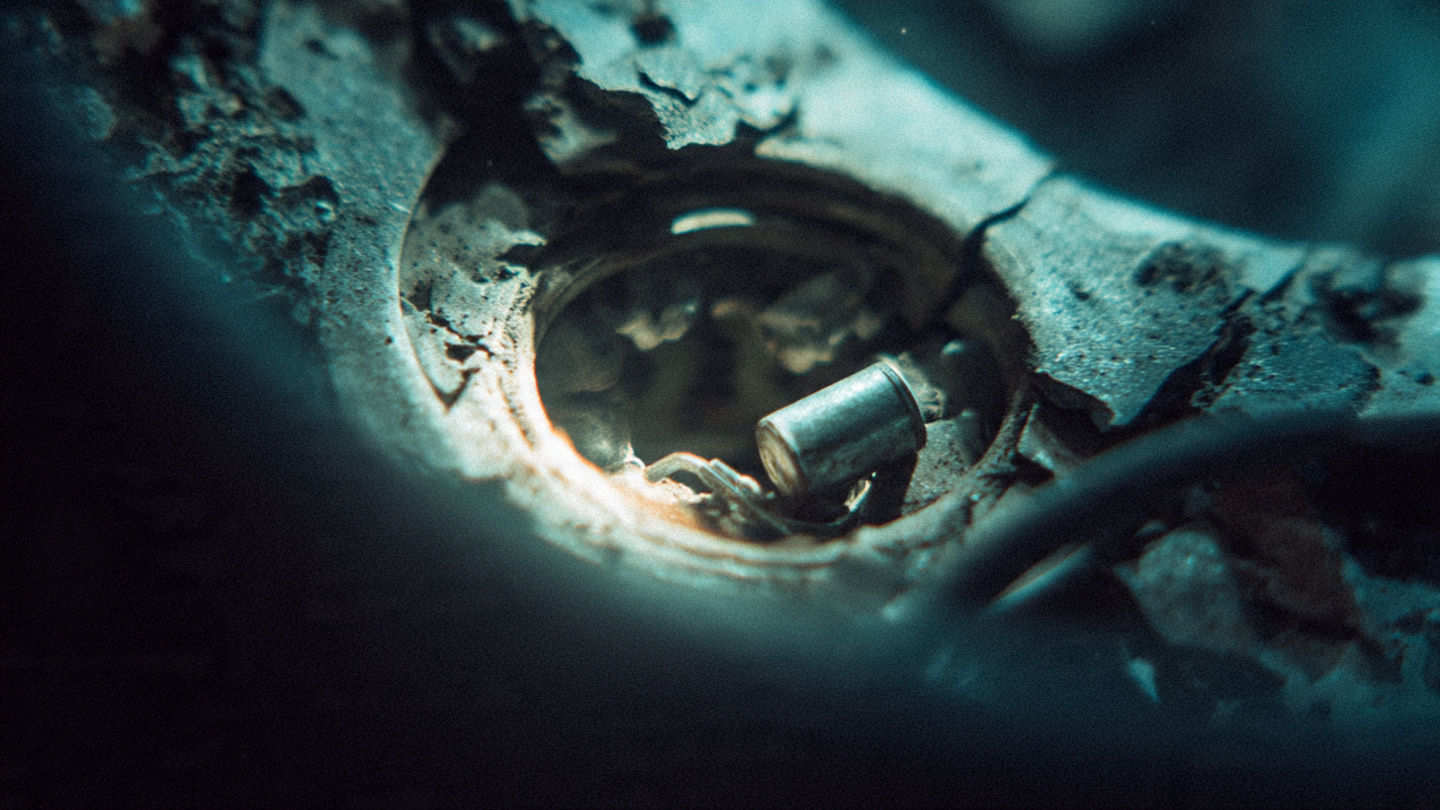
Ten people are dead because their airbags did not deploy but instead exploded backward, driving metal fragments into chests, necks, eyes, and faces during crashes that any modern vehicle with a functioning restraint system should have let them walk away from. The inflators responsible were counterfeits manufactured by a company called DTN in Jilin Province, China, smuggled into U.S. auto repair shops through import channels that nobody has been able to trace, and bolted into steering columns as replacement parts by mechanics who had no way of knowing what they were installing.[1]
On April 29, NHTSA dropped the regulatory equivalent of a nuclear weapon: a compulsory recall order, the first one in over twenty years.[2] Of 997 vehicle and equipment recalls issued in 2025, 88% were voluntary. Another 12% followed NHTSA investigations but were still manufacturer-initiated. Compelled orders essentially never happen, and when they do, it means the agency has concluded that every other mechanism has failed and the government itself must intervene.
NHTSA intervened. The recall landed on a company that operates from China, denies selling its product in the United States, and suggests the inflators bearing its name might be counterfeits of its counterfeits.[1] The parts were imported illegally, leaving no customs records, no distribution chain, and no serial numbers linked to vehicle identification numbers. NHTSA's own FAQ page states the quiet part out loud: "Because these inflators were likely illegally imported and a list of affected vehicles is not available, a traditional recall is unlikely."[1]
The agency issued a recall and simultaneously conceded it cannot execute one.
All twelve confirmed incidents so far have occurred in two models: Chevrolet Malibus and Hyundai Sonatas, model years 2017 through 2022. Every affected vehicle had a common history: a previous crash that deployed the original airbag, followed by a repair that installed a DTN60DB inflator as the replacement. Many carried salvage or rebuilt titles.[3] The pattern is a supply chain story that starts when a used car gets totaled and a salvage yard or independent shop needs a replacement airbag. Genuine OEM modules cost hundreds of dollars, while counterfeit DTN inflators are cheaper, available, and look like they fit. Nobody inspects them because nobody is required to.
The Takata crisis is where this story's supply chain collapses. Takata's ammonium nitrate inflators killed 27 people worldwide and triggered the largest recall in U.S. history: 67 million inflators across 19 manufacturers.[4] CARFAX estimates 6.4 million vehicles still carry unfixed Takata airbags today.[5] That recall created a replacement demand of staggering proportions, with tens of millions of vehicles needing new inflators. Into that gap walked DTN, whose product entered the country through channels NHTSA still cannot trace, installed by shops NHTSA cannot identify, in vehicles NHTSA cannot find.
The first crisis manufactured the second. Takata failed, and the repair pipeline that was supposed to fix the failure introduced a new one. One that kills faster, in a more gruesome way, and without any of the traceability that made the Takata recalls possible in the first place.
So what does NHTSA's compulsory order actually accomplish? It bans the import and sale of DTN60DB inflators, which is useful exactly to the extent that a ban deters illegal importers who were already operating illegally. It orders DTN to initiate a recall, despite DTN being a Chinese company that claims it never sold to the U.S. And it refers vehicle owners to the FBI and Homeland Security Investigations,[6] because apparently the correct response to discovering your steering column contains a device that could perforate your sternum is to file a report with a federal law enforcement agency and hope they have a field office nearby.
Here is what the order does not do. It does not tell you whether your car is affected, because a VIN search will not identify these parts since they are aftermarket and not tied to any OEM recall campaign, which means there is no database to query, no checkbox to click, and no website that will show you a red warning banner when you type in your license plate. You have to physically open the steering column and look for an inflator stamped "DTN60DB" or bearing the number sequence "144415654 666631." NHTSA explicitly says do not attempt this yourself because the device that might kill you in a crash can also kill you during disassembly.[1]
So you need a mechanic, and you pay for the inspection, and if the inflator is counterfeit you pay for the replacement, and there is no manufacturer reimbursement program because the manufacturer is not in this country and claims no responsibility, and there is no dealership notification campaign because no dealership installed these parts. The full economic burden of identifying and correcting a lethal safety defect discovered by a federal investigation with ten confirmed fatalities falls entirely on the vehicle owner who had no way of knowing the defect existed.[1]
Credit where it is warranted: NHTSA moved fast by its own standards. The agency skipped its preliminary evaluation phase entirely, opened directly at the Engineering Analysis level in October 2025, compressed the public comment period to 15 days, and finalized the recall order 27 days after the initial decision.[2] Six months from investigation to order. By the 617-day average that this publication documented last week, that is practically emergency response. The problem is not speed but rather that the most powerful enforcement tool in the federal vehicle safety apparatus, deployed at maximum velocity, produced an unexecutable recall. It banned a product that was already banned by virtue of being illegally imported. It ordered a manufacturer to initiate a recall that the agency itself concedes will never function as a traditional recall.
The most recent death occurred February 16, 2026, in Clarksdale, Mississippi, when the driver of a 2020 Chevrolet Malibu was killed ten months after the first fatality in Dallas, and the inflators responsible remain distributed across an unknown number of vehicles with no mechanism for their owners to discover the danger before the next crash triggers the next rupture, because the recall designed to prevent exactly this outcome cannot identify a single one of them.
What you should do
If you drive a used car that was ever in a crash where airbags deployed, especially a Chevrolet Malibu or Hyundai Sonata from 2017 to 2022, get a vehicle history report immediately. CARFAX offers free airbag deployment checks. If the report shows prior deployment or the vehicle has a salvage or rebuilt title, take it to a manufacturer dealership or reputable shop and ask them to inspect the driver-side airbag inflator. Reference NHTSA's technician guidance. If a DTN inflator is found, do not drive the vehicle. Report it to your local Homeland Security Investigations office or FBI field office.
Sources & References
- NHTSA, Deadly Air Bag Inflator Replacements: What to Know, updated April 2026. Official advisory, crash timeline, and FAQ. nhtsa.gov
- Sidley Austin LLP, “NHTSA Issues the First Defect Recall Order in Decades,” May 11, 2026. Legal analysis of recall statistics and administrative process. sidley.com
- Carscoops, “10 Deaths Later, The US Finally Moves To Ban Illegal Chinese Airbag Inflators,” April 2, 2026. Reporting on salvage title pattern and lawsuits. carscoops.com
- NHTSA, Takata Recall Spotlight. 67 million inflators recalled across 19 automakers, 27 deaths worldwide. nhtsa.gov
- CARFAX / CollisionWeek, “6.4 Million Vehicles Need Takata Airbags Replaced Ten Years After Start of Recalls,” 2024. collisionweek.com
- Repairer Driven News, “NHTSA bans defective Chinese airbag inflators,” April 30, 2026. Secretary Duffy quotes, industry alert details. repairerdrivennews.com
Limitations
The total number of DTN inflators in U.S. vehicles is unknown. All 12 confirmed ruptures involved Chevrolet Malibu or Hyundai Sonata models, but NHTSA states the risk may not be limited to these makes. DTN has claimed the inflators may be counterfeits of its own product; the true manufacturer remains unconfirmed. No data exists on the share of used car buyers who obtain vehicle history reports prior to purchase, making it impossible to estimate how many at-risk owners will ever learn of this advisory.
Strongest counterargument
NHTSA moved at extraordinary speed by historical standards. Skipping the preliminary evaluation, compressing comment periods, and finalizing in six months demonstrates an agency trying to act within genuine jurisdictional constraints. A Chinese manufacturer operating through illegal import channels is fundamentally harder to regulate than a domestic OEM with dealership networks and VIN databases. The equipment ban and FBI referral may represent the maximum available enforcement against a supply chain designed to evade regulation. The alternative was doing nothing and letting the inflators circulate without even a public advisory, and that would undeniably have been worse.