NHTSA Says 38% of July 4th Drivers Killed Are Drunk. For the Corvette, It’s 26% on a Tuesday.
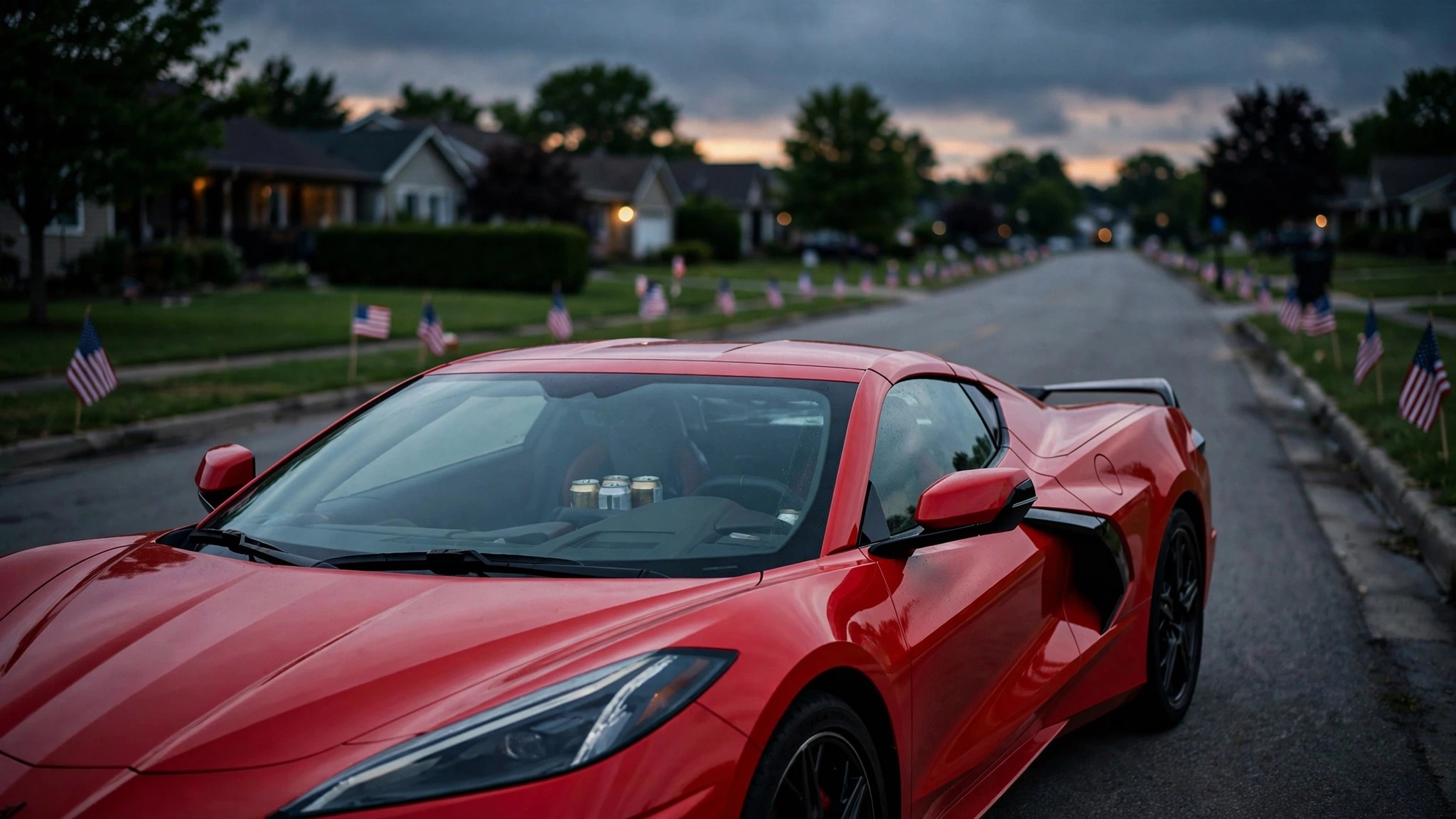
Right now, NHTSA is blasting its annual Buzzed Driving Is Drunk Driving campaign: billboards, radio spots, social media. Independence Day is uniquely dangerous, the agency warns, because 38% of drivers killed during the July 4th period are drunk, per five years of data covering 2020 through 2024.[1] Nearly double the year-round fleet baseline of 20% impairment in fatal crashes.[2] Genuine crisis, worth every dime.
Five models already live there.
FARS toxicology data spanning 2014 to 2023 tracks 490,736 drivers in fatal crashes, and when you sort by vehicle instead of calendar date the distribution collapses into something revealing: a handful of outliers making holiday weekends look routine, surrounded by a vast middle that barely moves regardless of the month. Corvette leads at 26.2% impairment across 1,147 drivers, meaning one in four Corvette drivers who ended up in a fatal crash had something in their system on a statistically unremarkable Wednesday. Camaro clocks 23.0% across 2,832 drivers, Charger lands at 22.7% across 4,339 (one of the largest single-model datasets in all of FARS), Challenger records 22.5% across 2,037, and Mustang rounds out the quintet at 21.9% across 4,664. Compare that to Prius at 16.0% (n=1,746), CR-V at 17.6% (n=5,807), RAV4 at 18.4% (n=5,286), and the Corvette-to-Prius gap stretches to 10.2 percentage points, a 1.64x ratio that holds every day of every year.
Holiday math makes it worse: if July 4th represents a 1.9x multiplier over normal impairment (38% divided by the 20% fleet baseline), a Corvette driver killed on Independence Day weekend projects to 49.8% impairment, which means roughly half the Corvette drivers who die that weekend would test positive. A Prius on July 4th projects to 30.4%, still lower than what a Corvette produces on a random Tuesday in February.
Strongest counterargument, stated fairly: muscle car buyers skew heavily toward 21-to-34-year-old males, the exact demographic where 47% of holiday drunk-driving deaths concentrate.[1] Fair enough, and nobody argues Corvettes metabolize bourbon differently. But insurance companies already exploit this correlation ruthlessly, charging young male Corvette owners multiples of what a 40-year-old RAV4 buyer pays, because their actuarial tables reflect precisely what FARS reveals, and NHTSA could apply the same logic to intervention by sending year-round safety messaging to Charger and Challenger registrants instead of blasting the entire American fleet six weekends a year and hoping the right 15,000 people hear it.
Caveat: that 1.9x multiplier is a fleet-wide average, and muscle car drivers already near their ceiling may spike only 1.3x or 1.5x on holidays, but even at 1.5x a Corvette's 26.2% baseline hits 39.3%, which still clears the fleet-wide July 4th crisis threshold of 38% and erases the distinction between "holiday danger" and "every other day."
Driving a Corvette, Camaro, Charger, Challenger, or Mustang this weekend? You were statistically overdue for this conversation before anyone lit the first fuse. Check your VIN for open recalls at nhtsa.gov/recalls. Download a ride-share app before your third beer, not after your fifth.
Sources & References
- NHTSA Traffic Safety Marketing, Fourth of July: Buzzed Driving Is Drunk Driving, 2020–2024 data. trafficsafetymarketing.gov
- NHTSA, Fatality Analysis Reporting System (FARS), 2014–2023. nhtsa.gov
- NHTSA, Celebrate America Safely This July 4th. nhtsa.gov
Source: NHTSA FARS 2014–2023 toxicology data covers drivers in fatal crashes who were tested. Not all drivers are tested in every state, and testing rates vary by jurisdiction. "Impairment" includes any alcohol or drug positive, including prescription medications. See methodology for caveats.