The Dodge Challenger Is the Safest Muscle Car in America. Nobody Believes It.
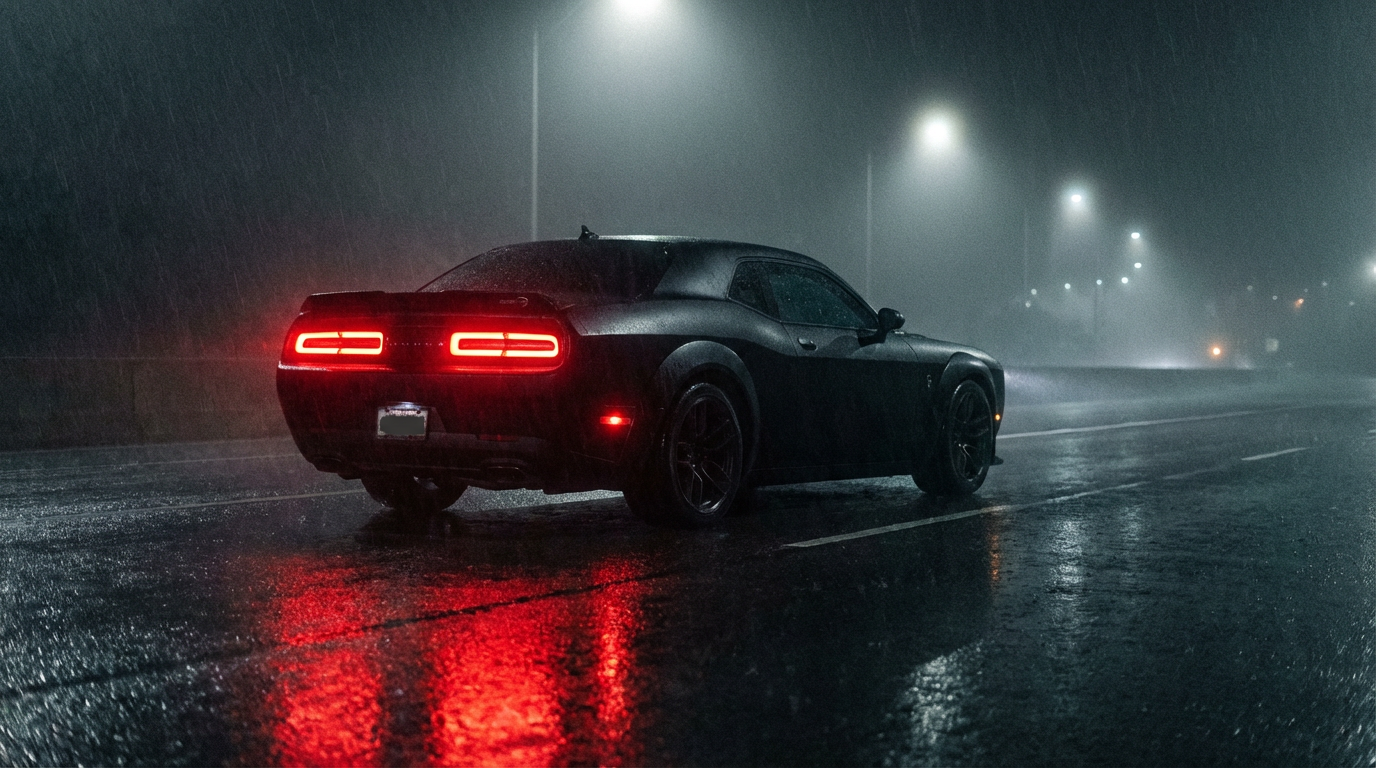
Here’s a fun fact that will ruin your morning commute. The Dodge Challenger — the car that looks like it was designed by someone who thought the 1970s didn’t have enough horsepower — is the safest muscle car in the FARS database. Not per dollar. Not per horsepower. Per mile driven. The car that looks like it wants to kill you is statistically the least likely to actually do it.
The Challenger’s fatality rate is 1.00 per 100 million vehicle miles traveled. That’s 385 deaths from a fleet of 481,250 vehicles between 2014 and 2023. Sounds bad in isolation. Sounds miraculous when you put it next to the competition.
The Muscle Car Death Ladder
| Vehicle | Deaths | Rate per 100M VMT | Fleet |
|---|---|---|---|
| Ford Mustang | 2,739 | 6.02 🔴 | 568,750 |
| Chevrolet Camaro | 1,204 | 3.44 🔴 | 437,500 |
| Chevrolet Corvette | 320 | 1.52 | 262,500 |
| Dodge Challenger | 385 | 1.00 🟢 | 481,250 |
| Dodge Charger | 715 | 0.75 🟢 | 831,250 |
The Mustang kills at 6× the Challenger’s rate. The Camaro at 3.4×. Even the Corvette — which costs twice as much and attracts an older, presumably more cautious buyer — is 52% deadlier per mile. The only muscle car safer than the Challenger is its own sibling, the Dodge Charger, which benefits from being a four-door sedan that families actually commute in.
It’s Not the Drivers
The obvious objection: maybe Challenger owners are just more sober. They aren’t.
| Vehicle | Impairment Rate | Alcohol | Drug |
|---|---|---|---|
| Chevrolet Corvette | 26.2% 🔴 | 21.3% | 6.8% |
| Chevrolet Camaro | 23.0% | 17.1% | 8.8% |
| Dodge Charger | 22.7% | 17.0% | 8.7% |
| Dodge Challenger | 22.5% | 17.5% | 9.1% |
| Ford Mustang | 21.9% | 16.4% | 7.9% |
The impairment rates are essentially identical across all five cars — clustered between 21.9% and 26.2%, all above the national average of ~20%. These are muscle cars. They attract a certain kind of driver. But the Mustang’s impairment rate is actually the lowest of the group at 21.9%, and it kills at 6× the Challenger’s rate. The driver behavior is the same. The outcomes are wildly different.
Why the Challenger Survives
Three factors, and they’re all about physics, not personality.
Weight. The Challenger is enormous for a muscle car — 4,200 to 4,450 pounds depending on trim. That’s 400–600 pounds heavier than a Mustang and 300–500 heavier than a Camaro. In a crash, mass is survival. Newton doesn’t care about your zero-to-sixty time.
Size. Built on the same LY platform as the Charger and the Chrysler 300, the Challenger is dimensionally more sedan than sports car. Longer wheelbase (116.2”), wider track, more front crumple zone than either competitor. It’s a grand tourer that happens to have a muscle car badge.
Demographics. The Challenger was introduced in 2008 and deliberately targeted nostalgia buyers — older enthusiasts who wanted a retro icon, not a weekend track weapon. Median Challenger buyer age trended well above Mustang and Camaro buyers. Older drivers tend to keep the speed lower, regardless of what the car is capable of.
The Mustang Problem
The Mustang’s 6.02 rate demands an explanation beyond “muscle car things.” With 2,739 deaths from a fleet only 18% larger than the Challenger’s, the Mustang generates 7× more fatalities from a comparable population. The Ecoboost base Mustang starts around $30K and weighs just 3,500 pounds — light, cheap, and marketed to young buyers as an attainable sports car. That combination of low mass, younger demographic, and aggressive styling creates a lethal feedback loop that the heavier, more expensive Challenger simply doesn’t trigger.
The Camaro at 3.44 sits between them, both in weight and in death rate. The pattern is clean: heavier muscle car = lower death rate, and the correlation holds almost perfectly across the segment.
The Paradox
Insurance companies charge Challenger owners some of the highest premiums in the market. Parents see one in their rearview mirror and change lanes. Every Fast & Furious movie uses it as visual shorthand for “dangerous.” And yet the FARS data says this 4,400-pound throwback to 1970 is safer per mile than a Honda Civic (2.25 rate), a Toyota Corolla (1.85), and a Nissan Sentra (2.13).
Dodge discontinued the gas-powered Challenger in 2023, replacing it with an electric reboot. The muscle car era’s last survivor turned out to be its safest member. Nobody wrote that story while it was alive. The FARS data did.
The numbers don’t lie. But they do occasionally smirk.