202,345 Truck Drivers Are Banned From Driving. Nobody Took Their Keys.
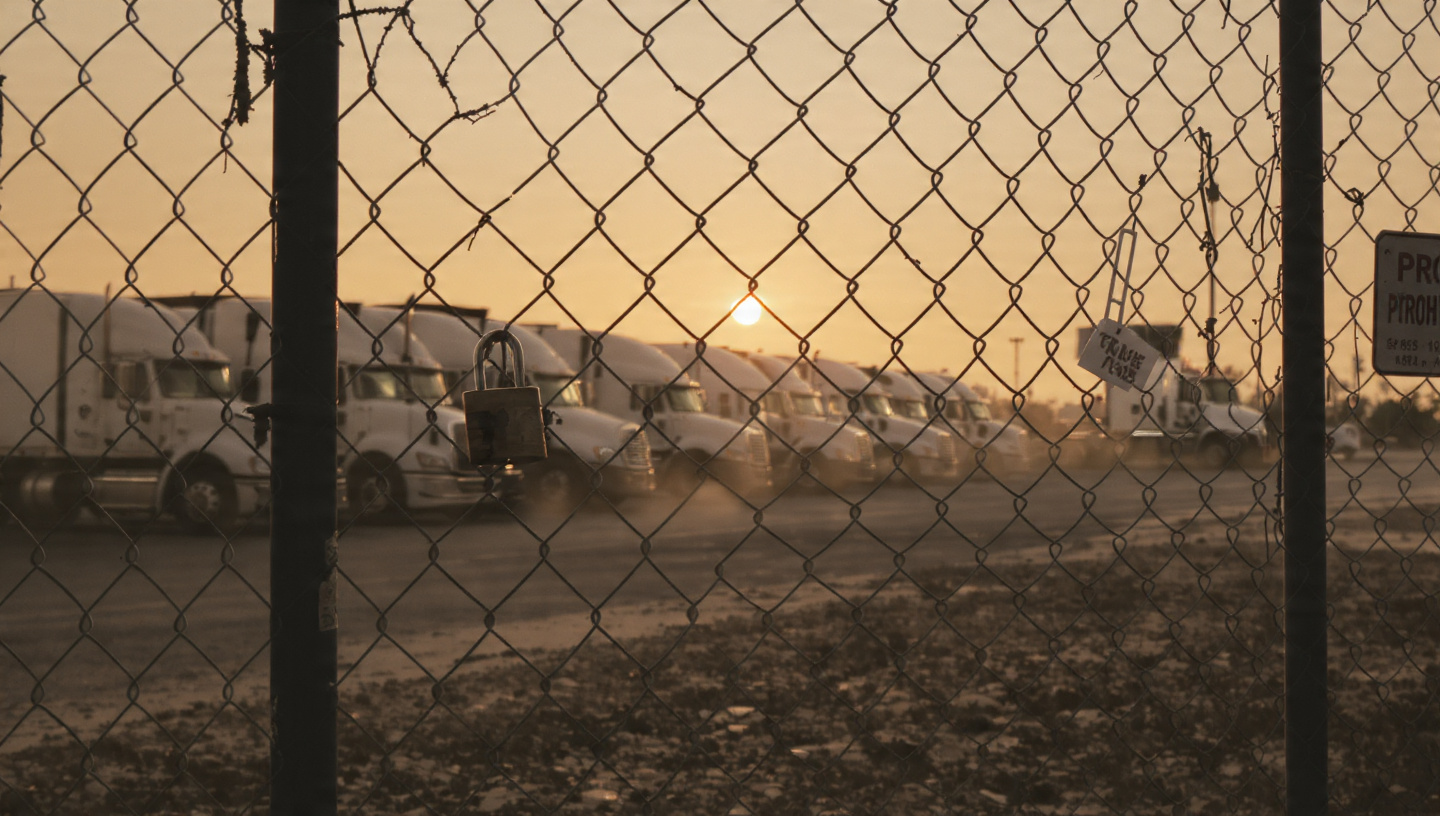
Imagine a safety system so well-designed that it identifies the dangerous people, catalogs them in a federal database, marks them "prohibited," and then does absolutely nothing to stop them from climbing into an 80,000-pound vehicle tomorrow morning. You don't have to imagine it, because the FMCSA Drug and Alcohol Clearinghouse already built exactly that system and deployed it nationwide.
As of January 2026, 328,431 commercial driver's license holders had at least one violation recorded in the Clearinghouse, and of those, 202,345 are classified as prohibited, which is the federal government's way of saying "banned from operating a commercial motor vehicle."[1] The truly staggering number buried inside that already staggering number is 159,226: the count of prohibited drivers who have not even begun the Return-to-Duty process.[1] Not "in progress," not "pending evaluation," not sitting in a waiting room somewhere filling out paperwork. They received the notification that said "you are prohibited from operating a commercial motor vehicle" and apparently treated it like a terms-of-service update they could scroll past.
Now cross-reference that administrative black hole with the body count. FARS crash data from 2018 through 2020 shows that of 4,778 large truck drivers involved in fatal crashes, 1,147 did not hold a valid CDL, which works out to 24% of the total, or one in every four truck drivers who killed someone on an American highway during that period.[2] Apply that ratio to FMCSA's 2024 count of 4,822 CMV fatalities, and you arrive at roughly 1,157 deaths per year in crashes where the truck driver should never have had access to a steering wheel in the first place.[3]
The I-95 bus crash on May 29 demonstrated how frictionlessly this system fails when confronted with an actual human being determined to drive. Jing Sheng Dong obtained his CDL in New York in 2024 through a driving school now under federal investigation, accumulated two prior speeding violations across Virginia and Maryland, and does not speak English despite a federal regulation at 49 CFR §391.11 that explicitly requires CDL holders to read and speak English sufficiently to communicate with the public and understand highway signs.[4][5] Five people are dead: Dmitri Doncev, 45; Ecaterina Doncev, 44; Emily Doncev, 13; Mark Doncev, 7; and Priscilla Mafalda, 25. An entire family erased because a licensing system that exists on paper dissolved on contact with reality.
Meanwhile, the DOT Office of Inspector General has been running CDL fraud prosecutions like a subscription service: a Massachusetts man sentenced in May 2026 for running a fraud scheme, an Idaho man pleading guilty in March for bribery, a former driving school owner convicted for bribery conspiracy in February, and a trucking company owner sentenced in Utah for yet another bribery scheme, all in the span of six months.[6] These are not isolated incidents; they are the ones that got caught, which, if you understand anything about enforcement ratios in commercial trucking regulation, means the real denominator is the kind of number that would keep transportation policy analysts awake at night if they bothered to estimate it.
The strongest case for optimism is the Clearinghouse-II rule that took effect in November 2024, which mandates automatic CDL downgrade for prohibited drivers and represents the first real structural fix since the database was created.[1] But the I-95 crash happened 18 months after that rule took effect, and the 159,226 non-compliant drivers who have done nothing about their prohibition remain exactly as non-compliant as they were before the rule existed. Enforcement without teeth is just paperwork wearing a badge.
Limitations
The 1,157 annual deaths estimate applies a 2018–2020 FARS ratio of 24% invalid CDL holders in fatal crashes to the 2024 fatality total, assuming the ratio held constant through a period when the Clearinghouse-II rule was actively being implemented. The actual ratio may have improved since November 2024, though no updated FARS cross-tabulation is available yet. FARS only captures fatal crashes; the broader universe of injury crashes involving unlicensed CDL drivers is invisible in this analysis, meaning the full scope of the problem is almost certainly larger than what the fatality data reveals. And "prohibited" in the Clearinghouse does not necessarily mean "currently driving," since some of those 202,345 may have left the industry entirely, but nobody tracks post-prohibition employment outcomes, so the actual number still behind a wheel remains genuinely unknown.
What you should do
Before you board a charter bus, check the carrier at safer.fmcsa.dot.gov and look for the safety rating, the number of vehicles, and the inspection out-of-service rate, because a two-year-old company with four buses and a "satisfactory" rating is categorically not the same thing as a carrier that has survived a decade of federal audits. If you share the road with commercial trucks, maintain distance, not because you are a cautious driver, but because the math says there is a roughly one-in-four chance that the person behind the wheel of the next 18-wheeler you pass was never supposed to be there at all.
Sources & References
- FMCSA Drug and Alcohol Clearinghouse statistics, January 2, 2026. clearinghouse.fmcsa.dot.gov
- FMCSA, Large Truck and Bus Crash Facts, Table 25: CDL Compliance in Fatal Crashes, 2018–2020. fmcsa.dot.gov
- FMCSA Motor Carrier Management Information System (MCMIS), 2024 CMV crash and fatality data. fmcsa.dot.gov
- USA Today / Washington Examiner, “I-95 bus crash kills 5; driver obtained CDL from school under investigation,” May 29–31, 2026.
- 49 CFR §391.11, General qualifications of drivers: English language proficiency requirement. ecfr.gov
- DOT Office of Inspector General, CDL fraud investigation press releases, September 2025–May 2026. oig.dot.gov