Evenflo Just Recalled 60,000 Car Seats. 53,000 Were Already Installed Wrong.
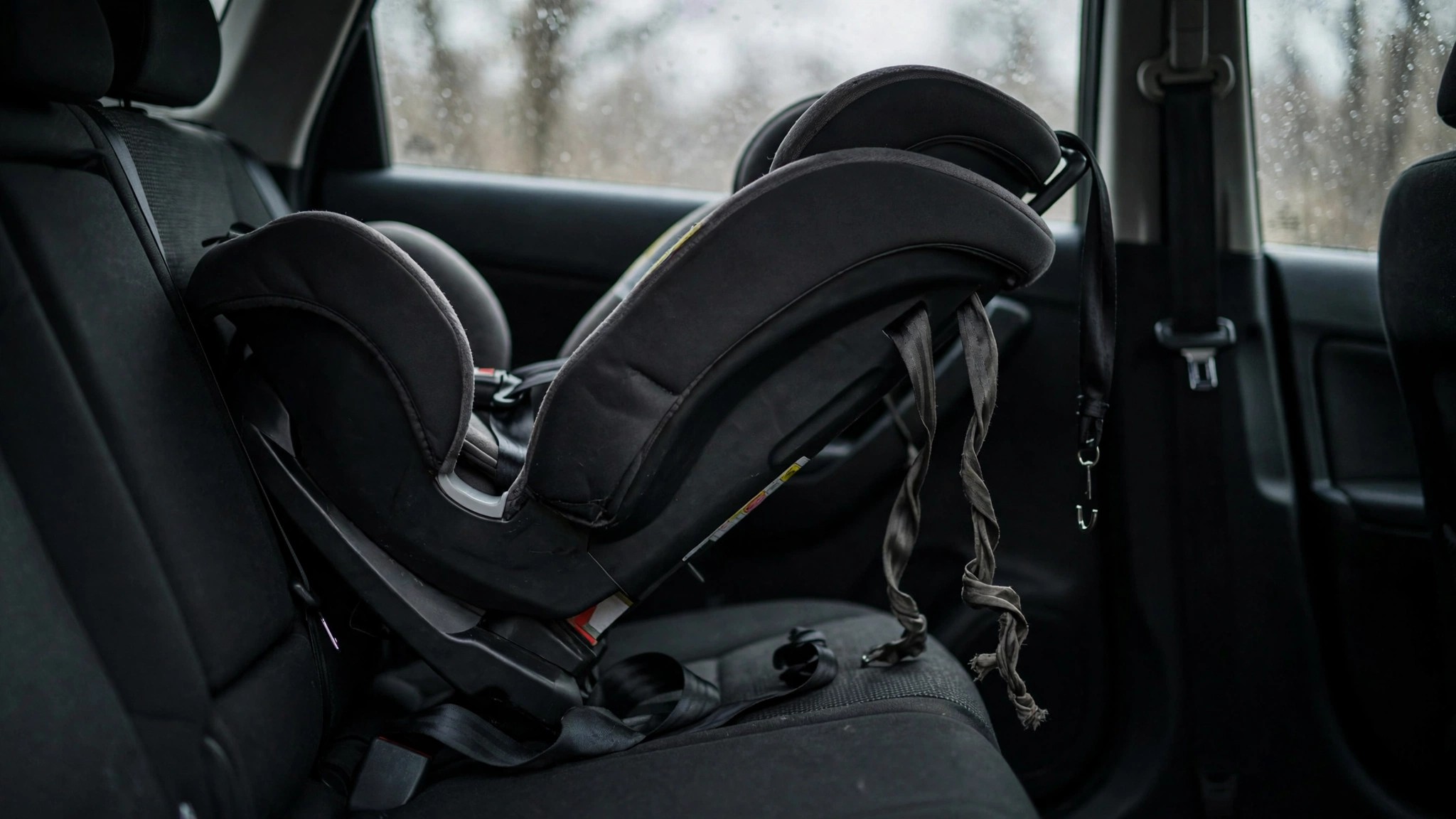
Evenflo pulled 59,661 Reo by Revolve360 car seats off the market this month after dynamic crash testing revealed the headrest could shift at its highest positions. Positions 10 and 11 in forward-facing mode. Position 11 in rear-facing. A supplier's stamping die wore out, the parts came off the line weaker than spec, and now parents get a recall notice in the mail.
Good. Fix it. But while NHTSA and Evenflo focus on two headrest clicks out of eleven, a peer-reviewed study published last October found something worse: only 11.9% of child car seats in the United States are installed entirely correctly.[1]
Run the arithmetic. If 88.1% of car seats are misused, then roughly 52,500 of those 59,661 recalled Revolve360s were already failing before the headrest defect mattered. Not failing at position 10. Failing at the harness. Tether. Angle. Routing. All the things no recall letter fixes.
The study, published in the Journal of Safety Research by Schwebel et al., assessed 1,477 real-world installations across seven sites by certified child passenger safety technicians using a standardized checklist.[1] Forward-facing seats installed with a seatbelt scored worst: only 76.5% of components correct on average. Rear-facing LATCH installations scored best at 89.1%. But "best" still means barely one in ten seats had zero errors.
National data backs it up. The NDCF reported that 74% of nearly 60,000 car seats checked by technicians in 2025 were not used as the manufacturer intended.[2] Top errors: seatbelt routing, harness tension, and the top tether. That last one matters. The top tether limits forward head excursion in a frontal crash. The AAP and NHTSA both call it critical. And about half of forward-facing installations skip it entirely.[3]
Car seats reduce fatal injury risk by 71% for infants and 54% for toddlers aged 1–4, per NHTSA.[4] But that number assumes correct use. A seat with a missing tether, wrong recline angle, or loose harness doesn't deliver the protection its crash rating promises. The gap between "installed" and "installed correctly" is where children die.
Evenflo's recall is real. The headrest defect is real. No parent should ignore it. But the recall system creates a dangerous illusion: that the named defect is the problem, and the fix resolves it. For the 88% of installations with pre-existing errors, the recall letter is a rounding error on a much larger failure. NHTSA can mandate a headrest replacement. It cannot mandate that a parent route the seatbelt through the correct path, tighten the harness to within one finger of the child's collarbone, or attach the top tether to the correct anchor instead of the cargo hook.
Limitations, stated plainly: The 88% misuse rate comes from a study where participants volunteered. Motivated parents who sign up for a car seat study are probably better than average. If so, the real national misuse rate is higher. The misuse severity also varies. Some errors are cosmetic (a chest clip one inch too low). Others are structural (an unbuckled LATCH connector). The study counts both equally. And we cannot directly cross-reference misuse with FARS fatalities, because FARS doesn't record whether the car seat was installed correctly when the child died.
The strongest counterargument: Evenflo's headrest defect is verified to fail under crash forces. A certified tech found it with a 3-year-old dummy on an impact sled. Many installation errors have never been crash-tested at their specific failure mode. So the recall addresses a proven crash-level risk, while the misuse statistics describe a probabilistic one. Fair. But when the probabilistic failure covers 88% of the installed base and includes known crash-significant errors like missing tethers and unbuckled anchors, the probability stops feeling theoretical.
What to do: Find a certified child passenger safety technician. NHTSA maintains a locator at nhtsa.gov/car-seats. Use LATCH anchors instead of the seatbelt when your vehicle and seat allow it (89% vs. 76.5% component accuracy). Always connect the top tether on forward-facing seats. And check your specific seat for recalls at nhtsa.gov/recalls. Fix the headrest. Then fix everything else.
Sources & References
- Schwebel DC, et al., “Child restraint misuse: Do parents properly install car seats?” Journal of Safety Research, Oct 2025. DOI: 10.1016/j.jsr.2025.10.004. PubMed
- National Digital Car Seat Check Form (NDCF), 2025 data. Cited via NPR Illinois / Consumer Reports, Feb 2026. NPR Illinois
- Macy ML, et al., “Child Car Seat Installation Errors Common Even with Top-Rated Seats,” Ann & Robert H. Lurie Children’s Hospital of Chicago, 2023. Lurie Children’s
- NHTSA, Car Seats and Booster Seats. nhtsa.gov
- NHTSA Recall Report, Evenflo Reo by Revolve360, July 2026. nhtsa.gov/recalls