42% of Drivers Killed in Crashes Had THC in Their Blood. America Has No Idea What to Do About It.
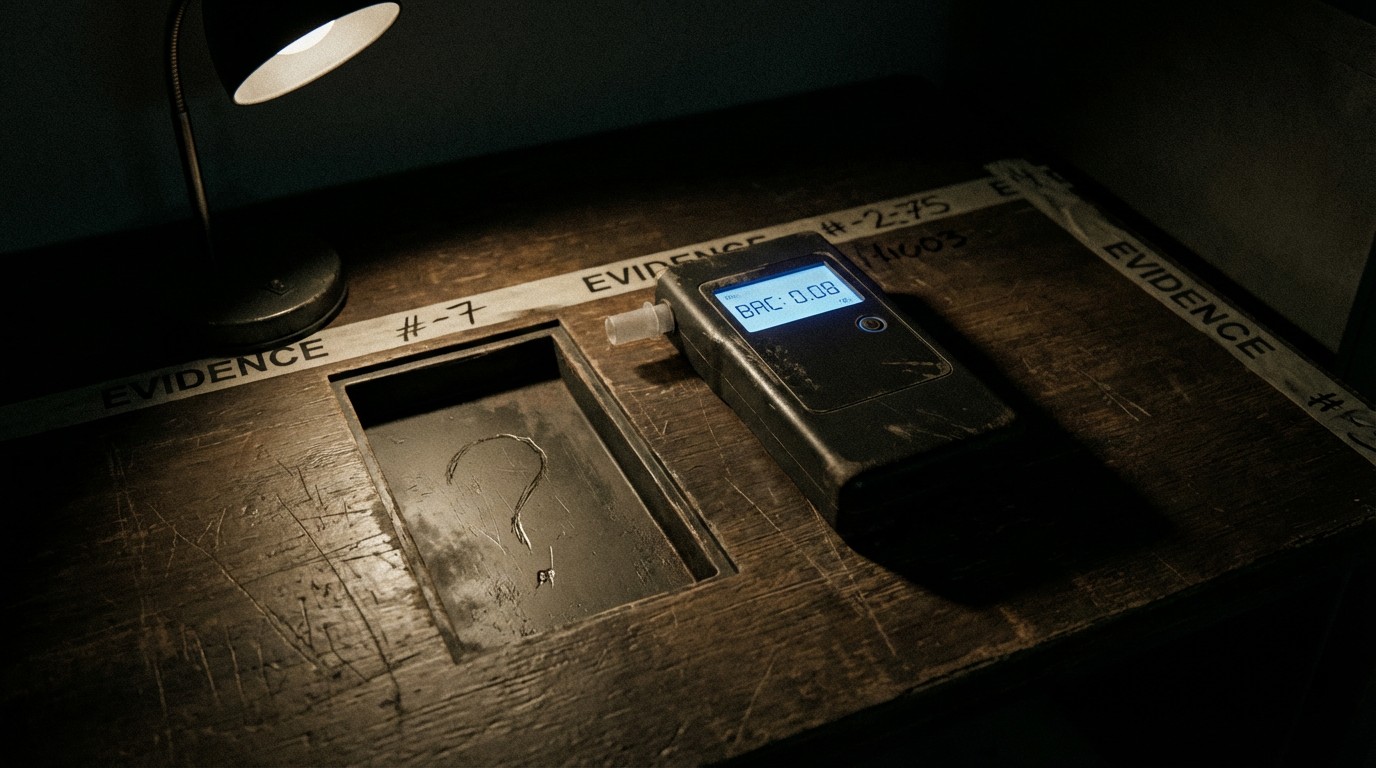
There is no number.
Not an imprecise number. Not a disputed number. Not a number with wide error bars and caveats. There is, in the formal epidemiological sense, no national count of cannabis-impaired driving deaths in the United States.
Alcohol has one. It’s 12,429. NHTSA publishes it annually, derived from FARS data with decades of imputation methodology behind it. You can break it down by state, by time of day, by BAC level. It’s a reliable number produced by reliable infrastructure.[7]
Cannabis has a void. And inside that void, a study presented at the American College of Surgeons Clinical Congress in October 2025 dropped a data point that should have stopped the policy conversation cold: 42% of fatally injured drivers who were tested had active delta-9 THC in their blood.[1]
The study was small (N=246, Montgomery County, Ohio, 2019–2024) and regional. But the average THC blood concentration was 30.7 ng/mL, which is 6 to 15 times above the per se limits in the five states that have them. The positivity rate was consistent across all six years and did not change after Ohio legalized recreational cannabis in 2023.
That 42% figure cannot tell us how many of those drivers were impaired by cannabis at the time of the crash. It cannot tell us whether cannabis contributed to the crash at all. And it cannot be extrapolated nationally with any rigor, because the system that would allow such extrapolation does not exist.
Three failures explain why.
Failure one: measurement
Only about 60% of fatally injured drivers in the United States are tested for drugs.[2]
That’s a national average. State-level drug testing completion rates range from less than 10% to more than 90%. Some coroner’s offices test every fatally injured driver. Some test only when they suspect impairment. Some don’t test for drugs at all unless the family requests it.
Compare this to alcohol. BAC testing of fatally injured drivers runs above 80% nationally, and NHTSA has refined imputation models since the 1990s to estimate BAC for the remaining untested drivers. The alcohol number is built on infrastructure. The cannabis number is built on whatever individual jurisdictions happen to do.
NHTSA does not attempt to impute drug test results for untested drivers. The agency’s own 2024 report to Congress called the state-level variation a fundamental barrier to producing a reliable national estimate.[2] Multiple federal agencies, including the GAO and NTSB, have described the existing drug testing data as unreliable. NHTSA added new drug testing fields to FARS in 2022 and 2023 to try to improve completeness. The data coming back is still inconsistent.
Failure two: science
Alcohol has a curve. Below 0.05 BAC, most people show measurable impairment on divided-attention tasks. At 0.08, the risk of a fatal crash roughly doubles for drivers over 21 and quadruples for drivers under 21. At 0.15, the risk is more than 10 times baseline. The relationship between blood alcohol concentration and driving impairment has been studied for decades and is accepted across all 50 states, the federal government, and every major international road safety body.
Cannabis has no such curve.
NHTSA’s own 2024 TOPIC report states plainly: drug concentration in blood “does not correlate to driving impairment” for cannabis.[4] A chronic daily user can have 30 ng/mL of THC in their blood and show no measurable impairment on standardized tests. An occasional user can have 3 ng/mL and be significantly impaired. The same blood concentration means different things in different bodies.
Five states have per se THC limits anyway: Illinois, Montana, and Washington at 5 ng/mL; Nevada and Ohio at 2 ng/mL. Colorado has a “permissible inference” threshold at 5 ng/mL, but it has produced near-zero successful prosecutions based on THC level alone. NHTSA itself says there is “relatively little research” supporting the relationship between these thresholds and crash risk.[4] The limits exist because legislators needed a number. The science didn’t provide one, so the states picked one themselves.
This is the foundational problem. Alcohol enforcement works because the science works: BAC maps reliably to impairment. For cannabis, no equivalent mapping exists. Every downstream system that depends on a measurement-to-impairment relationship is operating without one.
Failure three: enforcement
There is no THC breathalyzer.
An officer who suspects alcohol impairment can administer a preliminary breath test at the roadside and have a BAC reading within two minutes. That result informs the arrest decision, and a follow-up evidential test at the station produces a number admissible in court. The entire process, from suspicion to evidence, can be completed within an hour.
An officer who suspects cannabis impairment has no equivalent tool. Oral fluid screening devices like SoToxa can detect the presence of THC in saliva, but they cannot measure impairment or blood concentration.[6] A positive oral fluid test tells you THC was consumed recently. It tells you nothing about whether the driver is impaired right now.
The alternative is a Drug Recognition Expert evaluation: a 12-step protocol administered by a specially trained officer, covering vital signs, eye examinations, divided-attention tasks, and muscle tone assessment. It takes 45 minutes or more, requires a DRE-certified officer (a small fraction of any department’s patrol force), and produces a subjective opinion rather than an objective measurement. Defense attorneys challenge DRE conclusions routinely, and courts are mixed on their admissibility. DRE evaluations also carry documented racial disparities in application: the same subjectivity that makes them scientifically weak makes them enforcement liabilities.
Meanwhile, THC pharmacokinetics work against everyone. After smoking, delta-9 THC in blood drops more than 80% within 90 minutes.[6] By the time a suspected driver is transported to a hospital or station for a blood draw, the concentration may have fallen below detectable levels. The substance is leaving the body faster than the system can measure it.
What the math might look like
This is directional, not precise. It is meant to illustrate the scale of the void, not to fill it.
Approximately 28,000 drivers died in the 40,901 traffic fatalities in 2023.[7] If 60% were tested for drugs and 42% of those tested positive for THC, that produces roughly 7,056 known THC-positive driver fatalities.
But 40% were never tested. If the untested population has a similar or higher THC-positive rate (plausible, since undertesting is most common in states with high cannabis prevalence and fewer forensic resources), the true THC-positive count among fatally injured drivers could fall between 12,600 and 15,400. Many of these drivers also had alcohol or other drugs in their system; polysubstance use is present in roughly 40–50% of drug-positive fatalities, making any single-substance attribution difficult.
That range overlaps with alcohol’s 12,429.
There are reasons this number overstates the problem: THC presence does not mean impairment, and many of these drivers may have consumed cannabis hours or days before the crash with no effect on their driving. There are reasons it understates it: the 42% rate comes from a single county in Ohio, and some national surveys suggest even higher rates in western states. The two biases push in opposite directions, and there is no methodology available to net them out. That is not a rounding error. That is a structural absence.
The counterargument, at full strength
“THC presence is not impairment. These are coroner toxicology results from dead drivers, not proof that cannabis caused or contributed to the crash. Chronic users metabolize THC differently. Postmortem redistribution can alter blood concentrations. You cannot draw a causal line from a positive tox screen to a crash.”
Every word of this is correct. And it is exactly the point.
The fact that THC presence does not reliably indicate impairment is the reason per se limits don’t work. The fact that postmortem toxicology has known limitations is the reason coroner data can’t substitute for a national surveillance system. The fact that chronic and occasional users respond differently to the same blood concentration is the reason no scientist has produced a THC-to-impairment curve.
The counterargument does not weaken the case for alarm. It demonstrates that the measurement infrastructure for cannabis-impaired driving is broken at every level: detection, quantification, interpretation, and counting. We are not overcounting cannabis-impaired deaths. We are not undercounting them. We do not have a count.
One bright spot, maybe
Colorado’s Department of Transportation has piloted SoToxa oral fluid screening devices in 15 agencies. A comparison study in North Dakota found 94% agreement between oral fluid and blood results for cannabis detection.[6] IMMAD-VR, a four-minute virtual-reality impairment assessment being developed in Colorado, measures psychomotor function rather than substance concentration. It doesn’t care what you took. It tests whether your reflexes, tracking, and divided attention are degraded right now.
These are early-stage tools. Neither has been validated at national scale. Neither solves the science problem of correlating THC concentration with crash risk. But they represent a possible shift from “what substance is in your blood?” to “are you impaired right now?” which sidesteps the pharmacokinetic chaos that makes THC blood levels meaningless.
The comparison that crystallizes it
| Dimension | Alcohol | Cannabis |
|---|---|---|
| Impairment threshold | 0.08 BAC (scientific consensus) | None (NHTSA: “does not correlate”) |
| Roadside test | Breathalyzer (2 min, admissible) | None (oral fluid detects presence only) |
| Testing rate (fatal crashes) | 80%+ with imputation | ~60%, no imputation, <10% in some states |
| National death count | 12,429 (high confidence) | Unknown |
| Per se limit consensus | All 50 states + DC at 0.08 | 5 states, no scientific support per NHTSA |
| Evidence window | BAC declines ~0.015/hr (hours to clear) | THC drops 80%+ in 90 minutes |
| Combined use | Well-studied alone | 33% of dual-users drive within 2 hrs[3] |
Every cell in the alcohol column represents decades of scientific investment, legal standardization, and enforcement infrastructure. Every cell in the cannabis column represents a gap. The country built an entire system to count and prevent alcohol-impaired driving deaths. For cannabis, which may now rival alcohol in prevalence among fatally injured drivers, it built nothing.
Methodology and limitations
THC prevalence data comes from Ekeh et al. (ACS Clinical Congress 2025), a retrospective review of 246 fatally injured drivers in Montgomery County, Ohio, 2019–2024. This is a single-center study in a single state. National extrapolation is directional, not precise: it assumes similar THC-positive rates in untested populations, which has not been validated.
Drug testing completion rates come from NHTSA’s 2024 Report to Congress, citing 2019 FARS data supplemented with more recent data quality assessments. The “~60%” figure is an average; actual state rates vary widely and some have improved since 2019.
The 12,600–15,400 estimate assumes 28,000 driver fatalities (from 40,901 total deaths), a 42% THC-positive rate, and extrapolation to the untested 40%. This is arithmetic illustration, not statistical inference. It does not account for regional variation, polysubstance use (many THC-positive drivers also had alcohol or other drugs), or the distinction between THC presence and THC impairment.
The alcohol comparison framework uses NHTSA Traffic Safety Facts (2023) for the 12,429 figure and standard pharmacokinetic literature for BAC decline rates. The 33% combined-use driving figure comes from an IIHS survey of 3,000+ respondents in six states; self-reported driving behavior may understate or overstate actual prevalence.
Statistical analysis performed with computational assistance.