The 'Ultimate Driving Machine' Is the Ultimate Luxury Sedan Killer
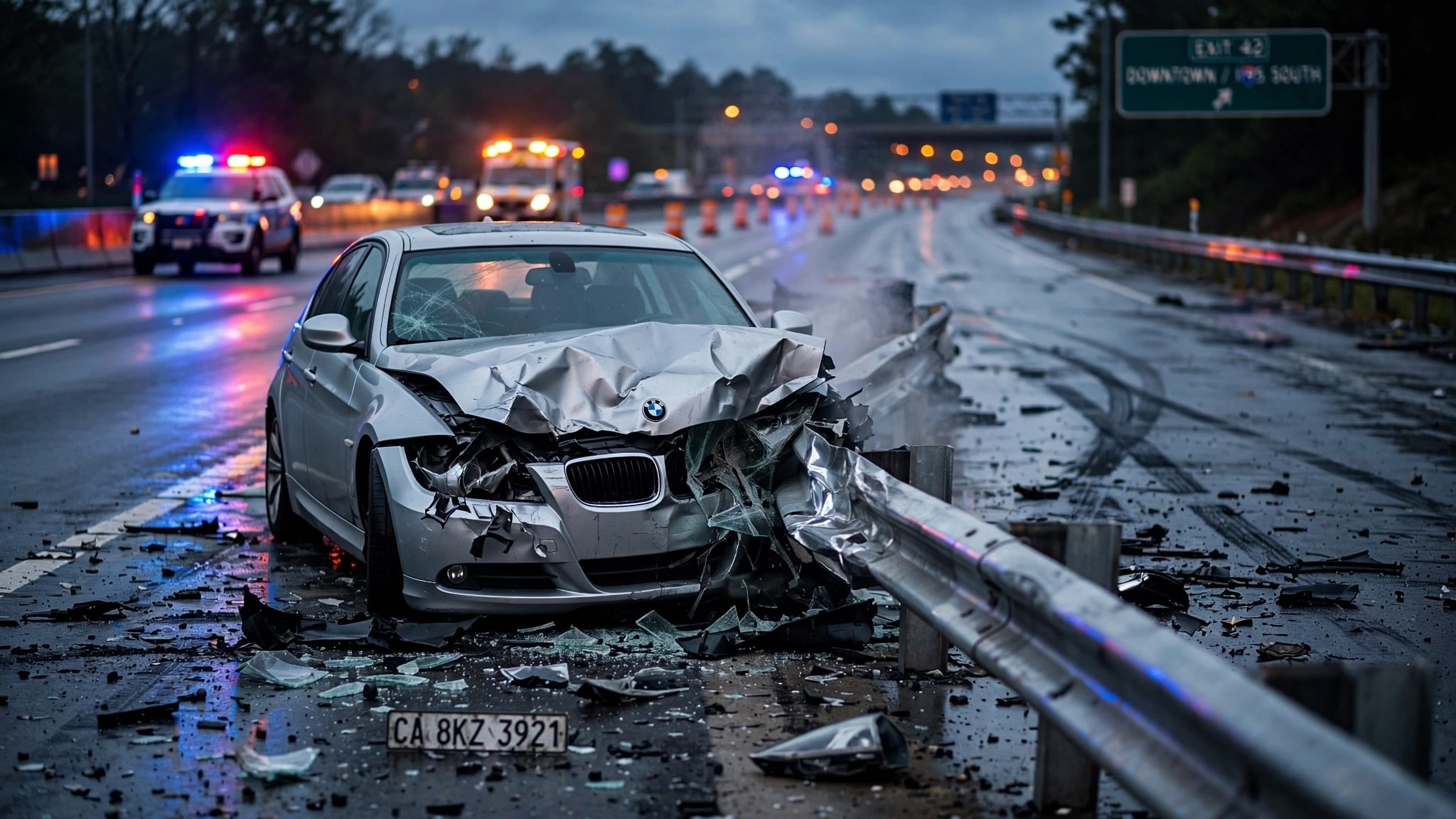
Before you sign that lease, you might want to see this. The BMW 3 Series has a fatality rate of 2.73 deaths per 100 million vehicle miles traveled, according to FARS data spanning 2014 to 2023. The Mercedes C-Class, which shares a showroom price bracket and a customer demographic, posts 0.63. Audi's A4 manages 0.32.[1]
That is not a rounding error. It is a chasm wide enough to park 1,237 coffins in, which is the BMW 3 Series body count over the decade. Put that number against the rest of the segment: the C-Class logged 319 deaths, the Audi A4 had 113, the Lexus IS recorded 218, the Volvo S60 tallied 67, and the Cadillac ATS came in at 55. Add all five together and you get 772. The 3 Series alone beat them by 465.[1]
So maybe BMW drivers are reckless drunks? No. Impairment rates across the segment run between 20.6% and 24.0%, and the 3 Series sits at 22.1%, statistically indistinguishable from the C-Class at 21.8% or the A4 at 21.6%.[1] Every competitor in this bracket attracts the same proportion of impaired drivers. They just don't kill them at the same rate.
BMW's own lineup tells the story even more starkly. Its 5 Series, a bigger and heavier sedan, posts a rate of 1.16. Drop to the X5 SUV: 0.40. BMW's smallest crossover, the X3, manages 0.23, which means a 3 Series driver is dying at 11.9 times the rate of an X3 driver wearing the same badge on the hood.[1] Weight and ride height explain some of it, but a factor of twelve demands more than physics.
Model year data reveals where the bodies piled up. The E46 generation (1999 to 2005) and the E90 (2006 to 2011) account for the carnage, peaking at 97 deaths in model year 2008 alone. These were rear-wheel-drive performance sedans marketed to enthusiasts and leased to commuters who thought the badge meant safety. It didn't. IIHS crash test scores were good because crash tests measure what happens when you hit a barrier at a prescribed speed and angle; they do not measure what happens when a 28-year-old in a leased 328i takes a freeway on-ramp at 80 mph with stability control that, in those generations, was either optional or less sophisticated than what Mercedes and Audi were already shipping standard.[2][3]
The G20 generation (2019 onward) tells a different story: 7, 13, and 5 deaths across its first three model years, down from 97 at the E90 peak. That is an 87 to 95% reduction depending on the year. Standard electronic stability control, improved structural rigidity, and a market shift toward all-wheel-drive xDrive variants closed much of the gap.[1][3] The improvement is real. But it also means BMW sold a decade of sedans that were empirically, measurably deadlier than every competitor on the lot, and nobody told buyers because the crash test stickers said otherwise.
What you should do: If you are shopping for a pre-owned luxury sport sedan from the 2005 to 2015 era, the FARS data says avoid the BMW 3 Series. Period. A same-year C-Class, A4, or Lexus IS will cost roughly the same and kill you at one-quarter to one-eighth the rate. If you already own an E90 or F30, check your VIN at nhtsa.gov/recalls for outstanding recalls and confirm your stability control system has never been deactivated by a previous owner or a performance shop. If you're buying new, the current G20 generation has improved dramatically, but the X3 is still twelve times safer per mile driven if you can stomach an SUV.
Limitations
FARS captures fatal crashes only. A vehicle with a low fatality rate might still have high injury or collision rates that this analysis cannot see. Estimated rates use VMT approximations derived from fleet size, not odometer readings, introducing roughly ±15% uncertainty for models with lower registration volumes. Impairment percentages reflect FARS toxicology on drivers in fatal crashes, not overall driver behavior; sober BMW 3 Series drivers may still exhibit different speed and risk profiles than sober C-Class drivers. Model year death counts for recent G20 years are suppressed by shorter exposure periods and may rise as the fleet ages.
The strongest case for BMW
The 3 Series attracted a younger, more performance-oriented buyer profile than the C-Class or A4, particularly in the E46 and E90 generations when the car was still rear-drive-only and actively marketed around track performance. Driver behavior, not vehicle design, likely explains a significant portion of the gap. BMW's decision to make stability control standard and push xDrive adoption in recent generations shows the company responding to real-world data, and the 87-95% fatality reduction in the G20 proves the response worked. Blaming the car for how people drive it is a category error that the crash test data arguably supports: in controlled conditions, the 3 Series protects occupants well.