Australia Just Mandated the Tech That Prevents 51% of U.S. Traffic Deaths. America Hasn't Started.
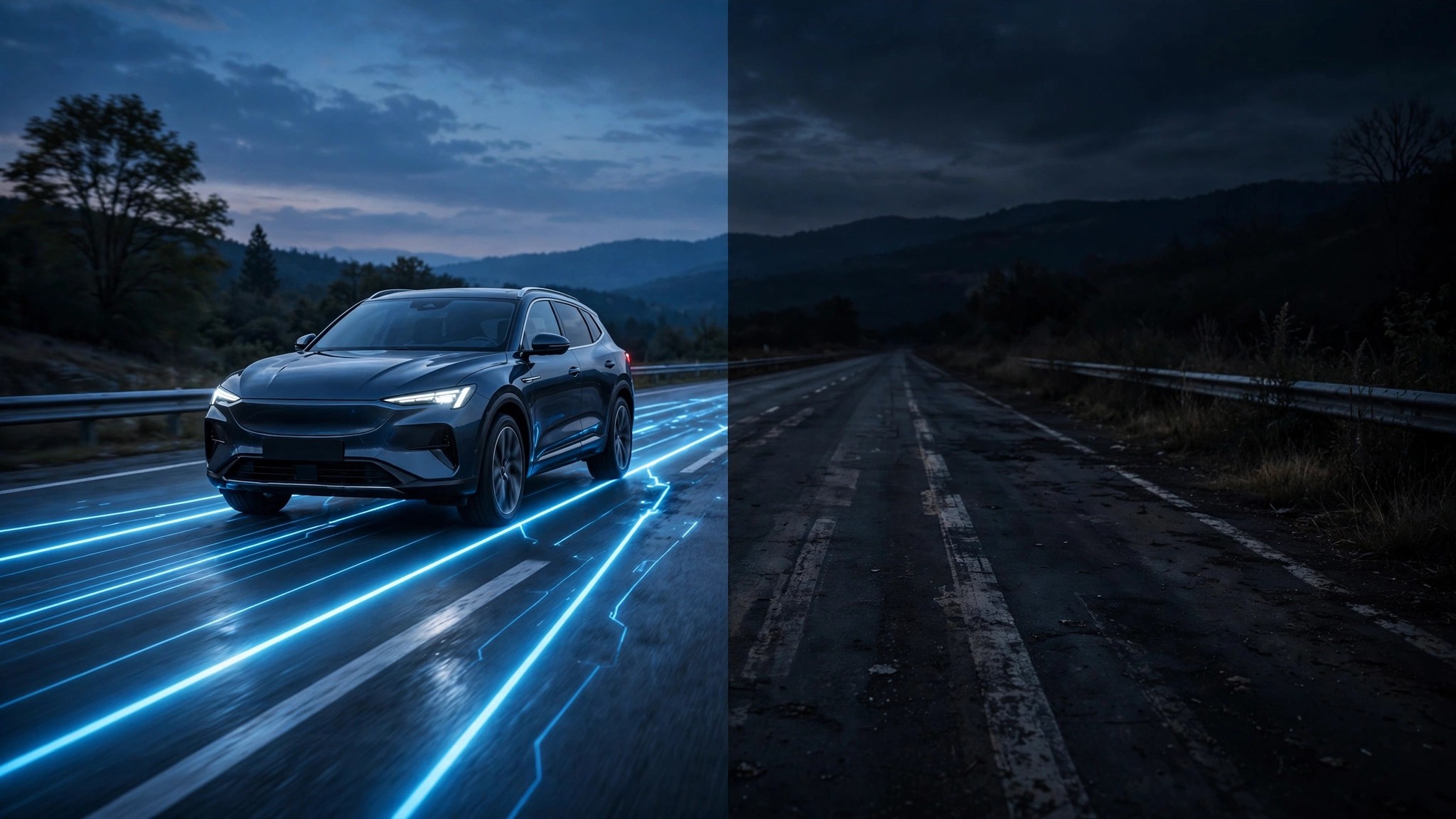
Lane-keeping steering assist will be mandatory on every new car sold in Australia by March 2029.[1] Not lane departure warnings. Not a dashboard beep. Active steering intervention that grabs the wheel when you drift. The Australian government projects this single mandate will reduce fatal light-vehicle crashes by nearly 12 percent.
Fifty-one percent. More than half of everyone who dies on an American road dies because a vehicle left its lane. Crossed a center line into oncoming traffic. Drifted off the shoulder into a tree. Overcorrected into a rollover. These are not freak occurrences. They are the single largest category of fatal crash in the United States, and they have been for decades.
Active lane-keeping assist exists to prevent exactly this. The technology reads lane markings through a forward camera and applies corrective steering torque when the vehicle begins to drift without a turn signal. It is not new. It is not exotic. Mercedes offered it in 2013. By 2024, most vehicles over $30,000 included it as standard equipment. The hardware cost per vehicle is under $200 when bundled with the forward camera already required for automatic emergency braking.[3]
Australia's phased rollout starts with new models in March 2028, then extends to all imports by 2029. Heavy trucks and vans over 3.5 tonnes get an exemption down to passive warnings only. Used cars are unaffected. It is a clean, enforceable rule with a realistic timeline.[1]
The United States has no equivalent mandate. None proposed. No advance notice of proposed rulemaking. NHTSA recently postponed its own crash-testing protocol overhaul, and the agency's regulatory pipeline remains consumed by fights over automatic emergency braking that have dragged on since 2015.[4] Lane-keeping is not even in the queue.
Run the math on the gap. Apply Australia's projected 12% reduction to the U.S. roadway-departure death toll of roughly 20,000 per year: that is 2,400 lives per year that a lane-keeping mandate could theoretically save. Over the five to seven years a typical NHTSA rulemaking takes from proposal to enforcement, the wait costs 12,000 to 17,000 lives. That is a reasonable estimate, not a certainty. But NHTSA has not even proposed the rule, so the clock has not started.
The honest counterargument: lane-keeping systems are imperfect. Some intervene with sudden, jerky steering. Drivers disable them. BYD's systems have suffered critical software failures in testing.[1] And many rural roads where 12,000 lane-departure deaths occur annually lack the painted lane markings that camera-based systems need to function.[2] A mandate without infrastructure is a mandate that protects highways and ignores county roads.
But imperfect technology on paved highways still beats no technology anywhere. ESC was imperfect in 2007 when NHTSA proposed its mandate. The agency estimated it would prevent 5,300 to 9,600 fatal crashes per year. By 2012, when the rule took effect, IIHS data confirmed ESC was reducing fatal single-vehicle crashes by 49% and fatal rollovers by 75%.[5] Nobody argues the ESC mandate was premature. They argue it was six years late.
Lane-keeping assist is ESC for lateral control. Same principle: the vehicle corrects what the driver does not. Same cost structure: cheap enough to absorb into existing camera hardware. Same regulatory pattern: Europe and Australia mandate it while America runs cost-benefit analyses until the bodies stack high enough to overcome the lobbying.
Nineteen thousand deaths a year. Fifty-one percent of the total. The technology exists. The mandate exists, in a country that drives on the left side of the road and still figured it out before we did.
What to do: If you are buying a new car, verify that active lane-keeping assist is included and on by default, not buried three menus deep in a settings screen. Subaru EyeSight, Toyota Safety Sense, and Honda Sensing include it standard on most trims. Check whether it can be permanently re-enabled after ignition cycles or if it reverts to off. A system you disable once and forget about is worse than no system at all.
Sources & References
- Autoblog, “New Cars In Australia Will Need Safety Tech The U.S. Still Delays,” July 25, 2026, citing Drive.com.au on the Australian mandate timeline and 12% fatality reduction projection. autoblog.com
- FHWA, “Roadway Departure Safety,” 2016–2018 average: 19,158 annual roadway departure fatalities, 51% of all U.S. traffic fatalities; 12,000 annual deaths on rural roads. highways.dot.gov
- IIHS estimates camera-based ADAS hardware at $100–$300 per vehicle when integrated with existing forward-facing camera platforms. Exact figure varies by manufacturer. iihs.org
- NHTSA proposed an AEB mandate in June 2023; as of July 2026 the final rule has been delayed multiple times, with full compliance not expected before 2029. Lane-keeping assist has no active rulemaking. nhtsa.gov
- IIHS, “Life-saving benefits of ESC continue to accrue,” confirming 49% reduction in fatal single-vehicle crashes and 75% reduction in fatal rollovers attributable to ESC. iihs.org