Your Car's Emergency Braking Was Tested at Parking Lot Speeds. It Fails at Highway Speeds.
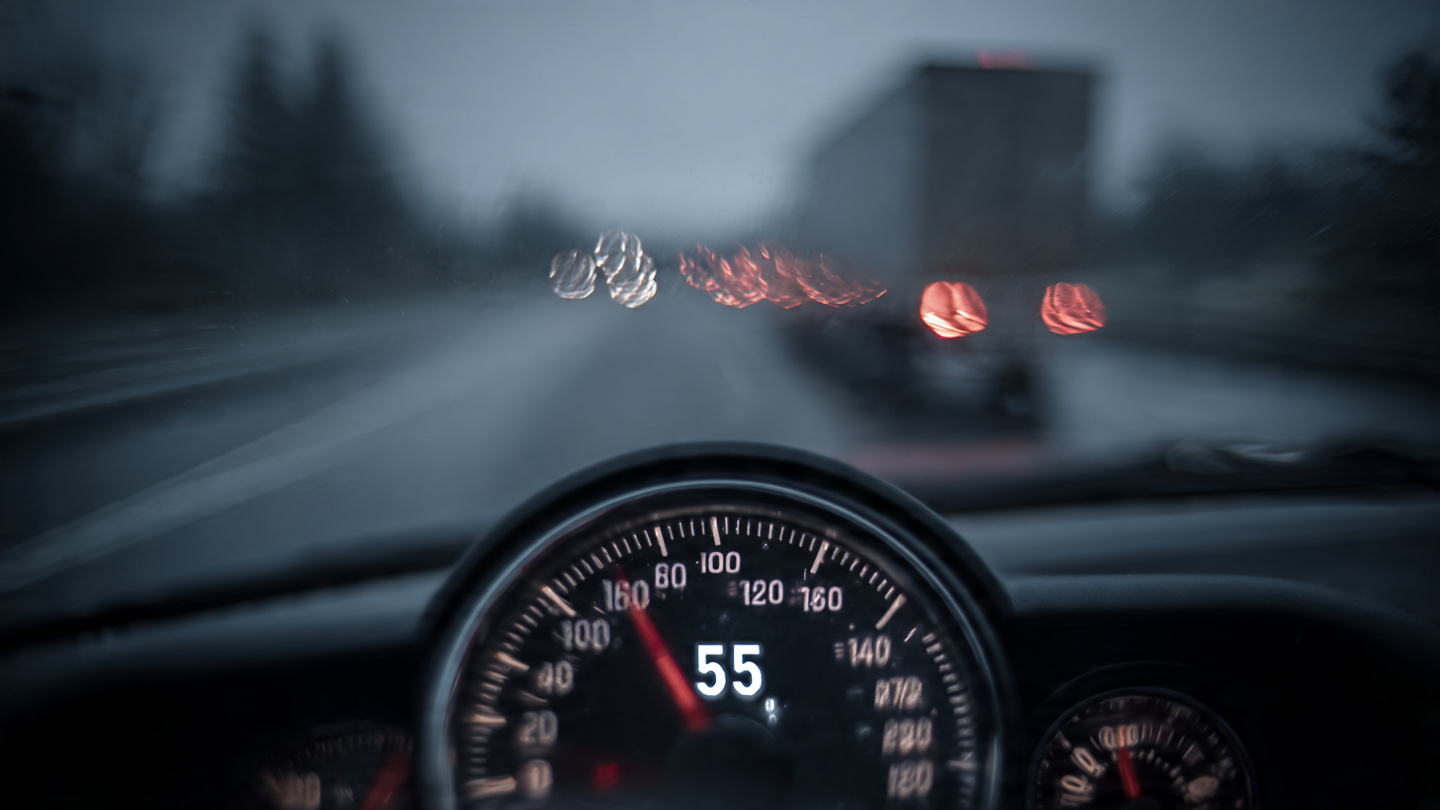
Eighty-five percent of 2022 model year vehicles earned IIHS's top "superior" rating for automatic emergency braking. That test maxes out at 25 mph, and according to IIHS's own research, only 3% of police-reported rear-end crashes happen at speed limits that low.[1] Seventy percent of fatal rear-end crashes happen at 55 mph or above. The rating system built to differentiate safe cars from dangerous ones now certifies almost everything as excellent, in conditions where almost nothing goes wrong.
The numbers behind that 3% come from IIHS Senior Research Scientist David Kidd, who cross-referenced FARS fatal crash data and the General Estimates System from 2016 through 2019 against the Institute's testing protocols.[1] Fatal rear-end crashes at speed limits of 25 mph or below accounted for just one percent of the total, and nonfatal injury crashes at those limits only three percent. Meanwhile, half of all nonfatal rear-end injury crashes clustered between 35 and 45 mph, and the lethal ones concentrated above 55.
Kidd validated the methodology by pulling event data recorder readings from towed vehicles in police-reported crashes. Striking vehicles averaged 2 mph below the posted speed limit at the moment of impact. Speed limits are not a guess but a proxy verified by the black boxes.
So what happens when AEB faces real highway speeds? AAA answered that in October 2024, testing identical makes and models across two generations: 2017-2018 vehicles with early AEB and 2024 models with the latest systems.[2] At 35 mph, the 2024 models avoided every collision. Genuinely impressive. At 45 mph, three out of four still stopped. At 55 mph, where the Federal Highway Administration says a majority of total vehicle miles are driven, the result was zero for four.[2] Every single test vehicle hit the target. Full speed. The safety feature that earned a "superior" label at 25 mph provided exactly zero protection at the speed most Americans spend most of their driving time traveling.
NHTSA recognized this in May 2024 when it finalized FMVSS 127, a rule requiring AEB to achieve full collision avoidance at speeds up to 62 mph and automatic braking engagement up to 90 mph for imminent collisions.[3] The projected benefit: 360 lives saved and 24,000 injuries prevented annually, with a compliance deadline of September 2029. That rule is now frozen. The Alliance for Automotive Innovation, representing virtually every major automaker selling in the U.S., sued in D.C. Circuit in January 2025, calling the standard "practically impossible."[4] Three days later, the Trump administration imposed a regulatory freeze, and the case now sits in abeyance. The September 2029 deadline is technically still active, but nobody is building to it.
I ran the math on what the current testing regime actually protects. NHTSA estimated 39,345 traffic fatalities in 2024, from approximately 33,000 fatal crashes.[5] Rear-end crashes constitute about 7% of fatal crashes, per IIHS, which yields roughly 2,300 fatal rear-end crashes nationwide.[6] One percent at speed limits of 25 mph or below gives us around 23. If AEB prevents 50% of those crashes, as IIHS's own effectiveness data suggests, current systems certified under the 12-to-25-mph test are preventing perhaps a dozen fatal rear-end crashes per year.[6] A dozen. Out of 33,000. That 50% figure, notably, was calculated across crashes at all speeds, not just the tested range, meaning real-world effectiveness at the certified 12-to-25-mph speeds is likely higher than 50% and effectiveness above 45 mph is likely far lower.
The counterargument from the industry is reasonable on its face. AEB does activate above 25 mph in the real world; it just has not been tested or certified there, and its performance degrades unpredictably. IIHS's Kidd acknowledged this: "In the real world, AEB systems are preventing crashes at higher speeds than the maximum 25 mph our test program uses. The problem is that our current evaluation doesn't tell us how well specific systems perform at those speeds."[1] But AAA's results at 55 mph suggest the degradation is not gradual but total.
If you drive a vehicle built after 2018, you almost certainly have AEB. Good. If you are in a parking lot at 12 mph and a car stops ahead of you, your brakes will probably engage on their own. Also good. If you are on a two-lane highway at 55 and a truck stops in your lane, the feature that gave your car a five-star sticker will likely do nothing at all. Check whether your vehicle's system has been independently tested at speeds above 35, because AAA's report names specific models that passed and failed. If your car is not on the list, drive it like the brakes are your responsibility alone, because above 45 mph, they are.
Sources & References
- Kidd, D.G., IIHS, “Improving the safety relevance of front crash prevention testing programs,” 2023. iihs.org
- AAA, “Out with the Old (AEB), In with the New,” October 2024. newsroom.aaa.com
- NHTSA, FMVSS No. 127: Automatic Emergency Braking Systems for Light Vehicles, May 2024. nhtsa.gov
- Harris, B.E. et al., Nelson Mullins, “The Road Ahead for FMVSS 127,” 2025. nelsonmullins.com
- NHTSA, 2025 Traffic Death Estimates & 2024 FARS. 39,345 fatalities in 2024; fatal crashes estimated at ~33,000 (FARS typically records 1.15–1.20 fatalities per fatal crash). nhtsa.gov
- IIHS, “Front crash prevention slashes police-reported rear-end crashes,” AEB reduces rear-end crashes by 50%. iihs.org