One Cop's Ram 1500 Got 547 Speed Camera Tickets. New York Just Made a Law About It.
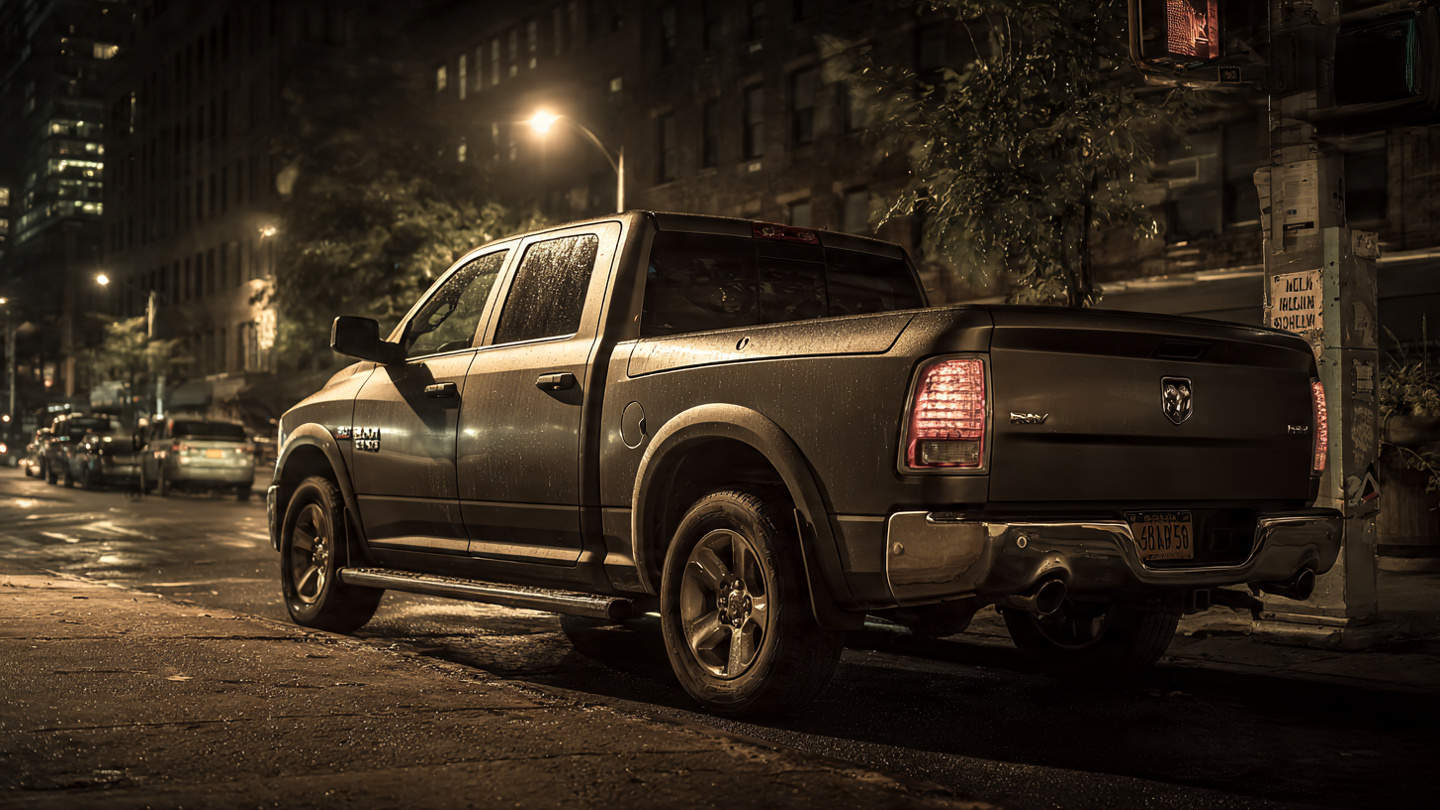
NYPD officer James Giovansanti drives a Ram 1500 on Staten Island. Between 2022 and early 2026, his truck tripped speed cameras and red-light cameras 547 times, generating $36,650 in fines and zero disciplinary consequences.[1] That works out to roughly one violation every 2.7 days for four straight years. Near schools. Near residential streets. While drawing a city paycheck to enforce the very laws his accelerator pedal kept breaking.
In 2025 alone, Giovansanti collected 187 speeding tickets. That is roughly one every 46 hours, a pace that suggests either a profound misunderstanding of how cameras work or a deliberate calculation that the consequences would never outweigh the convenience of treating Hylan Boulevard like a personal drag strip. He was right, for years, because the only thing speed cameras do to repeat offenders is generate invoices that nobody reads twice before filing them in the same mental drawer as expired coupons.
Then Streetsblog published his name, his badge, and his ticket count. Albany noticed.
In May 2026, Governor Kathy Hochul signed the Stop Super Speeders Act into law as part of the state budget. It makes New York the first jurisdiction in the United States to mandate Intelligent Speed Assistance devices on privately owned vehicles.[2] Any driver accumulating 16 or more speed camera violations in a 12-month period must install a GPS-based limiter that physically prevents the car from exceeding posted speed limits. Refuse, and the fines start at $1,500 and escalate to $2,500, followed by registration suspension if the device isn't installed within 45 days.[3]
The technology is not new. It is a GPS receiver, a speed-limit database, and a throttle intervention module. Total cost: about $150 to install and $4 per day to operate. New York City already tested the approach on 700 municipal fleet vehicles starting in 2022, where a US Department of Transportation evaluation found speeding dropped 64 percent, including a 49 percent reduction among the worst habitual offenders.[4] The device does not touch the brakes and does not cut the engine; it simply makes the gas pedal resist once the car exceeds the posted limit by a few miles per hour, the way a responsible adult might gently push your foot off the accelerator if you kept trying to kill pedestrians outside an elementary school at 45 in a 25.
Roughly 14,600 vehicles currently qualify under the 16-ticket threshold, according to Transportation Alternatives.[3] New York City has approximately 2.1 million registered vehicles. That means the super speeder population represents about 0.7 percent of the fleet producing an outsized share of the risk, a concentration so extreme that the legislative response amounts to surgically removing the worst actors from the speed distribution rather than imposing blanket restrictions on everyone. The original bill, authored by State Senator Andrew Gounardes, set the trigger at six violations and would have captured roughly 150,000 drivers statewide.[2] Assembly negotiations inflated the threshold to 16, which is the legislative equivalent of saying "we'll only require a smoke detector in your house after the fourth kitchen fire."
The parallel to DUI enforcement is precise and deliberate. Every state mandates ignition interlock devices for convicted drunk drivers, requiring them to blow into a breathalyzer before the car will start. Interlocks reduced repeat DUI offenses by approximately 70 percent while installed.[5] The ISA device is the speeding equivalent: you can still drive, you just cannot break the law while doing it. What took decades for the drunk-driving apparatus to accomplish, the super-speeder law attempts to replicate in one budget cycle, which is either impressively efficient or a sign of how absurd the status quo had become when a uniformed police officer could average a speed camera violation every 46 hours without anyone in his chain of command asking questions.
Nationally, speeding is a contributing factor in approximately 29 percent of all traffic fatalities, killing roughly 12,000 Americans per year.[6] NHTSA does not publish data on what share of those deaths are attributable to the repeat-offender population, but the NYC data offers a crude proxy: if 0.7 percent of vehicles generate the most extreme speeding behavior and the fleet ISA pilot cut their speeding by 64 percent, the arithmetic suggests ISA-equipped super speeders would have their speed-related crash exposure reduced by nearly two-thirds, though the relationship between camera tickets and fatal crashes is not linear and the populations are not identical. Giovansanti never killed anyone. Most super speeders have not. But "hasn't yet" is a probability statement, not a safety record, and the FARS data is full of drivers whose probability caught up with them on a Tuesday afternoon in a school zone.
The wealthiest offenders treated speed fines as a subscription service. A Streetsblog analysis of city traffic data found that drivers of late-model BMWs, Mercedes-Benzes, and luxury SUVs collectively paid more than $10 million in speed camera fines over 12 months.[3] One owner of a 2024 Mercedes-Benz GLS accumulated nearly $94,000 in unpaid tickets while continuing to drive without interruption. For a driver whose vehicle costs north of $90,000, a parking-ticket-sized fine for endangering schoolchildren is indistinguishable from a toll, and they treated it accordingly. ISA does not care about your income bracket. The gas pedal pushes back whether you drive a Ram 1500 or a GLS 580.
The law has real limitations and the strongest counterargument deserves full weight. Civil liberties advocates and some Assembly members raised legitimate concerns about GPS tracking of private vehicles, equitable enforcement, and whether a 16-ticket threshold is arbitrary rather than evidence-based. Assembly Member Michaelle Solages argued the program could disproportionately affect communities of color, a concern grounded in decades of unequal traffic enforcement patterns.[2] Supporters counter that communities of color suffer disproportionate traffic violence and that the law targets automated camera data, not officer discretion, though cameras themselves are not uniformly distributed across neighborhoods. Whether this law reduces deaths or merely creates a new compliance bureaucracy depends entirely on implementation details that remain unresolved, including who monitors the devices, what happens when they malfunction, and whether the $4-per-day operating cost becomes its own regressive penalty.
The methodology caveat matters: the 64 percent reduction in the fleet pilot applies to a captive audience of city employees whose driving was already monitored by their employer, not to private citizens who chose to blow past cameras 547 times while presumably knowing someone was counting. Compliance incentives are structurally different. And FARS does not isolate repeat-offender-attributed crashes, making any national extrapolation speculative. The strongest claim the data supports is narrower than advocates want: ISA works on fleet vehicles, the super speeder population is small and identifiable, and the legal infrastructure to compel device installation now exists for the first time on American roads.
What the data cannot tell you is whether James Giovansanti will install the device or simply eat the fines. What it can tell you is this: a man whose job was to protect the public spent four years proving, one camera flash at a time, that voluntary compliance is a fantasy for a certain kind of driver, and that the only intervention that might work is one that takes the decision out of his right foot entirely.
What to do
If you drive in New York and your speed camera ticket count is approaching double digits, the threshold is 16 violations in 12 months. Check your record at the NYC Department of Finance ticket lookup portal. If you have been notified, the ISA device must be installed within the compliance window or your registration will be suspended. If you are shopping for a vehicle with built-in ISA: the EU has mandated the technology in all new cars sold since July 2024,[7] but no US-market vehicle currently ships with a comparable system as standard equipment. If you want to check whether any vehicle has open recalls that might affect your safety more immediately than speed: visit nhtsa.gov/recalls and enter your VIN.
Sources & References
- Streetsblog NYC, “To Protect And Swerve: NYPD Cop Has 547 Speeding Tickets Yet Remains On The Force,” 2026. nyc.streetsblog.org
- Streetsblog NYC, “Stop Super Speeders Act Included in Final State Budget,” May 7, 2026. nyc.streetsblog.org
- NY Post, “NYC 'super speeders' face crackdown, mandatory speed limiters,” May 7, 2026. nypost.com
- Streetsblog NYC, “City's In-House Program Proves Speed Governors Work,” 2024. nyc.streetsblog.org
- CDC, “Ignition Interlocks,” Motor Vehicle Safety. cdc.gov
- NHTSA, “Speeding,” Traffic Safety Facts. nhtsa.gov
- European Transport Safety Council, “Intelligent Speed Assistance (ISA),” 2024. etsc.eu
Source: NHTSA FARS 2014–2023 for national speeding fatality context; NYC traffic camera data via Transportation Alternatives and Streetsblog reporting. Speed camera ticket counts and fine amounts are from public records reporting by Streetsblog NYC and Carscoops. ISA fleet pilot data from US DOT evaluation. See methodology for caveats.